TSMC July Revenue Jumps 45% on Strong AI Chip Demand
TSMC, the world's largest contract chipmaker, reported July revenue of NT$467.58 billion ($14.5 billion), up 44.7% year-on-year, driven by sustained demand for AI-related chips and high-performance computing components. The surge highlights continuing strength in the semiconductor sector strength in the semiconductor sector as major tech companies funnel capital into AI infrastructure. Semiconductors
AI Demand Drives TSMC's Growth
AI demand is the primary force behind TSMC's recent revenue surge. Investors are closely monitoring Big Tech spending and return on investment, as the sector continues to funnel unprecedented amounts of capital into building out AI infrastructure, including designing and buying semiconductors. TSMC manufactures chips for a variety of customers, including Nvidia and Google's own custom semiconductors, so the Taiwanese firm's sales are a closely watched metric of tech sector demand.
The AI accelerator market has experienced explosive growth in 2026, with major cloud providers and enterprises alike increasing spending on custom silicon and merchant chips for training and inference workloads. TSMC's advanced nodes, particularly 3nm and 5nm, have become the foundation for this infrastructure expansion. The company's ability to maintain high yields on these leading-edge processes has made it the preferred manufacturing partner for companies scaling AI operations globally.
Market analysts note that the correlation between TSMC's financial performance and AI infrastructure spending has become increasingly direct. As AI models grow in scale and complexity, the demand for specialized silicon manufactured by TSMC has created a self-reinforcing cycle of investment and capacity expansion. This technology theme has positioned TSMC at the center of the broader technology investment trend that has driven much of the market's performance this year.
"TSMC is now guiding for 40% growth in revenues for this year, so July's numbers put it ahead of that figure. This is no mean feat and highlights that for now demand is still there and takes the pressure off August and September somewhat in that these two months don't have to be as aggressive," said Ben Barringer, head of technology research at Quilter Cheviot.
Demand in the semiconductor industry, however, can shift quickly so it is important that people do not read too much into the monthly numbers as they can jump around. The company is, however, continuing to expand with various additional investments, so you would hope this level of chip production can continue.
Capital Investments and Capacity Expansion
TSMC's latest revenue figures come as the company invests heavily in expanding its manufacturing capacity across its global network. The company has announced multiple new fabrication plant projects in the United States, Europe, and Asia, with total capital expenditure expected to exceed $40 billion in 2026 alone. These investments are designed to meet growing demand for advanced nodes ranging from 3nm to 5nm, which are essential for AI accelerator chips and high-performance computing processors.
The Arizona fab cluster, now entering high-volume production for 4nm and 3nm technologies, represents TSMC's most notable expansion outside of Taiwan. Additional projects in Germany and Japan are also progressing, though timelines have been adjusted due to local regulatory and construction considerations. The company's foundry model, which focuses exclusively on manufacturing while customers handle chip design, has allowed TSMC to maintain technological leadership while its partners invest in complementary roadmaps.
Capacity planning at TSMC operates on multi-year horizons, with current fab construction cycles averaging 3-4 years from major production to first production. The company's disciplined approach to capacity expansion, combined with its leadership in advanced node technology, has created barriers to entry that protect its market position even as new competitors emerge in the foundry space. Nevertheless, the industry is watching closely as Samsung Foundry and Intel Foundry both ramp their own advanced capabilities, potentially increasing competitive pressure over the next 2-3 years.
Market Context and Outlook
Semiconductor industry analysts note that TSMC's dominant position in advanced manufacturing gives it unique visibility into end-market demand. The company's customer base spans computing, communications, automotive, and industrial segments, making its revenue figures a broad indicator of tech cycle health.
While some economists caution that monthly revenue figures can be volatile and may not reflect quarterly or annual trends, the consistent outperformance against guidance suggests the AI-driven capex cycle is far from peaking. TSMC's guidance for 40% full-year revenue growth implies continued strength through the remainder of 2026, assuming no major macroeconomic shocks or supply-demand imbalances. The company's visibility into customer inventory levels and order lead times provides additional confidence that the current demand trajectory has room to run through the end of the year.
Geopolitical factors continue to shape the semiconductor context, with trade restrictions, export controls, and investment screening all affecting the industry's structure. TSMC's position as a Taiwan-based company with global operations means it navigates a complex regulatory environment that can affect capacity decisions and customer relationships. The company's recent announcements about investment in Japan and Germany reflect efforts to diversify its manufacturing footprint while maintaining its core capabilities in Taiwan.
Supply Chain Implications
TSMC's expansion has ripple effects across the global semiconductor supply chain. Equipment manufacturers, materials suppliers, and packaging companies all track the company's capacity plans as a proxy for future demand. ASML, the primary supplier of extreme ultraviolet lithography systems, has reported increased order intake from TSMC, reflecting the foundry's aggressive node-pushing schedule.
Downstream, packaging and testing facilities in Southeast Asia are expanding capacity to handle the expected increase in finished chip output from TSMC's new fabs. This includes investment in advanced 2.5D and 3D packaging technologies like CoWoS, which are critical for AI accelerator chips that require high memory bandwidth. The CoWoS supply situation has been a constraint for the industry, and TSMC's capacity additions are expected to alleviate pressure in the latter half of 2026.
Equipment suppliers beyond ASML are also benefiting from TSMC's expansion. Lithography consumables, wet process chemicals, and specialty gases all see increased demand from the foundry's new fabs and node transitions. Materials companies such as Shin-Etsu, SUMCO, and Findable have all reported growth tied to TSMC's production ramp. Even equipment refurbishment and second-hand markets are experiencing activity as TSMC's existing fab lines are repurposed for new node production.
Conclusion
TSMC's July revenue surge underscores the central role of AI semiconductors in driving the current chip cycle. As the company continues to expand capacity and its customers increase AI infrastructure spending, the semiconductor sector is positioned for another year of strong growth. However, industry watchers recommend looking beyond monthly figures to quarterly trends and capital expenditure plans for a more complete picture of the market's trajectory. The interplay between technological advancement, capital investment, and end-market demand will continue to shape the industry's evolution through 2026 and beyond.
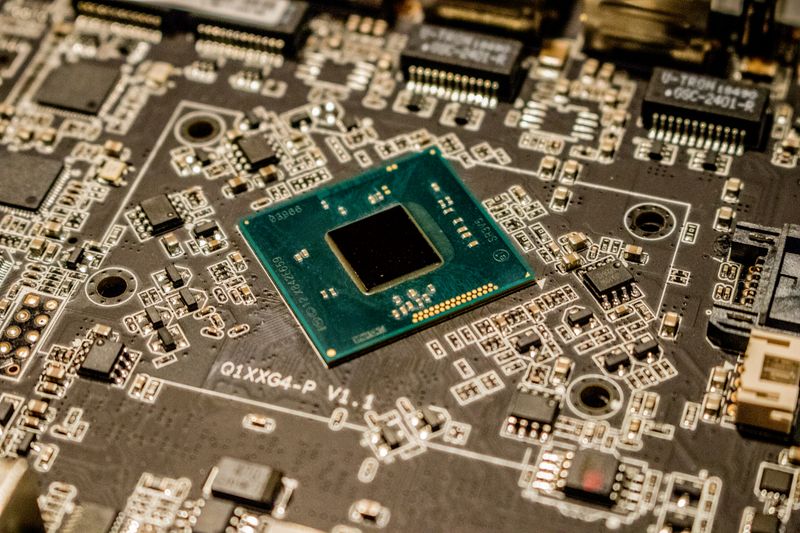 Alt: Macro close-up of a dark PCB with a central teal-green microchip (IC die exposed with gold pads, golden test points). The chip bears serial codes. Sharp focus on a surface-mount semiconductor surrounded by capacitors, resistors, and conductive traces.
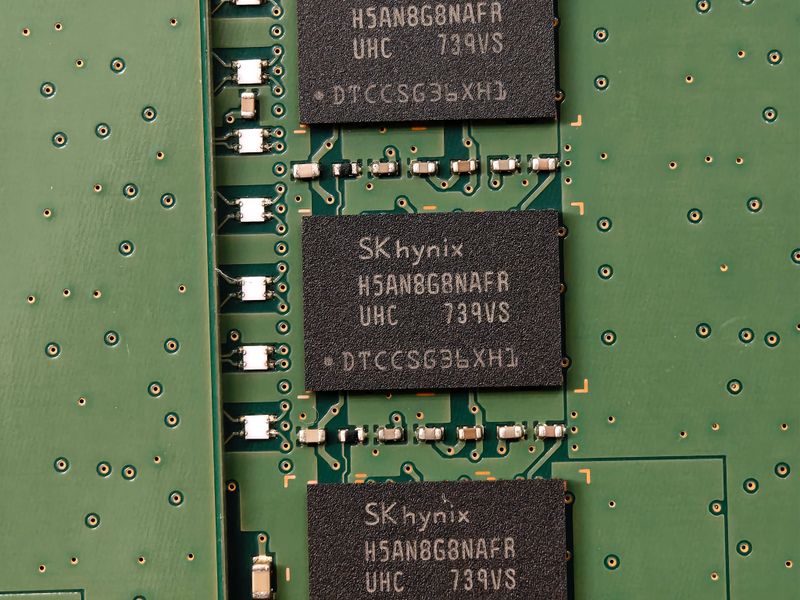 Alt: Green PCB with three SK Hynix DDR4 SDRAM chips (model H5AN8G8NAFR). Gold copper traces, vias, and small passive components between memory ICs.
Source: CNBC, "World's biggest chipmaker TSMC's sales surge 45% amid buoyant AI demand," August 10, 2026 Outbound source: https://www.cnbc.com/2026/08/10/tsmc-revenue-surge-ai-chip-big-tech.html Keywords: TSMC, AI chips, semiconductor revenue, July 2026, chip manufacturing, advanced nodes