Cloudflare reported on July 6 that it observed a three hundred percent increase in artificial intelligence-related bot traffic directed at semiconductor company websites. This surge confirms how the AI build-out is fundamentally reshaping the entire chip industry's security environment and attack surface.
Data Center Investment Surges
Major cloud providers are redirecting billions toward semiconductor-capable infrastructure. Amazon Web Services, Microsoft Azure, and Google Cloud have collectively pledged over sixty billion dollars in new data center capacity during the current calendar year. The Nvidia Rubin platform is driving the most aggressive expansion, as AI inference workloads have become the primary driver of semiconductor demand, clearly eclipsing traditional computing refresh cycles. Cloud infrastructure spending patterns now directly correlate with AI accelerator deployment schedules rather than conventional server replacement timelines. Recent earnings reports show hyperscalers increasing capital expenditure by fifteen to twenty percent year-over-year, with AI-specific infrastructure accounting for more than forty percent of new spending.
TSMC's Three-Nanometer Ramp Dominates Revenue
Taiwan Semiconductor Manufacturing Company's three-nanometer process node appears on track to overtake the five-nanometer node as the top revenue generator during the second half of twenty twenty-six. Industry analysts attribute this transition to surging demand from Nvidia, Advanced Micro Devices, and Broadcom for AI accelerator chips. The foundry's ability to sustain this ramp will depend on maintaining yield development ahead of published schedule while managing construction labor bottlenecks across its expanding fabrication network. Economic Daily News reporting suggests quarterly output value could exceed four hundred billion New Taiwan dollars, representing more than thirty percent of total revenue. TSMC's management has indicated that their 3nm capacity utilization is expected to reach ninety-five percent by year-end twenty twenty-six, up from seventy-five percent in early twenty twenty-six.
Memory Shortage Deepens Across All Categories
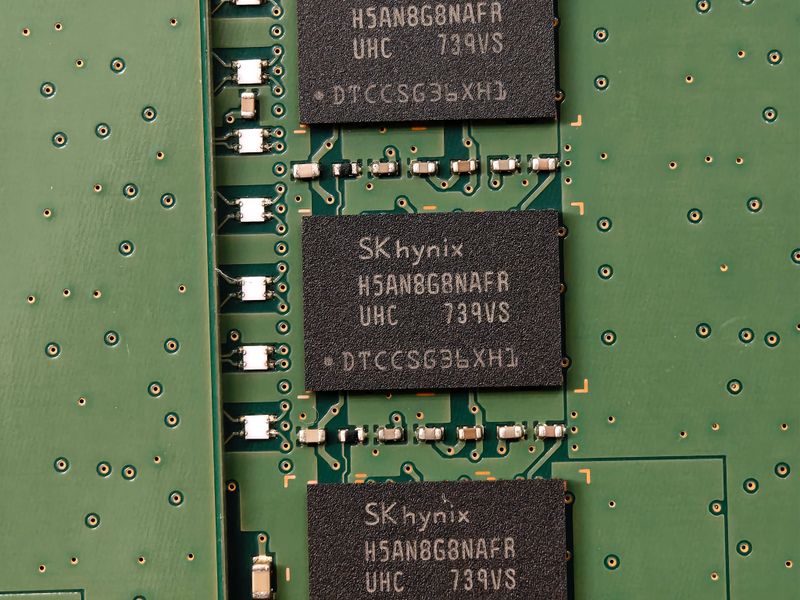
Micron Technology's president and chief technology officer warned at the SEMICON Taiwan trade event that the global memory shortage will deepen across high-bandwidth memory, double data rate, and solid-state drive categories as artificial intelligence demand compounds. The memory market structure has fundamentally shifted: AI data centers now compete directly with consumer electronics for the same production capacity, creating sustained upward pressure on retail prices and allocation rationing across distributors. TrendForce data indicates smartphone DRAM prices rose approximately eighty-three percent quarter-over-quarter during the second quarter of twenty twenty-six, with similar increases observed for consumer solid-state drives. Micron's management reported that HBM demand has increased two hundred percent year-over-year, while DDR5 prices have risen forty-five percent since January twenty twenty-six.
Samsung's P5 Megafab Construction Acceleration
Samsung Electronics' P5 facility in Pyeongtaek has crossed a critical construction milestone, with phase one cleanroom utility piping now under active construction. The Hanyang Engineering contract, valued at approximately one hundred forty-eight billion South Korean won, confirms that essential infrastructure installation is underway. Once mass production targets are met in late twenty twenty-eight, this six-cleanroom three-floor facility will become one of the industry's largest high-bandwidth memory production facilities. Samsung has positioned P5 as a future production hub for HBM — the high-bandwidth memory that every Nvidia AI accelerator requires — and for which global supply has remained severely constrained throughout twenty twenty-six. The company has committed to dedicating an additional fifteen billion dollars to P5 facility completion through twenty twenty-seven.
Geopolitics and Trade Negotiations
South Korea is negotiating semiconductor tariff terms with the United States under the "no less favorable" principle, explicitly seeking parity with Taiwanese treatment. Trade Minister Kim Jung-kwan's September fourth negotiations reflect broader tensions around United States semiconductor policy, including potential equity stake demands from the Commerce Secretary. The outcome will shape multi-billion dollar investment decisions across the industry's major players, with Samsung positioned to argue for equitable treatment relative to Taiwan's existing CHIPS Act agreements. Recent statements suggest the United States may impose additional tariffs on semiconductor equipment shipments if manufacturing milestones are not met.
Consumer Device Pricing Impact
The semiconductor supply crunch is already affecting consumer device pricing across multiple product categories. Memory cost increases of approximately eighty-three percent quarter-over-quarter have cascaded through smartphone and personal computer bill-of-materials costs, with Apple, Huawei, and Xiaomi all implementing price adjustments during the third quarter of twenty twenty-six. As AI infrastructure build-out accelerates through twenty twenty-seven, end-user device prices may continue rising as capacity allocation increasingly tilts toward high-margin artificial intelligence applications. Counterpoint Research estimates that memory components now account for forty percent of smartphone bill-of-materials cost, up from thirty-five percent two years ago.
Advanced Packaging Capacity Remains Critical Bottleneck
Advanced packaging capacity, particularly CoWoS-class technologies, remains the critical bottleneck for AI accelerator production across all foundries. Taiwan Semiconductor Manufacturing Company and Samsung Electronics are both expanding advanced packaging facilities, but demand far outstrips available slot capacity. The industry association reports that CoWoS capacity utilization exceeded ninety-five percent during the second quarter of twenty twenty-six. This has created a two-tier market where foundries with secure packaging slots command premium pricing, while others face extended lead times measured in months for AI chip production. TSMC has announced plans to add two additional CoWoS production lines in Taichung by twenty twenty-seven to address the shortage.
Processor Architecture Evolution Across All Vendors
The central processing unit market continues to evolve with new architecture releases from all major vendors. Advanced Micro Devices' latest Zen five desktop processors have entered volume production, offering measurable single-thread performance gains that compound the overall system efficiency improvements seen across artificial intelligence workloads. Intel's fourteen-angstrom process development is reportedly ahead of schedule, setting up a three-way race at the leading edge that will shape competitive dynamics throughout twenty twenty-seven. GlobalFoundries' twelve-nanometer and eight-nanometer mature-node offerings continue to serve established markets while capacity constraints push new designs toward advanced processes. ARM's latest Cortex-X4 architecture shows measurable performance improvements for mobile AI applications, indicating broader industry movement toward specialized processing.
Government Resilience Initiatives Restructure Investment
Government programs across the United States, Europe, and Asia are actively reshaping semiconductor supply chains. The CHIPS Act has triggered over one hundred fifty billion dollars in announced investments, though actual construction progress varies across regions and process nodes. The "no less favorable" clause in United States-Korea trade negotiations could further restructure investment patterns, with Samsung Electronics positioned to benefit from parity arguments against Taiwanese treatment. The renegotiation context includes scrutiny of equity stake demands, with previous administration proposals having been withdrawn for certain recipients. The European Union has also introduced its Critical Raw Materials Act, which includes semiconductor manufacturing incentives and supply chain diversification requirements.
Conclusion
The semiconductor industry is undergoing its most meaningful transformation in decades, driven by artificial intelligence demand that has rewritten demand forecasts across every product category. From leading-edge process nodes to mature-node capacity, from advanced packaging to memory production, every segment faces constrained supply meeting exponentially growing demand. The next eighteen months will be critical as new fabrication capacity comes online and existing players handle the competing pressures of government policy, trade negotiations, and relentless AI-driven demand growth. Stakeholders who can successfully secure advanced packaging slots and work through trade policy transitions will hold key advantages in the emerging market.
Read more Semiconductor Industry News coverage.