Samsung Hikes Chipmaking Prices by Up to 15% Amid Strong AI Demand
By Tech Desk | August 20, 2026 | Semiconductors
Samsung Electronics has announced price increases of up to 15 percent for chips manufactured using its 4-nanometer process, known as SF4, industry sources said Tuesday. The move comes as the Korean tech giant capitalizes on surging demand from artificial intelligence accelerator makers and positions itself ahead of heightened competition in the foundry sector.
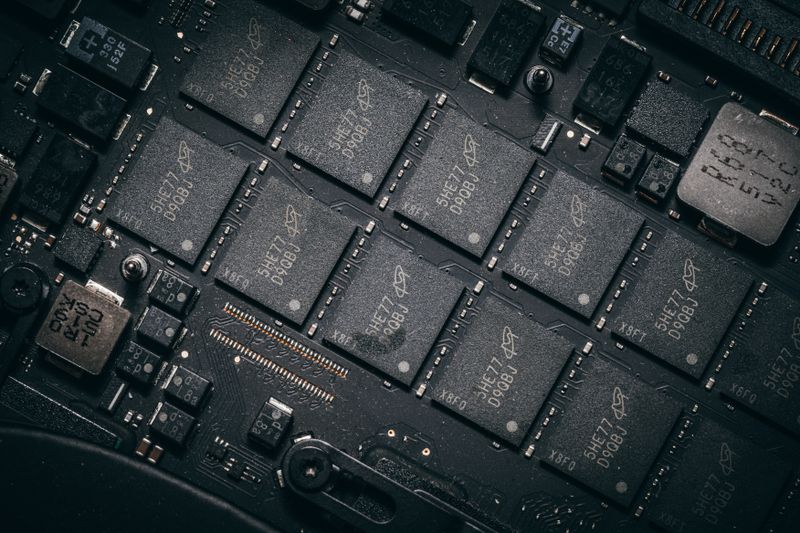

The price adjustments, which took effect in July, affect chips produced at Samsung's foundry facilities using the SF4 process node. According to sources with knowledge of the matter, the increases range from 10 to 15 percent depending on the specific product category and customer tier. The company cited "market conditions reflecting the true value of advanced manufacturing capacity" in a brief statement, while declining to provide detailed breakdowns by product line.
Market Context and Competitive Pressure
The price hike underscores the tight supply situation in the advanced foundry market. While TSMC maintains its position as the world's leading contract chip manufacturer, Samsung's foundry business has been aggressively pursuing AI-related contracts to diversify beyond its traditional mobile application processor base.
"Samsung has been repositioning its foundry portfolio to capture a larger share of the AI accelerator market," said analyst Min-soo Kim at Seoul-based TechInsights. "By adjusting pricing to reflect the scarcity of 4nm-class capacity, the company is signaling that its foundry capacity is becoming a differentiated commodity, especially as Broadcom and other major design houses secure long-term partnerships."
Recent reports indicate that Samsung has signed a major collaboration with Broadcom to supply HBM4 memory and next-generation AI chips, a deal that could validate the company's foundry strategy if volume production meets expectations. The partnership, first disclosed earlier this month, involves Samsung providing its 2nm process integrated with 1c DRAM technology—a vertically co-optimized approach that proponents say could deliver meaningful performance-per-watt advantages. Under the arrangement, Broadcom will gain priority access to Samsung's 2nm capacity for custom AI accelerator dies, with initial shipments targeted for Q4 2026. The deal represents one of the largest HBM-offtake agreements signed this year and signals Samsung's growing influence in the AI supply chain.
TSMC's Position and the Broader Manufacturing Context
Meanwhile, TSMC has also announced foundry price increases of up to 10 percent, set to take effect in 2027. The Taiwanese giant's 2nm process, currently priced at approximately $30,000 per wafer, is expected to exceed $33,000 under the new pricing structure. Against this context, Samsung's 2nm order pipeline has become increasingly visible, with the company securing production slots that could challenge TSMC's historical dominance in the most advanced nodes.
The combined price increases from both foundry majors reflect a sector-wide revaluation of advanced chip manufacturing capacity. Demand driven by AI accelerator, high-performance computing, and emerging applications such as autonomous vehicles has far outstripped supply, giving manufacturers unprecedented pricing power. Market research firm Counterpoint Research estimates that advanced node (7nm and below) utilization rates across the industry have surpassed 90 percent, with lead times for new orders extending to 16–20 weeks from the typical 12–14 weeks a year ago. TSMC's own price adjustment comes as the company faces pressure from both Samsung and emerging foundry competitors in China and Europe, yet its market share leadership remains largely intact despite the pricing headwinds.
Samsung's Foundry Strategy and HBM Leadership
Samsung's foundry push into AI accelerator territory is closely tied to its strengths in high-bandwidth memory. The company is already a leading supplier of HBM3 and HBM3E to the AI market, and the Broadcom collaboration extends this expertise into custom accelerator territory. According to industry sources, Broadcom plans to use Samsung's HBM4 memory in its AI accelerators, with production ramping expected in the latter half of 2027. The Broadcom-Samsung partnership has drawn attention from industry analysts for its AI accelerator market implications for its implications in the AI accelerator market.
The report also notes that Samsung is expected to ramp production of its next-generation HBM4E memory to strengthen the collaboration. By combining its 2nm process with 1c DRAM technology, Samsung can co-optimize chip design, power delivery, and thermal performance—a vertically integrated approach that, according to the report, could give it a competitive edge over TSMC in certain AI accelerator segments. Samsung's ability to co-optimize logic and memory on the same process flow gives it a unique advantage in the HBM-centric AI accelerator market, where power efficiency and bandwidth are paramount. The company's 2nm process, which entered high-volume production in early 2026, has already attracted interest from several major AI chip designers seeking alternatives to TSMC-dominated capacity.
Supply Chain Implications and Customer Impact
The price increases will likely ripple through the tech industry, affecting everything from data center infrastructure to consumer electronics. Major customers including Apple, Nvidia, and various Chinese AI chip startups are expected to absorb the increases or renegotiate contracts, but the overall effect is likely to be higher bill-of-materials costs for end products. Industry analysts predict that the price increases could add 3–5 percent to the BOM cost of high-end smartphones and laptops that rely on Samsung-manufactured application processors.
Analysts warn that if the price hikes lead to reduced order volumes, the market could face longer lead times for advanced nodes, particularly as several major foundry expansions remain on multi-year timelines. Samsung's own $45 billion foundry expansion in Taylor, Texas, is not expected to begin volume production until 2027, meaning the current supply constraint could persist through the middle of the decade. On the other hand, higher prices could also incentivize capital investment in new foundry capacity, potentially easing the supply bottleneck over the longer term. Globalfoundries, which has historically positioned itself as a lower-cost alternative, may see increased interest from price-sensitive customers, though its technology node roadmap lags Samsung and TSMC by several years.
Conclusion
Samsung's decision to raise foundry prices by up to 15 percent marks a major shift in the advanced chip manufacturing domain. As AI demand continues to outstrip supply, the foundry business is moving from a volume-driven model to a pricing-driven model, with both Samsung and TSMC leveraging their process technology leadership to capture greater value from their most capable customers.
The coming quarters will be critical in determining whether the price increases stimulate additional capacity investment or simply compress margins across the industry. For now, the message from Samsung is clear: advanced semiconductor manufacturing is no longer a commodity business, and pricing power is increasingly concentrated in the hands of those who control the most capable process nodes. Industry observers expect at least one more round of price adjustments in 2027 as the market stabilizes at new equilibrium points.
Sources: Reuters, TechInsights, Counterpoint Research, Bloomberg, industry analyst statements, Broadcom investor relations filings, Counterpoint Research market data