ON Semiconductor just told Wall Street something carmakers won't love: when supply runs short, AI data center customers get first pick of its chips.
The company, known as onsemi, reported second-quarter revenue of $1.6 billion on August 4, up 9% from a year earlier and 6% from the first quarter. Non-GAAP earnings came in at $0.74 a share, beating estimates, and shares jumped about 5% in after-hours trading. But the number that grabbed attention was buried in the earnings call: CEO Hassane El-Khoury admitted the company shifted shipments away from its traditional automotive and industrial customers to keep AI data center orders moving.
"We prioritized shipments to AI data center over automotive and industrial," El-Khoury told analysts, adding that the company redirected constrained products toward AI customers while production catches up.
Why a power-chip maker is picking sides
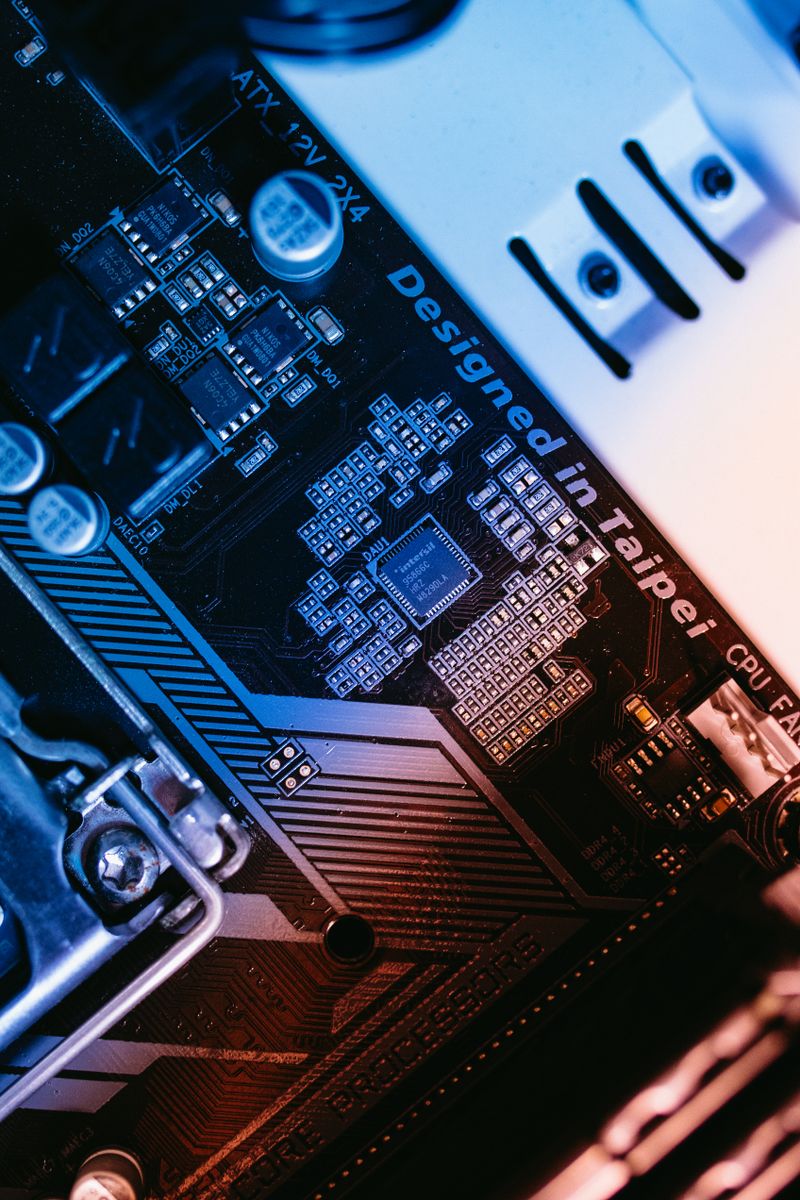
onsemi is not a maker of the big AI processors themselves. It sells the power management chips, silicon carbide components, and voltage regulators that sit between the wall socket and the GPU — the parts that keep a rack of Nvidia accelerators fed with clean, stable electricity. As AI clusters grow from megawatt to gigawatt scale, that power tree has become almost as important as the processors at the end of it.
The company now expects AI data center revenue to more than double in 2026, an upgrade from its earlier "double" target. El-Khoury said growth spans the whole power chain, "ramping everything from the wall all to the XPU," and confirmed silicon carbide revenue in AI data center applications should grow nearly 60% this year.
The numbers back the shift. The "Other" end-market category, which includes AI data center, surged 34% sequentially to $400 million, and CFO Thad Trent called AI data center "the primary driver" of that growth. Power Solutions Group, the company's largest unit, grew 19% year over year to $829 million, while the Analog and Mixed-Signal Group slipped 2% and Intelligent Sensing rose 7%.
The new customers: hyperscalers, then China
onsemi detailed an expanding list of AI wins on the call. It has broadened its role in the Nvidia MGX ecosystem to supply power systems for next-generation AI data centers, added content supporting AWS power supply and battery backup systems in U.S. hyperscaler deployments, and secured two power supply platform wins with Great Wall, a major supplier of power solutions for China's cloud and AI infrastructure market.
That China connection matters. El-Khoury said AI data center demand is primarily U.S.-driven today, with China emerging through the Great Wall wins. He also noted the company's automotive business is strongest in China, then the U.S., then Europe — and in China, onsemi's automotive revenue rose 13% in the first half of 2026 even as the country's vehicle market fell 4%, helped by content wins at Geely, Zeekr, and Xiaomi. In the U.S., the company added power content on Rivian's R2 platform, with MOSFETs supporting the zonal controller architecture and silicon carbide in the onboard charging system.
What happens to carmakers
The uncomfortable part for the auto industry is the order of operations. When asked directly whether prioritizing AI data center shipments hurt other end markets, El-Khoury conceded the point: "We did shift some — not just automotive specifically — we did prioritize AI data center that took away from our other businesses in the short term as manufacturing catches up."
He framed it as a temporary allocation issue that should normalize in the third and fourth quarters. Automotive revenue still grew 7% year over year to $781 million, and industrial revenue rose 4% to $423 million, so the damage so far is limited. But the episode is a warning sign for an industry that has spent two years worried about chip supply: when a chipmaker's fastest-growing customer is a hyperscaler with an open checkbook, a car plant in Michigan or Stuttgart waits its turn.
Margins are climbing as factories fill up
The other big story in the quarter was margin. Non-GAAP gross margin expanded for the fourth consecutive quarter, rising 80 basis points to 39.3%, as factory utilization jumped to 83% from 77%. CFO Thad Trent said each point of utilization adds 25 to 30 basis points of gross margin, with the full benefit showing up in the fourth quarter.
For the third quarter, onsemi guided revenue of $1.65 billion to $1.75 billion, non-GAAP gross margin of 40% to 42%, and non-GAAP EPS of $0.81 to $0.93. At the midpoint, EPS growth would outpace revenue growth by nearly three times.
The margin story comes with a cost warning. Trent said the company is seeing rising input costs in raw materials and external manufacturing and is implementing a second round of price increases — across all markets, including automotive — to offset them. He also confirmed the final $35 million of planned non-core revenue exits were completed in the quarter, bringing cumulative exits to roughly $900 million, with the Mountain Top and Philippines fab divestitures expected to deliver about $35 million in annualized savings.
The bigger picture: who gets chips when supply is tight
The onsemi call is the clearest sign yet that AI infrastructure is climbing to the top of chipmakers' priority lists, and that the pecking order is starting to hurt traditional buyers. Power management is a less glamorous corner of the semiconductor industry than AI accelerators or memory, but it is where the shortage is now showing up — lead times are extending, orders are increasingly placed within lead time, and customers are escalating to get parts.
El-Khoury said full utilization sits around 92% to 93%, and revenue would need to rise another 25% to 30% before capacity becomes a limiting factor. On content per rack, he put the current figure at about $15,000 per rack, roughly 70% medium and low voltage and 30% high voltage, moving toward $115,000 per rack as 800-volt DC distribution ramps in late 2027 or early 2028.
The AI data center market's total addressable market is now pegged at roughly $50 billion by 2030, up from $12 billion, according to the company. For a chipmaker that spent years betting on electric vehicles and industrial automation, the pivot is a big one. The question for automakers is how long they stay second in line.
The company also expects its Synaptics acquisition to close in mid-2027, which El-Khoury said will be accretive to gross margins.
Why the chips are going to servers first
None of this happens in isolation. The earnings call transcript shows analysts pressing on the same question all morning: how does a company that built its reputation on automotive power chips keep every customer happy when AI is the fastest-growing line? The answer, spelled out repeatedly, is that it cannot — at least not until it adds capacity.
Trent put a number on the pressure. External demand for power management chips is climbing so fast that the company's own factories, running near capacity at around 83% utilization in the quarter, cannot absorb all of it, and second-round price increases are going out to offset rising raw material and manufacturing costs. He said the company sees no evidence of customers building inventory, and that shipments are tracking end demand — a signal that the AI streak is real demand, not a stockpiling play.
The shift also reflects a years-long bet paying off. onsemi spent much of its recent history arguing that silicon carbide and power semiconductors would ride the electrification wave, from EVs to solar inverters to grid storage. That business is still growing — energy storage system revenue is expected to rise about 40% this year, helped by North American microgrid customers, and the company is sampling a 500-kilowatt hybrid module it calls the highest power density platform of its kind. But the surprise is that the fastest growth is now coming from racks of servers, not from electric cars.
The road back for automotive
For auto buyers, the near-term math is a waiting game. onsemi expects utilization to be flat to slightly higher in the third quarter, with the full margin benefit landing in the fourth quarter, and El-Khoury said supply should improve during the second half of the year as manufacturing catches up. The company guided third-quarter revenue to $1.65 billion to $1.75 billion, above the $1.60 billion it just posted.
The longer-term read is rosier for carmakers. onsemi sees the EV power component market roughly doubling to $63 billion, pulled by wider silicon carbide adoption, hybrids, and zonal electrical architectures — the same trend that put its parts on Rivian's R2 and into Zeekr, Geely, and Xiaomi cars in China. In the meantime, the ordering at the front of the line now belongs to whatever customer is paying the most per watt. More semiconductor coverage: AI memory shortage, data center power, and EV silicon carbide.