AI demand pulls global fab capacity to a record high
The global semiconductor industry is set to add capacity this year at the fastest pace in its history, with production rising 6% in 2024 to a record 33.7 million wafers per month, SEMI announced in its World Fab Forecast report. The expansion would mark a first post-pandemic catch-up in output, driven by surging demand for chips that run artificial intelligence models.
Leading-edge capacity for 5nm nodes and below is expected to grow 13% in 2024, a jump largely powered by generative AI training and inference in data centers. Intel, Samsung, and TSMC are all preparing to start 2nm Gate-All-Around chip production, which SEMI expects to lift leading-edge growth by another 17% in 2025.
TSMC has taken the lead on advanced logic nodes for AI accelerators, according to industry estimates. Samsung and Intel are expanding their own advanced capacity in response.
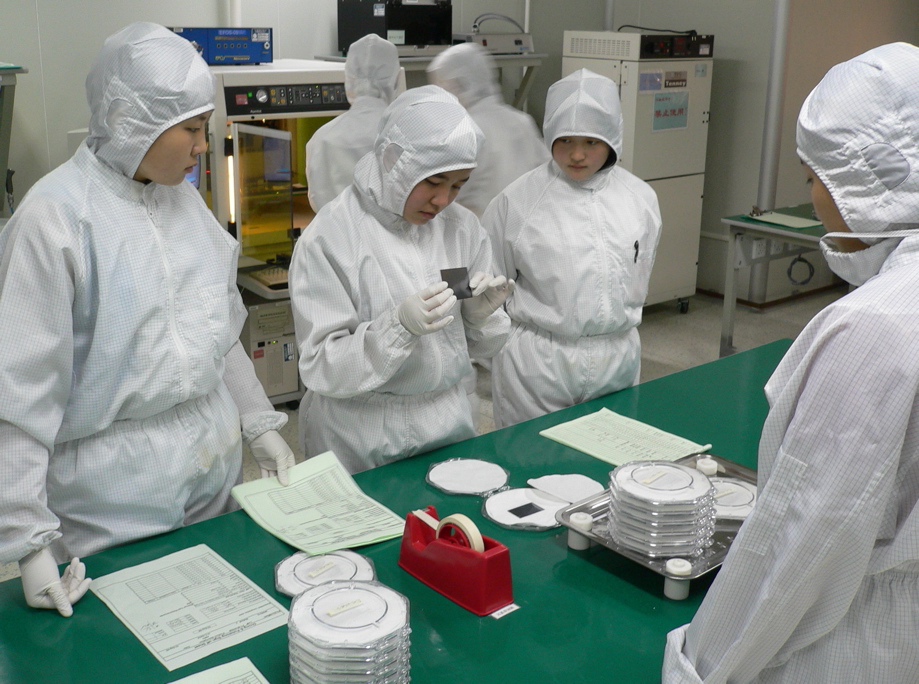
The cleanroom suits you see in these photos are not costume. Workers wear full protective gear before entering a fabrication suite, because a single particle can ruin a wafer batch. The sealed air filters behind those suits are what allow chipmakers to stack more layers onto every new chip.
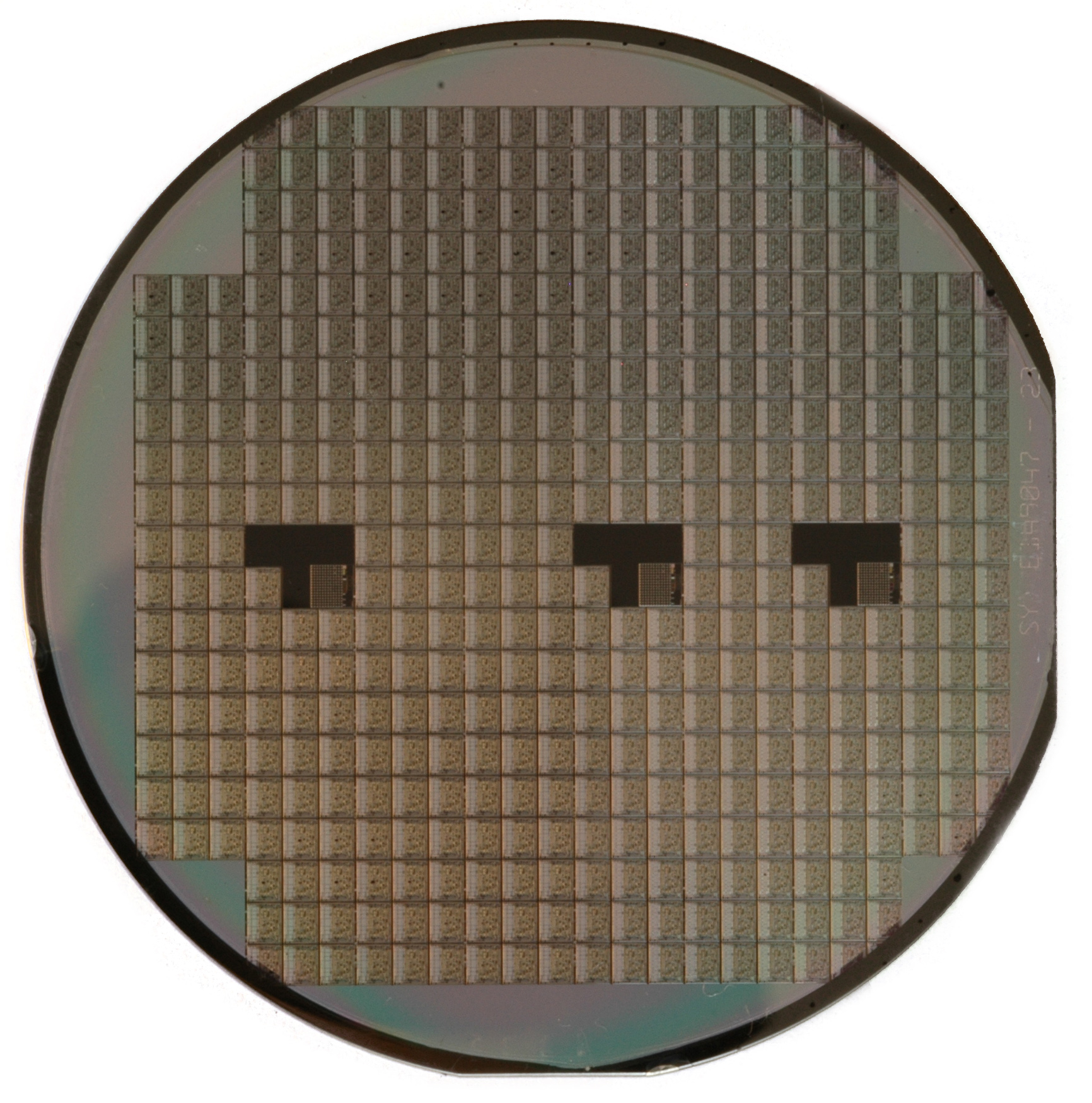
The silicon wafer shown here has passed through dozens of deposition and etch steps. Each layer adds circuits that will eventually become part of a processor or memory chip. The precision required is measured in nanometers, and the cost of a single defect compounds across the entire production chain.
China expands capacity despite export pressure
Chinese chipmakers are projected to add 14% to their capacity this year, reaching 10.1 million wafers per month, according to SEMI data. The figure represents nearly a third of the industry's global total, up from 8.85 million wpm in 2024.
The projection carries real stakes right now. The region has used export control pressure as a reason to direct capital toward domestic fabs, with foundry suppliers Huahong Group, Nexchip, Sien Integrated, and SMIC plus DRAM maker CXMT all pouring investment into new capacity.
Industry observers point to a different driver. China's AI ambitions have pushed state-backed capital into advanced logic, even when overseas tools remain restricted. The build-out is visible in new equipment orders placed with Japanese and European suppliers.
AI chips reshape the memory market
The memory sector is seeing its own surge. High-bandwidth memory demand from AI servers pushed leading DRAM makers to expand, with each HBM stack now integrating 8 to 12 dice. DRAM capacity is expected to rise 9% in both 2024 and 2025, while the 3D NAND market stays weak, with no growth forecast for 2024 and a 5% gain expected in 2025.
AI is also pushing DRAM content higher in consumer devices. The rise of AI in edge devices will lift smartphone memory from 8GB to 12GB, and AI assistant laptops will need at least 16GB of DRAM.
The AI training clusters under construction now will need far more memory per server than current racks contain. The next generation of data centers is being designed with this assumption already embedded in the building plan.
Export controls have reshaped trade since 2018
The U.S. government has tightened export controls on advanced semiconductors since 2018, adding layers in 2024 and 2025 that target advanced packaging and high-bandwidth memory. The Congressional Research Service report R48642, updated in September 2025, maps the timeline of those actions.
Nvidia's CEO Jensen Huang said in May 2025 that U.S. chip restrictions had cut the company's China market share nearly in half, according to CNBC. Nvidia and AMD have also agreed to pay the U.S. government 15% of AI chip sales to China, reporting by The Washington Post showed in August 2025.
Reuters has covered the shifting enforcement timeline closely, reporting on how license exceptions and compliance reviews have become central to the debate. The rules are not static, and firms now plan for a regulatory environment that shifts faster than a standard product cycle.
Capacity building keeps the AI engine running
The new output would lift global fab capacity to roughly 34.4 million wpm by late 2025, SEMI estimates, keeping the industry's expansion on track even as the world's two largest chip markets remain split by export controls.
The forward-looking test now is whether China's domestic fabs can turn their current share of new capacity into a durable lead, or whether the gap between the two halves of the market narrows as U.S. restrictions face legal and diplomatic pushback.
Taiwan's 5.8 million wpm forecast for 2025 reflects that tension. Its growth is modest, but the strategic importance of its foundries has never been larger. Any disruption to the supply chain in that region would cascade through the entire AI hardware market within weeks.
The supply chain is a bet on electricity
The semiconductor industry treats fab capacity as a long bet. Equipment orders arrive two to three years before a new wafer starts. The 6% growth forecast for 2024 assumed those bets were already in motion. The 7% forecast for 2025 assumes customers will keep paying.
That assumption is the real story behind the numbers. AI companies have committed to multi-billion dollar clusters that need far more supply than current fabs can deliver. The shortage is not about design talent or funding. It is about cleanrooms, tools, and time.
Fab build-outs take years to complete. A new facility often breaks ground two years before its first wafer, then spends another two or three years qualifying tools before the first chip can ship. The timeline is fixed, and the demand is not waiting.
The question now is whether the next round of equipment deliveries will arrive before the next wave of AI accelerators, or whether the industry's expansion timeline will slip again. That makes this a core item for the semiconductors desk on this site.
The industry now spends roughly $100 billion per year on semiconductor equipment alone, according to industry estimates. That figure excludes the cost of facilities, labor, and materials, meaning the real capital commitment is far larger. Each new fab can cost $10 billion to $20 billion to build. The bet is enormous, and the payoff depends on whether AI demand stays above the current growth curve.