French Startup's 40-Gram Drone Just Pulled Off the First Autonomous Air-to-Air Kill of a Flying Insect
A Y Combinator-backed French company says its palm-sized drone has, for the first time, tracked and destroyed a flying insect in mid-air with no human at the controls. Mosquitoes are next on the target list.
Tornyol, founded by Clovis Piedallu and Alex Toussaint, announced in July 2026 that its 40-gram micro-drone achieved the first autonomous "air-to-air" kill of a flying insect — a moth — captured on video and reported by Tom's Hardware and Interesting Engineering. The stated end goal is blunter: clear backyards and, eventually, whole neighborhoods of mosquitoes, at a fraction of the cost of today's control programs.
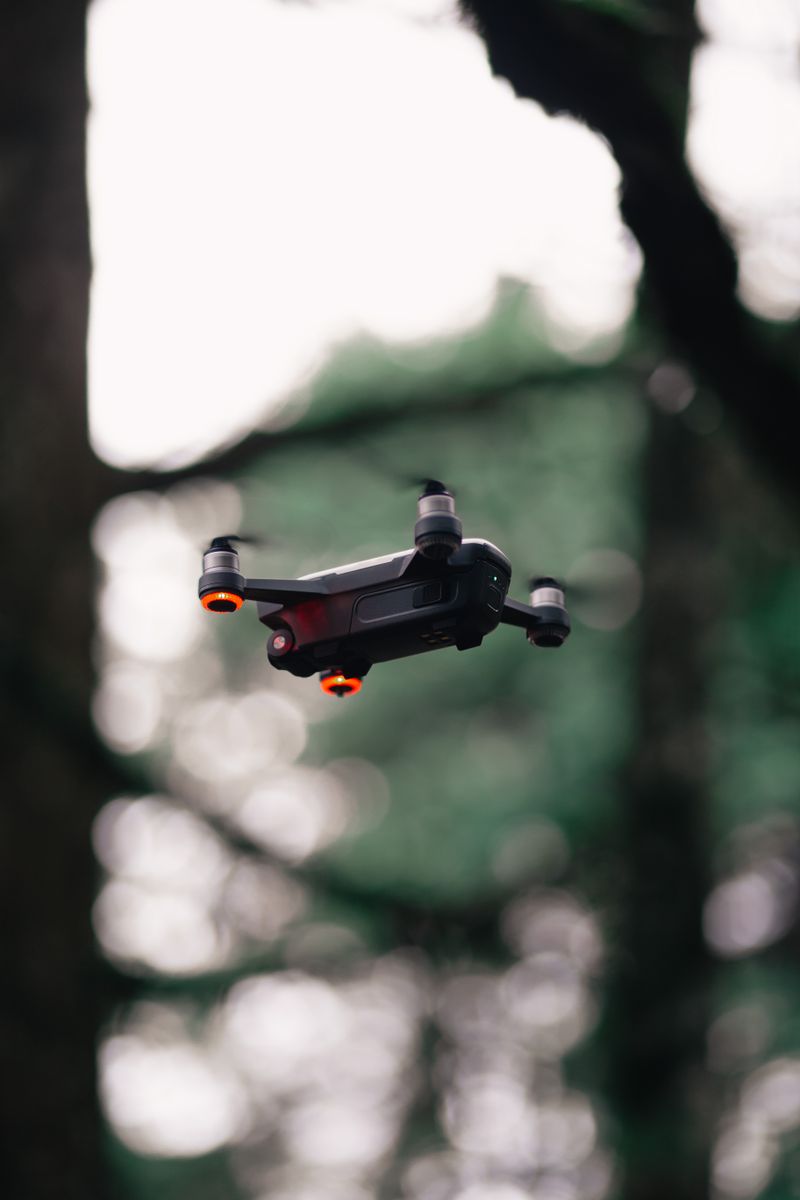
A 40-gram hunter takes its first kill
The drone itself is unremarkable to look at. It's a "tinywhoop" — the kind of lightweight, shielded-rotor quadcopter hobbyists fly indoors for fun. What Tornyol changed is everything around it: the sensing, the software, and the decision to fly the thing straight into a bug.
Footage shared by the team shows the craft locking onto a moth and intercepting it in the air. Tornyol frames the moth as a proof step. The real quarry is the mosquito, a pest that the founders say kills roughly 700,000 people a year and sickens about 700 million, with some 4 billion people exposed to dengue risk.
That scale is the reason the company exists. Instead of spraying chemicals or handing out bed nets, Tornyol wants a small, silent, always-on drone that picks off mosquitoes one at a time, around the clock.
How a parking sensor became a mosquito radar
The trick is hearing the insect before you can see it. Tornyol built an ultrasonic phased-array sonar out of cheap, off-the-shelf parts: the same HC-SR04 transmitters found in Arduino kits and the ultrasonic "parking assist" sensors bolted onto cars, paired with an array of smartphone microphones.
The system fires an ultrasonic pulse, then listens. As a mosquito beats its wings, the motion creates a wobbling Doppler shift in the returning echo. Plot that shift over time and you get a spectrogram — a kind of acoustic fingerprint. Tornyol says each species, and even each sex, leaves a distinct two-dimensional signature, so the drone can tell what it's chasing and whether it matters.
Early versions ran on a board with a Xilinx XC7A100T FPGA and 380 PDM microphones. The team has since shrunk the electronics onto a miniaturized processor board, now in fabrication, to fit the weight budget of a 40-gram airframe.
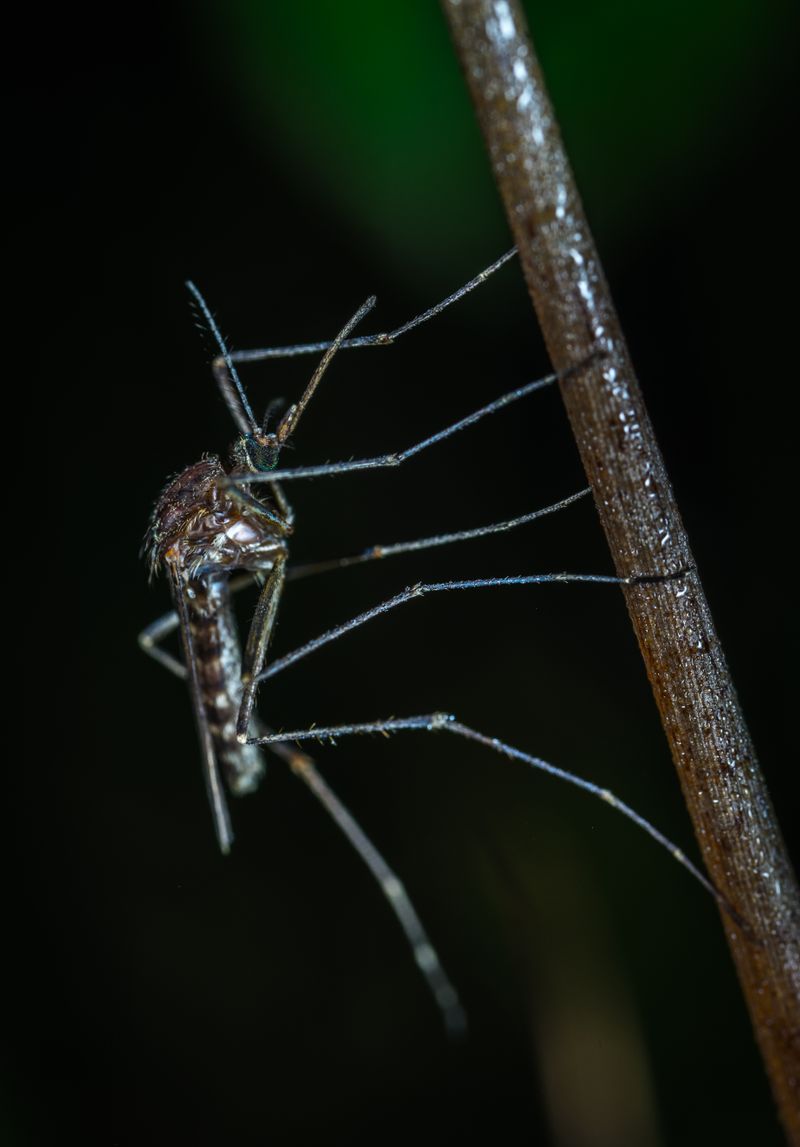
From napkin math to a YC-backed bet
Piedallu and Toussaint did not start with a venture-scale plan. Toussaint had spent years tinkering with ultrasonic sonars — he built an early air-gapped phased-array scanner as a personal project — and later worked on navigation and control at MBDA, a UK-French missile systems supplier. The mosquito idea began, in his own telling, as a "stupid" joke between friends.
A back-of-the-envelope calculation suggested the approach could actually work, and that was enough to pull in a $28,000 grant backed by Scott Alexander and Vitalik Buterin through the Manifund platform, plus a wave of online attention. Tornyol then entered Y Combinator, where it now lists itself under drones, hardware, and robotics.
The company's pitch rests on economics as much as engineering. Because the airframe is a near-commodity toy drone, Tornyol claims it could drop the cost of mosquito control by as much as 100 times. The headline claim: ten 40-gram drones could clear a square kilometer of land.
The malaria math behind the mission
Why chase a single insect with a flying robot? The numbers Tornyol cites are stark. Mosquito-borne illness sits among the world's heaviest infectious-disease burdens, and the toll falls hardest on tropical and subtropical countries — including Indonesia, where dengue surges seasonally and strains clinics year after year.
Conventional defense mixes insecticide spraying, larval source control, and bed nets. Each works, and each carries downsides: chemical resistance builds up, sprays reach beyond the target, and nets demand constant distribution and compliance. A silent, chemical-free hunter that runs all night is a different shape of tool — one aimed at the moment a mosquito is actually in the air and looking for a meal.
Tornyol is selling the first version as a consumer product: a micro-drone plus a base station that patrols a garden 24/7 and clears the zone of mosquitoes. The company asks $100 as a refundable reservation and quotes a $50-per-month service once units ship.
What still has to work
Tornyol is candid that the hardest part remains ahead. On its YC launch page, the founders say most subsystems "are working in isolation" and that the team is pushing to make them all work together. They report killing mosquitoes in simulation and were, at the time of writing, still working toward reliable kills in the real world. A patent is pending, which is why some details stay unpublished.
Field performance is a different problem from a controlled demo. Wind, rain, competing insects, and the simple difficulty of finding a faint acoustic target against a noisy backyard all stand between a video of one moth and a product that can promise mosquito-free evenings. The team also has to prove the drone avoids walls and people while it hunts.
Those caveats matter. Plenty of insect-control gadgets have promised more than they delivered. Tornyol's edge is that its core parts — microphones, ultrasonic sensors, and small drones — are already mass-produced and cheap, so the bet is about software and integration rather than inventing new hardware.
Where this fits in the wider drone push
The milestone lands as drones move from novelty to infrastructure across every category this newsroom covers. Regulators in the United States opened a scaled path for beyond-visual-line-of-sight delivery flights this month, and warehouse and logistics operators keep adding autonomous mobile robots to move goods. Tornyol's work sits at the small, smart end of that same trend: put just enough sensing and control on a tiny, cheap airframe to do one job well.
The acoustic classification behind it also leans on the same machine-learning and signal-processing muscle that powers the broader AI wave, while its miniaturized FPGA and microphone array are a neat example of how commodity semiconductor parts get repurposed for new robots.
None of that guarantees Tornyol will ship a garden guardian that lives up to the demo. But a 40-gram drone that can hear a mosquito and fly into it is a concrete step past the slide-deck phase of "smart" pest control — and a reminder that the most useful robots this year may be the small ones with a narrow, boring job.
Tornyol still has to prove the kill holds up outside the lab. If it does, the humble mosquito may have met a patient, tireless, and very small opponent.
Sources: Tornyol (tornyol.com), the company's Y Combinator launch post (ycombinator.com/launches), and reporting from Tom's Hardware.
More on the category: Robotics & Drones · AI · Semiconductors