Humanoids, Drones, and Logistics Automation Signal a Busy Second Half of 2026
Enterprise robotics is moving faster in mid-2026 than most forecasts expected. The through-line across the recent wave of announcements is simple: machines that sense and act are leaving demos and entering warehouses, loading docks, and test centers where they are measured by throughput, not press releases. The shift from spectacle to line item is the milestone that matters more than any single headline, because a technology that appears in a budget is a technology that ships.
At MODEX 2026, a Drone-as-a-Service platform showed an AI-powered drone flying regular inventory sweeps inside a working warehouse, counting stock, flagging misplaced pallets, and logging exceptions without a human climbing a forklift. The pitch is speed, accuracy, and safety, and in a tight labor market those three words close deals. A flying sensor that turns a day of manual counting into a ten-minute autonomous sweep is a product, not a prototype, and procurement teams noticed.
Humanoids move from video to test centers
The humanoid story is shifting from viral clips to controlled deployments. Several operators have stood up dedicated test centers where bipedal robots run repeatable tasks, moving totes, tending machines, and basic sortation, under supervision, with the data feeding faster iteration. The gap between a polished demo and a robot that works a full shift unattended remains wide, but the number of organizations treating it as an engineering program rather than a spectacle is the real change, and engineering programs scale where spectacles fade.
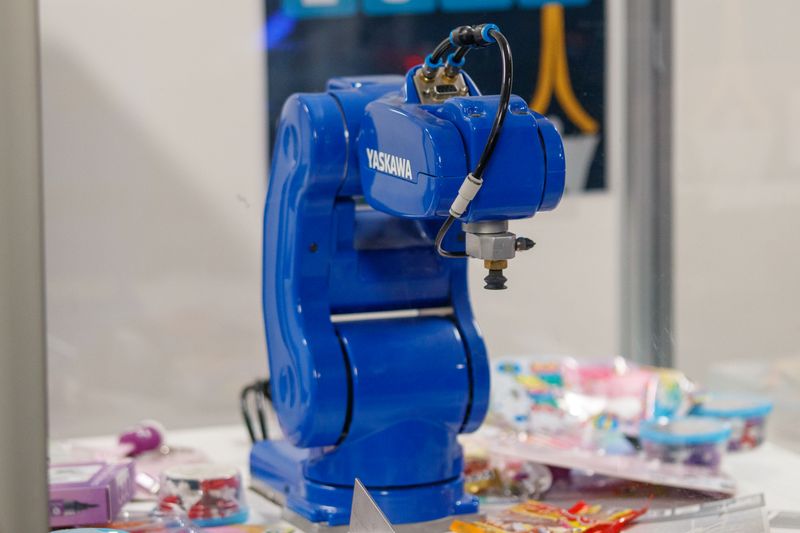
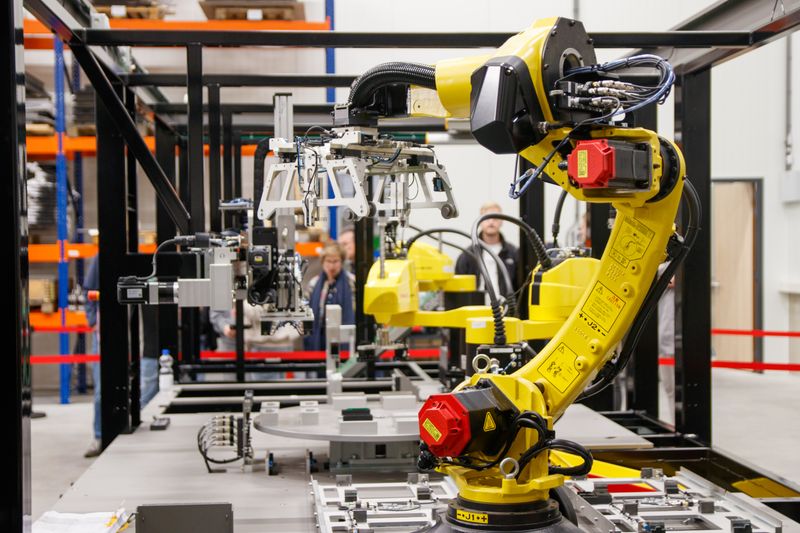
Deloitte's 2026 predictions for the sector put the compelling factory-floor vision, humanoids that see and act with human-like judgment, out at 2030 or beyond, while arguing the nearer-term wins are narrower and more boring: fixed industrial arms, mobile manipulators, and drones doing specific, well-bounded jobs reliably. That framing is useful. The flashy robot gets the views; the boring one gets the purchase order, and the purchase order is what builds a market.
Drones scale in the commercial lane
Commercial drone use is the quiet success. Beyond warehouses, operators are scaling aerial inspection for energy, agriculture, and logistics yards, where a single autonomous flight replaces hours of manual checking. The constraint is less the airframe than the software stack, the autonomy, the collision avoidance, and the backend that turns flight data into a work order that a human actually acts on. The hardware matured first; the software is now catching up, and the software is where the value lives.
This is where AI meets robotics most concretely. A drone that merely records is a camera with rotors; a drone that identifies a fault, routes a ticket, and returns to charge is a worker. The 2026 cohort is increasingly the latter, and the difference is the software, not the airframe. As models get smaller and run on the edge, the drone that thinks is finally affordable to field at scale.
Logistics automation goes end to end
The third pillar is inbound and outbound logistics, where robotics is knitting together picking, packing, and transport handoffs. The appeal is resilience: a partially automated fulfillment line keeps moving when staffing dips, and it generates the data that makes the next optimization obvious. For a retailer juggling seasonal spikes, that resilience is worth real money, because a missed peak is a lost year, not a missed quarter.
For buyers, the pattern is consistent. Start with a bounded task, prove the return, then expand. The firms winning in 2026 are not the ones with the flashiest robot; they are the ones who picked a job, measured it, and shipped the result. The technology is mature enough to deliver, provided the scope is honest and the success metric is a number on a dashboard rather than a clip on a feed.
The open questions
Two things will decide how far this goes. One is autonomy that holds up outside the lab, because lighting, weather, and messy real sites break brittle systems that look perfect on a stage. The other is integration: a robot is only as useful as the warehouse management system it reports to, and siloed machines create siloed data that no one acts on. Both are solvable, but neither is solved by the robot alone.
The second half of 2026 looks busy precisely because the technology stopped being a promise and started being a line item. Vendors that treat the machine as the product will stall; those that treat the workflow as the product will scale, and the market is learning to tell them apart fast enough that the laggards will feel it in their pipelines. Our Robotics & Drones section tracks these deployments, and IoT covers the sensors that feed them.
The labor question
Automation that works raises the oldest question in the field: what happens to the people whose tasks the machines take. The honest answer in 2026 is mixed. Repetitive, injury-prone, and hard-to-staff roles are the first to go, and warehouses report real relief in exactly those slots. But each deployment also creates roles for the people who run, maintain, and integrate the systems. The firms that retrain rather than replace are the ones building the workforce the next phase needs, and the ones that don't are storing up a problem for later.
The politics of that choice will shape adoption speed. A robot that demonstrably frees a worker for a better job sells itself; one that simply deletes a paycheck meets resistance that no demo overcomes. The winners in 2026 are learning to tell those stories with payroll data, not promises, and the market is starting to price the difference.
The measure, in the end, is not how many robots ship but how many workers move up. A sector that automates itself into a smaller, better-paid workforce earns its social license; one that automates into unemployment earns a backlash. The technology is ready to do either, and the choice is managerial, not mechanical. The companies that get this right will be the ones telling a story backed by promotion records, not press releases. The ones that get it wrong will discover that automation without a workforce plan is just unemployment with better optics, and the market eventually prices that too.