FAA Part 108 Rule Opens U.S. Skies to Scaled Drone Delivery This July
The Federal Aviation Administration's Part 108 rule, the first standing federal framework for beyond-visual-line-of-sight (BVLOS) drone delivery, began phasing in this month. For the first time, operators can certify package flights at scale without negotiating one-off waivers. The change ends a patchwork of exemptions that has governed commercial drones since 2019, and it sets a tiered certification regime built around aircraft capability, population density, and operational risk.
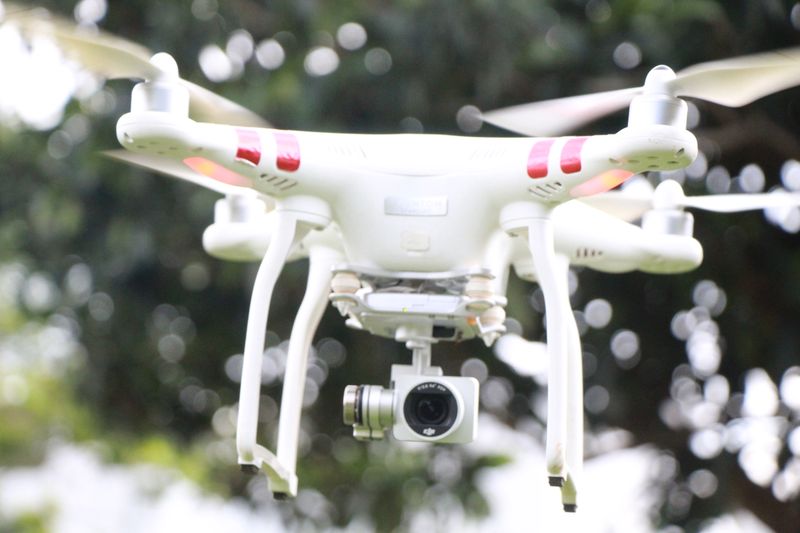
Category 2 sits at the center of the rollout. That tier covers routine commercial package delivery at scale, and the FAA has signaled it will be the workhorse path for retail and healthcare logistics runs. Operators that show airspace traffic management capability, meet detect-and-avoid requirements, and hold a clean safety record can certify under the new rule instead of begging for bespoke exemptions. State and local land-use approvals still gate how fast any one operator can blanket a metro area.
What Part 108 actually changes
Before July, almost every long-range delivery flight ran on a waiver. Zipline, Wing, and Amazon each carved out permission through Part 135 carrier certificates and repeated exemptions. That model worked for pilots, but it did not scale. Part 108 turns the ad-hoc process into a standardized one with three tiers, letting a qualified operator expand routes without re-litigating every corridor.
The three tiers map to risk. Category 1 fits lower-exposure flights; Category 2 is the routine package-delivery workhorse; Category 3 covers higher-risk operations that need more proof. An operator's aircraft capability, the population density below the route, and the operational risk all feed the tier it lands in. The design means a suburban pharmacy run and a dense urban corridor are not held to the same bar.
The rule also bakes in community review. The FAA Reauthorization Act of 2024 pushed the agency to stand up a Community Collaboration Program and to prepare programmatic environmental reviews for package delivery. Drone "hubs" — the takeoff and landing pads — must still clear local zoning and land-use rules. The FAA picks airspace; cities pick where the pads go.
How the drones avoid each other
Part 108 puts real weight on detect-and-avoid. Zipline's onboard system uses ADS-B transponders that flag crewed aircraft nearby, plus an acoustic array of small microphones that hears other aircraft up to two miles out in every direction, even at night and in rough weather. The company says it runs more than 500 preflight safety checks and builds redundant flight-critical systems into each airframe.
Those details matter because Category 2 certification hinges on proving that capability, not just promising it. An operator that cannot show continuous, real-time airspace monitoring will stay on the waiver track. The FAA's bet is that uniform standards beat a stack of one-off deals.
Zipline's head start
South San Francisco-based Zipline already holds the FAA's first approval for an airspace traffic management system built for drone delivery, plus Part 135 authority to fly packages beyond visual line of sight. The company has flown more than 50 million commercial autonomous miles and completed over 750,000 deliveries without a major safety incident, figures it shared after the latest approval. It also holds Part 135 certification for the longest-range drone delivery flights approved in the U.S.
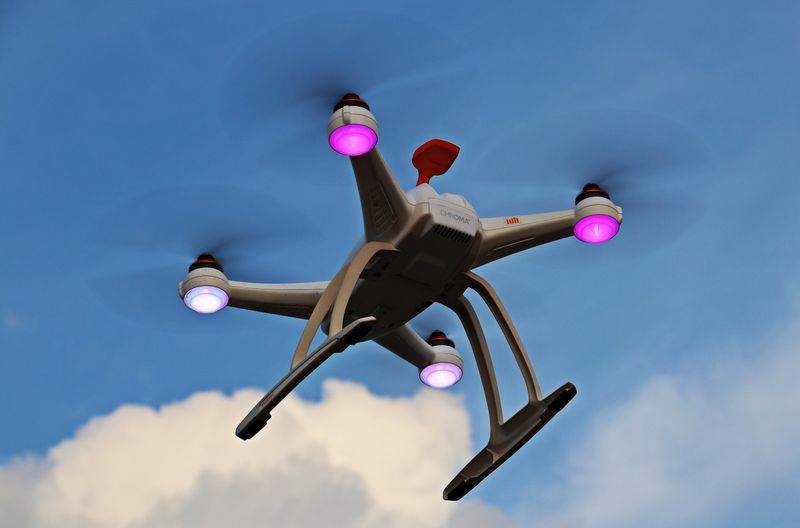
Zipline plans to scale under Part 108 in the Dallas-Fort Worth area and the Salt Lake City metro. The company's CEO and co-founder, Keller Rinaudo Cliffton, argues the new path lets Zipline hubs serve hundreds of thousands of homes a year instead of a few thousand. He frames today's deliveries as reliant on 4,000-pound gas trucks with human drivers, which he calls expensive, slow, and bad for the environment.
The company has also been busy on the hiring front. This month it added executives pulled from Tesla, Waymo, and Uber, and it said it has passed 2.5 million deliveries worldwide while launching service in Austin and Cleveland. Cleveland Clinic, meanwhile, began prescription drone delivery with Zipline in the Beachwood area, a sign the healthcare side of the market is moving as fast as the retail side. Zipline runs at national scale in several countries and can fly up to 140 miles round trip; it started U.S. service in 2020 hauling medical supplies during the pandemic.
Wing, Walmart and the retail race
Alphabet's Wing has delivered packages in Dallas-Fort Worth since 2019 under Part 135 authority and now partners with Walmart and DoorDash. Last year the FAA cleared Wing and Zipline to operate at the same time without visual observers across overlapping suburbs — a preview of the Part 108 era. Wing has pushed into higher-payload aircraft to compete with Zipline on grocery and small-parcel runs.
Walmart's reliance on Wing keeps widening. The pair doubled Houston coverage in early July, adding eight stores to the greater Houston program. That expansion shows how a standing rule, not a one-off waiver, lets a retailer add zones week by week. For Walmart, shorter hops from neighborhood stores fit a model built on density rather than distance.
Amazon and the last-mile push
Amazon's Prime Air is the third name in the race. The unit flies its MK30 drone and has locked in a string of new metros this month: Cleveland, Baton Rouge — Louisiana's first drone delivery city — and more sites around its existing footprints. Each launch still needs local sign-off, but Part 108 trims the federal side of the paperwork.
Prime Air's model leans on backyards and short hops from small fulfillment sites. Amazon has not published per-city delivery counts, but the steady cadence of metro announcements signals confidence that the regulatory floor is now firm enough to plan against. The MK30's quieter rotor design also speaks to the noise problem that has slowed drone programs in some towns.
What comes next for cities
Part 108 is expected to draw a wave of new entrants that sat out the waiver years. Matternet and a long tail of last-mile startups have applications staged for the first certification window. The real bottleneck moves from Washington to city hall: where pads can sit, how noise gets managed, and which neighborhoods see flights first. The FAA's BEYOND program, which studied community engagement for drone integration, feeds directly into this local stage.
For readers tracking the broader automation wave, our earlier roundup on humanoids, drones, and logistics automation maps how ground and air robots are converging on the same warehouses. More context lives in our Robotics & Drones section.
The FAA's own guidance on environmental review for drone operations lays out the NEPA steps every major proposal must clear. The agency's advanced operations page details the categorical exclusions, environmental assessments, and impact statements now in play. Zipline publishes its safety and operations record there as well.
Noise remains the public's top concern, the FAA notes, and programmatic reviews will shape how loud any given corridor gets. Operators that engage communities early tend to win broader acceptance and hit fewer snags at launch. The first certification window is open, and the skies over U.S. suburbs are about to get busier.