A Massachusetts startup has signed its first battery deal outside the United States, and the chemistry inside those cells is about as plain as it gets: iron, water, and air. Form Energy said on March 17 that it will build a 10-megawatt, 1,000-megawatt-hour iron-air storage system in the northwest of Ireland with FuturEnergy Ireland, a clean-energy developer. The project is small by power standards but enormous by duration. It is designed to discharge for 100 hours on a single charge.
The agreement marks the company's first international deployment and the clearest sign yet that long-duration storage is moving from conference slides to concrete foundations. Ireland expects the system online around 2029.
How an Iron-Air Battery Actually Works
Conventional lithium-ion cells shuffle lithium ions between layers of metal and carbon. Form Energy's cells do something closer to letting iron slowly rust. During discharge, iron reacts with oxygen from the air to form iron oxide, releasing electrons. During charging, electricity reverses the reaction, turning the rust back into iron. The company describes the process as "reversible rusting."
That trick trades energy density for cost. An iron-air battery is far too heavy and weak for a car, but it can sit beside a wind farm and soak up surplus power for days at a stretch. Form Energy has said it targets capital costs on the order of $20 per kilowatt-hour of stored energy, roughly a tenth of what lithium-ion packs cost for the same capacity, though at a much slower discharge rate.
The materials are the point. Iron is the fourth-most-abundant element in Earth's crust, and the cells need no nickel, cobalt, or lithium. For grid operators worried about supply chains, that is a different kind of security than a chemistry built on mined metals.
Ireland Bets on Multi-Day Storage
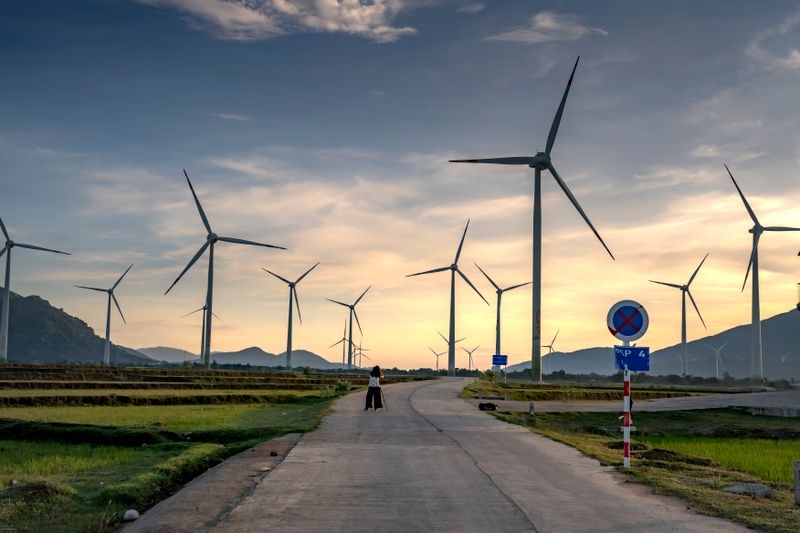
Ireland is an odd but logical first customer. The island runs one of the highest shares of wind power in the world, and on blustery days its grid sometimes makes more electricity than it can use. When that happens, operators pay wind farms to switch off, a waste of clean power that engineers call curtailment.
Ireland's 2024 Electricity Storage Policy Framework named long-duration storage as a tool for a clean, reliable grid by 2030. Form Energy estimates that adding multi-day storage to Ireland's 2030 portfolio could cut renewable curtailment and lower annual generation costs by more than 25 percent. Peter Lynch, chief executive of FuturEnergy Ireland, called the 100-hour system a way to "deliver large volumes of clean power across multiple days" while easing local grid congestion.
The signing ceremony was held on St. Patrick's Day at Form Energy's Somerville headquarters, with Ireland's Minister for Foreign Affairs and Trade Helen McEntee and Massachusetts Lieutenant Governor Kim Driscoll in attendance. The symbolism was intentional: a transatlantic clean-energy handshake built on one of the oldest metals known to humans.
A Funding and Deployment Surge
The Ireland deal did not appear from nowhere. Form Energy has spent two years turning pilots into purchase orders. In October 2024 the company raised $405 million and announced a collaboration with GE Vernova, the power-equipment giant, while expanding a manufacturing plant in West Virginia. It has run a 1.5-megawatt, 150-megawatt-hour pilot with Great River Energy in Minnesota and has projects underway in Georgia, Maine, and California.
The biggest vote of confidence came from the data-center industry. In early 2026, Google agreed to pay about $1 billion for a 100-hour iron-air system, reported at roughly 300 megawatts, to help power a data center in Pine Island, Minnesota, according to Canary Media and other reporting. Tech firms are hunting for round-the-clock clean power to run AI workloads, and a battery that holds a charge for four days fits that need better than one that empties in four hours.
The pitch is simple. Solar and wind are cheap, but they only generate when the sun shines or the wind blows. A multi-day battery banks that cheap power and feeds it back through calm, cloudy stretches, smoothing out the gaps that shorter-duration storage cannot cover.
Why Long-Duration Storage Matters Now
The broader storage market is booming. The U.S. installed 9.7 gigawatt-hours of new storage capacity in the first quarter of 2026, the strongest opening quarter on record and a 32 percent jump from a year earlier, per the U.S. Energy Storage Market Outlook released by the Solar Energy Industries Association and Benchmark Mineral Intelligence. SEIA now expects more than 610 GWh of storage to be installed nationwide by 2030.
Most of that capacity still comes from lithium-ion, the same chemistry in phones and EVs. But lithium-ion is built for speed. It charges and discharges in hours and is priced for power, not for parking energy for days. As grids add more wind and solar, the valuable gap is the one that lasts through a still night or a week of weak wind, exactly the gap iron-air is designed to fill.
Data centers are pulling demand forward. SEIA noted that Google, Meta, and other tech firms have announced deals this year to buy tens of thousands of megawatt-hours of storage. "Energy storage is no longer just for backup, it's critical energy security infrastructure," said Shan Tomouk, BESS and Energy Lead at Benchmark Minerals.
The Road Ahead
Form Energy is not alone in chasing multi-day storage. Rivals are testing flow batteries, compressed air, and gravity-based systems. Each trades the fast response of lithium-ion for cheaper energy that sits idle most of the time. The verdict on iron-air will come from projects like the one in Ireland, where performance over years, not a press release, will decide whether reversible rusting can scale.
For readers tracking the wider field, our battery coverage has followed sodium-ion's move from lab to line and the standards race heating up across Asia. The storage story is no longer only about what goes inside an EV. It is about what sits next to a wind farm, hums quietly for a hundred hours, and costs less because it is made of iron. See more in our EV and Battery Tech sections.
Sources: Form Energy Ireland announcement, Utility Dive on the $405M raise and GE Vernova tie-up, SEIA Q1 2026 storage record, and Canary Media on the Google deal.