CXMT Weighs a Second Beijing Memory Fab as Its Record IPO Funds a Faster Expansion
China's ChangXin Memory Technologies is in talks to build a second memory-chip plant in Beijing, Reuters reported Monday, citing two people familiar with the plans. The proposed 12-inch DRAM fab would go up in Yizhuang, a technology district about 20 kilometers southeast of central Beijing, where CXMT already runs a facility that makes random-access memory chips.
The financing talks are with the Beijing Economic-Technological Development Area, the government-backed hub that runs Yizhuang. CXMT is asking for at least 60 million yuan, or roughly 8.9 million dollars, in support, and other state-owned technology companies have shown interest in joining. Sources caution the discussions are early and the size or shape of any package could still change.
A Record IPO Changed the Math
The timing is no accident. The talks began before CXMT's blockbuster Shanghai listing last week, when the company raised 57.92 billion yuan, about 8.6 billion dollars, at a valuation near 85.5 billion. Shares exploded 466 percent above the offer price on their July 27 debut, briefly making CXMT mainland China's most valuable listed company and pushing its market value toward 539 billion dollars. The stock has added roughly 13 percent since.
That listing was Asia's biggest IPO of the year, and it reset how investors think about Chinese memory. Demand for the offer was so strong that the shares nearly sextupled on day one, a move that stunned global markets and knocked Samsung and SK Hynix stocks lower the same week. For a company founded in 2016 and built under US export controls, the reception was a statement: state-backed chipmaking is no longer a sideshow in the world's second-largest economy.
That haul gives CXMT cash to chase an expansion plan it could not fully fund before. Reuters previously reported the company is building new plants in Shanghai and Hefei and has talked to other cities about additional capacity. Once those sites ramp, CXMT's monthly wafer capacity could more than double to 600,000 wafers or more, according to people familiar with the operations.
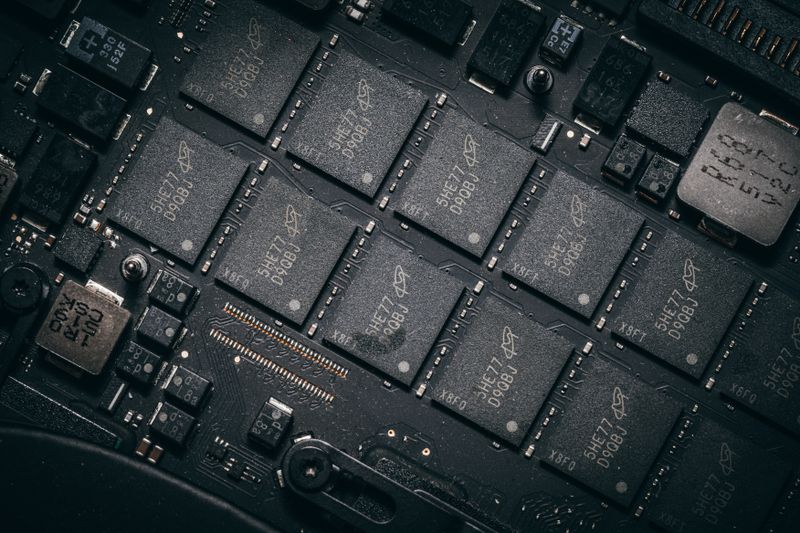
Today CXMT runs two 12-inch DRAM fabs in Hefei and one in Beijing, each capable of about 100,000 wafers a month. The company is the world's fourth-largest DRAM producer, though it remains far behind Samsung Electronics, SK Hynix, and Micron Technology, which together controlled close to 90 percent of the market in the first quarter, per Counterpoint Research.
Why Cities Are Fighting Over One Fab
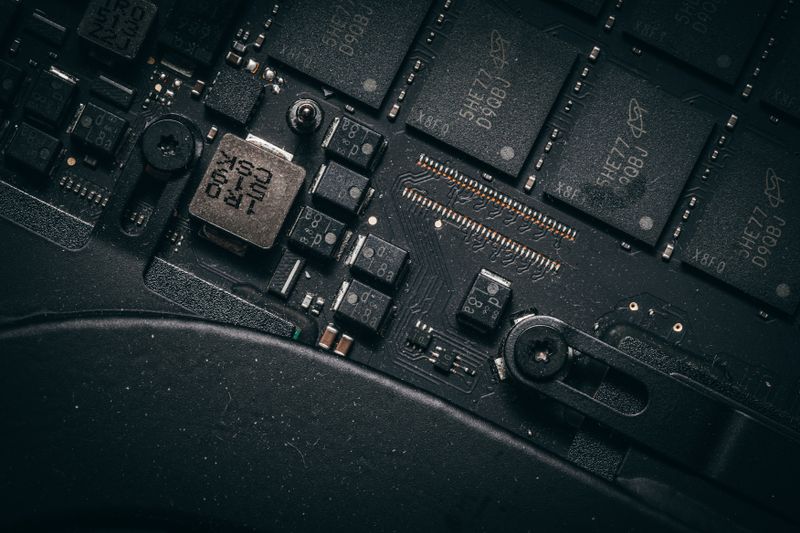
Yizhuang is already a semiconductor cluster. SMIC, the country's biggest contract chipmaker, has operations there, as does equipment maker Naura Technology and phone-and-EV giant Xiaomi. CXMT's existing Beijing fab, run by subsidiary Changxin Jidian, was set up in 2020 with backing from E-Town Capital, a state investment arm tied to the development zone, and its affiliate Beijing E-Town Technology.
The bidding reflects how much a single memory leader matters to local officials. Under the so-called Hefei model, Anhui's capital used state money to build CXMT into a strategic firm, and Beijing and Shanghai have since piled in with financing as they compete for the jobs, tax base, and prestige that come with its growth. A second Beijing fab would deepen the city's claim to the country's most valuable chip company at a time when Beijing wants to show self-sufficiency in semiconductors is more than a slogan.
The plant's planned capacity and total investment have not been disclosed. Industry observers note that a facility capable of leading-edge DRAM typically costs more than 10 billion dollars, so the 8.9 million in requested support is seed money next to the eventual bill. CXMT and the Beijing municipal government did not respond to requests for comment.
Pressure on Samsung, SK Hynix, and Micron
The expansion lands in the middle of a memory upcycle that has made CXMT the main worry for the established trio. Its DRAM revenue share climbed to about 8 percent in the first quarter, up from 3 percent a year earlier, according to Counterpoint, and within China its pricing power has grown to the point that it raised prices for customers including Huawei last month.
The timing is uncomfortable for the incumbents. Samsung and SK Hynix just posted record quarterly profits on AI memory demand, yet their shares were hammered in late July as investors fretted about an AI bubble and Chinese competition. SK Hynix fell as much as 30 percent over three days before a Friday rebound, and Samsung shed about 19 percent. CXMT's debut amplified the jitters: its shares tripled on day one while Samsung and SK Hynix stocks tumbled.
Analysts say the gap that matters is high-bandwidth memory, the ultra-fast chips inside AI accelerators. CXMT is still stabilizing 8-high HBM3 with yields below industry standard and sits roughly three to four years behind the Korean leaders, who are already sampling HBM4E. Standard DRAM is a different story, and that is where the new fabs aim.
The Catch: Equipment and Technology
CXMT cannot simply buy the best tools. US export controls bar it from advanced lithography and other leading-edge equipment, so the company has leaned on domestic suppliers where it can. That constraint shapes everything about the Beijing plan: the second fab will use whatever tooling is available to it, which in practice means it will chase volume in mainstream DRAM rather than the most advanced nodes.
Even so, capacity is the metric the market watches. Nomura projected earlier this year that CXMT could reach about 18 percent of global DRAM by 2028 if its expansion holds, a level that would make it a structural price-setter rather than a fringe player. The company's own messaging points the same way, with executives framing the build-out as a response to customers who want guaranteed supply in a market where shortages are expected to run through 2028.
There is also a political layer. Washington's export controls and the CHIPS Act subsidies are designed to slow Chinese memory progress, while Beijing answers with state capital and land. The Yizhuang talks show the counter-move is already in motion: when one city cannot fund the whole project, another will try.
The market context matters too. The same week CXMT's stock soared, more than a trillion dollars in value vanished from the world's biggest chip stocks as investors questioned whether AI infrastructure spending could keep pace with expectations. Nvidia, SK Hynix, Samsung, Micron, AMD, and TSMC each lost more than 100 billion dollars in market value in the selloff, according to CNBC's analysis of FactSet data. The Philadelphia semiconductor index, up 92 percent over the prior year, gave back nearly 20 percent in a month. Analysts called the drop a repricing of froth rather than a collapse in demand, but it underlined how nervous the sector has become exactly as CXMT pushes into new capacity.
For CXMT, the selloff is a sideshow. Its shares trade on Shanghai's STAR Market, where retail money and policy support have kept the rally alive, and its expansion is funded by state capital as much as by public investors. The company does not need global risk appetite to build fabs; it needs local government approval, land, and tools. All three appear to be lining up.
What to Watch
Three things will tell whether the Beijing fab becomes real. First, whether the development zone's support is approved and at what size, since a deal would signal official blessing for CXMT's multi-city strategy. Second, how fast the Shanghai and Hefei plants actually ramp, because the industry has seen Chinese capacity announcements outrun construction before. Third, whether CXMT can hold its pricing gains once the current shortage eases, which will determine if the extra wafers earn money or flood a market.
For now, the message from Yizhuang is simple: the company that raised Asia's biggest IPO of the year is spending like it plans to stay at the top table of memory makers. Samsung, SK Hynix, and Micron all know what that means.
Why the Fab Race Matters Beyond Memory
The Beijing talks are worth watching for reasons that go past DRAM prices. Every wafer CXMT produces with domestic tools is a data point in the broader US-China technology contest, and every successful ramp makes it harder for export controls to bite. The company has already shown what it can do under sanctions: it built working DRAM lines using mostly Chinese equipment, reached the world's fourth-largest spot, and priced some server modules above Samsung's comparable parts.
If the second Beijing fab materializes, it will also test how quickly China can repeat the Hefei model in other cities. The playbook is proven: a local government funds a strategic firm, the firm grows into a national flagship, and the city collects the jobs and the halo. Shanghai, Hefei, and now Beijing have all signed on. The question is whether the model scales without creating the oversupply that has punished memory makers in every past cycle.
The industry's history says be careful what you wish for. Memory has always been a boom-and-bust business, and the current shortage has drawn record investment from every corner: Samsung and SK Hynix are spending tens of billions on HBM and advanced DRAM, Micron is expanding, and now CXMT is adding fabs in three cities at once. When all that capacity comes online, prices will eventually soften. The winners will be the makers with the lowest costs and the strongest customer lock-in, which is exactly what CXMT's long-term supply agreements and state backing are meant to provide.
For the incumbents, the calculus is uncomfortable but clear. They can compete on technology, where HBM gives them years of runway, or they can compete on price, where a state-subsidized rival with 600,000 monthly wafers of planned capacity is a formidable opponent. Most analysts expect them to do a bit of both, which is another way of saying margins will be under pressure for years.
For more semiconductor industry coverage, see the Semiconductors section of news.jualin.id, or read our earlier look at CXMT's LPDDR6 push and the Doosan-SK Siltron wafer deal. The original report is Reuters' exclusive on the CXMT expansion, with additional detail from Entrepreneur Asia Pacific.