CXMT Overtakes Tencent as China's Most Valuable Company, Capping a Three-Week Surge for the DRAM Maker
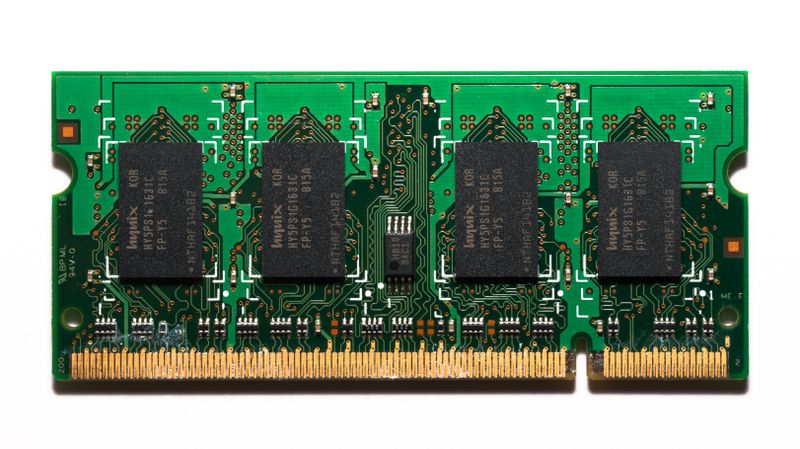
ChangXin Memory Technologies has become the most valuable Chinese company in the world, three weeks after its blockbuster Shanghai debut. The DRAM maker ended Thursday's session with a market capitalization of US$524 billion, nudging past Tencent, whose valuation slid to US$510 billion on growing worries about its AI spending. The crossover marks the moment investors decided that chips outrank clicks in China's stock market.
Shares of CXMT, which listed on Shanghai's STAR Market on July 27, fell 1.2 percent on Thursday and still ended ahead of Tencent. The gap widened Friday, when CXMT closed 4 percent higher at a valuation of roughly US$540.5 billion, according to LSEG data — putting it just behind Intel at US$552.6 billion and making it the world's 24th-most-valuable company. Nvidia tops that ranking at about US$5.5 trillion.
The milestone caps an extraordinary run for a company that did not exist a decade ago. CXMT was founded in 2016 in Hefei, the capital of Anhui province, and built its fabs with domestic equipment where possible because US export controls barred advanced foreign tools. Today it is the world's fourth-largest producer of random-access memory, behind Samsung Electronics, SK Hynix, and Micron, and the main supplier of homegrown DRAM for China's phone, PC, and server industries.
From 466 percent debut to the top of the mainland
The IPO itself was already historic. CXMT raised about US$8.6 billion on July 27 in an offering whose retail tranche was 212 times oversubscribed, and its shares closed 466 percent above the offer price on the first day. That debut made CXMT the first semiconductor firm to top mainland China's stock market in its 35-year history, and the rally has barely paused since. The stock is up another 8 percent after the initial surge.
Part of that momentum is mechanical. MSCI said in July it would add CXMT to its China All Shares Index, and the change took effect on August 10, forcing index funds to buy the stock. The inclusion gave foreign and domestic passive money a reason to hold a name that was previously impossible to index.
Bernstein analysts wrote this week that the IPO gives CXMT "much more cash to spend for capex," and the company plans to spend it. It has laid out a sixth mega-fab and a target of 30 percent of global DRAM output by 2030, a goal that would roughly quadruple its current share. Nomura expects CXMT's slice of global DRAM production to climb from about 10 percent to roughly 18 percent by the end of 2028.
The numbers behind the valuation are real, though the price tag is disputed. CXMT swung to an operating profit of 35.43 billion yuan (US$5.2 billion) in the first quarter, against a 2.83 billion yuan loss a year earlier, riding DRAM prices that have climbed through an extended memory shortage. It held 7.67 percent of the global DRAM market in 2025, according to sales figures in its IPO prospectus. Its US$524 billion valuation now sits at roughly half of Micron's US$1 trillion and about 60 percent of SK Hynix's US$880 billion.
Tencent's AI bill hands the crown to a supplier
The other side of the crossover is Tencent's stumble. The internet giant reported second-quarter revenue of RMB 204.8 billion (US$30.3 billion) on Wednesday, up 11 percent year over year, but capital expenditure climbed 176 percent to RMB 52.8 billion as the company bought computing capacity for its AI models and agents. Free cash flow went negative at RMB 13.8 billion. Tencent's US-listed shares dropped 5.34 percent after the report, extending a decline that has reached 26 percent so far in 2026 even as domestic games revenue grew 17 percent and marketing services revenue rose 22 percent.
Here is the twist: some of that spending flows straight to the company that just displaced it. Tencent signed a US$3 billion server DRAM agreement with CXMT in June, and CXMT followed with a five-year server DRAM deal worth more than US$7 billion with ByteDance in July. Server products grew from 8.4 percent of CXMT's revenue in 2024 to 26.5 percent in 2025. Investors are penalizing the buyer of AI hardware while rewarding its supplier, in part over the same purchase orders.
"Chips are the new clicks," said Gary Tan, a portfolio manager at Allspring Global Investments. "CXMT exceeding Tencent is a message from the market." Tan added that he expects the gap between the two to widen "as agentic AI takes an increasing share of internet flows."
Where the bulls and bears part ways
Analysts are far apart on what CXMT is actually worth. Nomura's price target of 116 yuan implies further upside from current levels. Morningstar's fair value estimate of 14.90 yuan suggests the stock trades at more than three times what the firm thinks it is worth. Neither view has moved the tape much; the momentum trade is in charge for now.
The bear case leans on technology limits. CXMT still lacks extreme-ultraviolet lithography, the tool that Samsung, SK Hynix, and Micron use for their most advanced memory. That puts a ceiling on how far it can chase the leaders on density and power, and the HBM segment — the high-bandwidth memory that feeds AI accelerators — remains dominated by SK Hynix and Samsung. CXMT is not ranked in HBM revenue share.
The bull case leans on demand and policy. China's government treats domestic DRAM as a strategic priority, and the country's phone and server makers have shown they will buy CXMT parts even when the spec sheet trails the leaders. The ByteDance and Tencent deals prove the largest Chinese AI customers will commit real money to domestic memory. With DRAM prices rising and capacity sold out, CXMT's wafer output has a ready buyer.
There is also the index effect. MSCI began including CXMT in its China All Shares Index in July, with the change effective August 10, and the firm joins the CSI 300 and other benchmark compilations as its free float grows. Each inclusion forces passive funds to build positions, which adds a structural bid under the stock that has nothing to do with quarterly results. The same mechanism that once inflated internet giants is now pointing at a chipmaker, and it explains part of why the valuation gap with Tencent keeps widening.
The stock's path also matters for the wider market. CXMT is now a proxy trade for China's AI ambitions and its semiconductor self-sufficiency push, which means every round of US export-control news moves the shares. A second US crackdown that blocks tool upgrades would cut both ways: it would hurt CXMT's technology roadmap, but it would also harden Beijing's resolve to fund domestic memory at any cost.
For Southeast Asian chip buyers, the practical effect is simpler. CXMT's rise gives the region a third source for mainstream DDR4 and DDR5 modules beyond the three incumbents, and its server deals with Tencent and ByteDance show the pricing pressure that follows when a fourth producer scales. The company that was founded nine years ago in an inland Chinese city is now worth more than the operator of WeChat, and the memory cycle that carried it there shows no sign of turning.
The semiconductor industry coverage on this site has tracked the memory arc from the start, including CXMT's LPDDR6 push and its Shanghai IPO, and the global chip sales surge that set the stage for this rally. The next test comes with CXMT's first earnings report as a public company, when investors find out whether the growth matches the price.
Sources: Business Times, Tom's Hardware, Bloomberg, Business Insider via Yahoo Finance.