Chip Stocks' Brutal Session Signals AI Trade Shift as TSMC, GlobalFoundries Bet on Advanced Packaging
Introduction
October 2026 is shaping up to be a turning point month for the decade-old AI trade. What began as a relentless upward march for semiconductor stocks has flipped into one of the most brutal selloffs in years, sending ripples across Asian and U.S. markets alike. The catalyst is not a fundamental breakdown in AI demand, but rather a growing awareness among investors that the cost of capital has become the new binding constraint on the AI buildout.
The selloff intensified on October 13, with South Korean chipmaker shares extending losses into a fifth straight day and the KOSPI index falling more than 6%, while Tokyo memory-maker Kioxia led AI-related declines with a 13% drop. In the United States, the Philadelphia Semiconductor Index fell 1.7% and Micron Technology slid 4% during Thursday's session. This marked the heaviest selling since the same group of stocks collapsed at the end of July, and it is already being described by market strategists as a potential early warning of a broader shakeout.
Behind the headline numbers is a deeper story about the maturation of the AI investment cycle. After nearly four years since OpenAI's ChatGPT launched, cash poured into semiconductor companies, data-center operators, chipmakers, and every player in the AI supply chain. That frenzy created a bubble that has now started to deflate as rising interest rates, tighter credit conditions, and executive caution converge to test the sustainability of the current capital-intensive expansion.
The Market Reality: Cost of Capital Becomes the Bottleneck
The selloff is not happening in isolation. In the same week, the International Monetary Fund released a financial stability report warning that "the consequences of an AI correction could be global," noting growing evidence that capability investments and economic gains may not be as big as expected. BlackRock's research arm, the world's largest asset manager, downgraded its U.S. stock outlook to neutral in October, citing "potential volatility around the AI build-out" and turning bullish on short-term Treasuries.
Real-world impacts are already visible in primary markets. Last week, Firmus, a data-center operator backed by Nvidia, shelved a US$5 billion (S$6.4 billion) initial public offering in Australia as investor interest shriveled. Similarly, the dollar and dim sum bond sale by Tencent Holdings in Hong Kong saw guidance for 10-year dollar notes about 1.15 percentage points on top of Treasury yields, which sit at 5.2%—a reflection of how suddenly risk is becoming the chief focus in allocating capital to the sector.
For many industry observers, the moment the market is processing is not the end of AI demand, but its transition from a growth-driven narrative to one focused on returns. As Damien Boey, portfolio strategist at Wilson Asset Management in Sydney, put it: "The most important development has been not just bond yields going up, but the volatility for bonds... and that's starting to work its way out through asset pricing across the board."
The implications for the semiconductor industry are profound. If AI capex slows, the massive capacity expansions that have been announced over the past 18 months may be re-evaluated. This is already reflected in the recent selloff, where investors are repricing the risk of over-investment in an environment where utilization rates may be uncertain and where the pace of demand growth is no longer guaranteed to outpace supply.
Structural Response: TSMC and GlobalFoundries Double Down on Interposer Production
While the market is punishing semiconductor stocks, the industry's biggest players are taking a longer-term view and investing in the infrastructure that will support the next wave of AI and high-performance computing. On October 8, GlobalFoundries announced a landmark five-year, US$2 billion agreement with TSMC to establish U.S. production capacity for silicon interposers, advanced-packaging components critical to the performance and power efficiency of next-generation AI systems.

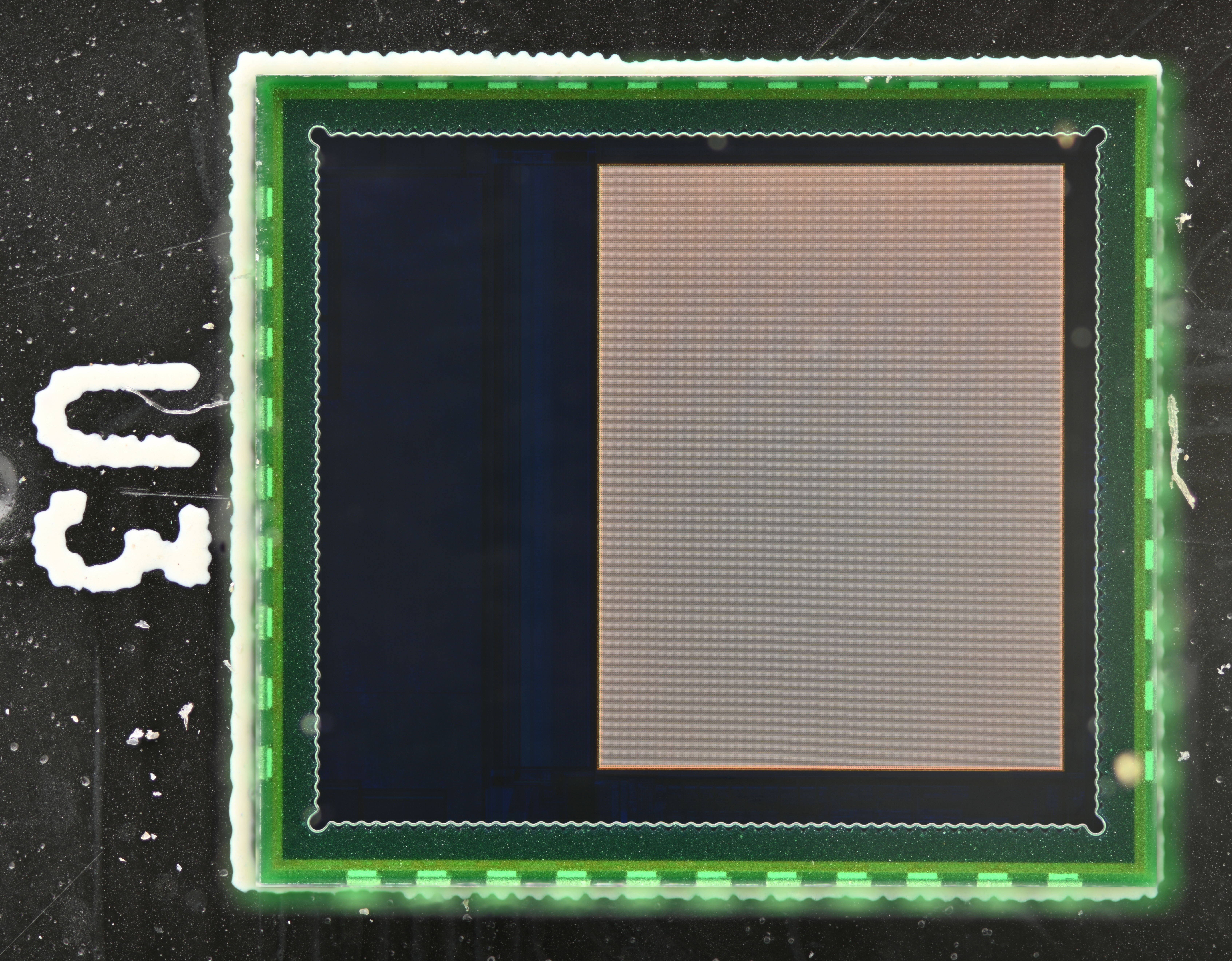
The deal is notable on several levels. First, it signals TSMC's recognition that diversifying its supply chain beyond Taiwan is essential for mitigating geopolitical risk and meeting customer demand for U.S.-based advanced packaging. Second, it underscores GlobalFoundries' strategic pivot toward becoming a key player in the advanced-packaging ecosystem, moving beyond its traditional focus on "essential semiconductors" to embrace higher-value, higher-margin components like interposers.
Silicon interposers are small layers of silicon that sit between a chip and its packaging, providing the wiring connections needed to make multi-chip modules functional. As semiconductors become larger and companies combine multiple chips into the same package, interposers have become increasingly important. They enable advanced packaging technologies such as embedded deep trench capacitor components, which are essential for the power delivery and signal integrity required by next-generation AI accelerators.
Under the agreement, GlobalFoundries will manufacture interposers at its Malta, New York facility, with volume production expected to ramp up in the first half of 2028. This timeline aligns with TSMC's own U.S. expansion plans, where the company is building advanced-packaging fabs to support its AI customers. The deal also includes an option for GlobalFoundries to expand capacity "as customer demand grows," suggesting that the partnership may scale further as AI adoption accelerates.
What This Means for the AI and Semiconductor Industry
The juxtaposition of a brutal market selloff and a massive interposer deal illustrates a key insight: while short-term valuation pressures are forcing investors to reprice risk, the industry's fundamental need for advanced packaging and interconnect technology remains unchanged. In fact, the market volatility may be accelerating the very capital allocation decisions that industry executives have been signaling for months.
As Marc Velan, head of investments at Lucerne Asset Management in Singapore, noted: "I suspect we're entering the next phase of the AI cycle, where markets increasingly focus on monetisation and returns on invested capital — I wouldn't call this the end of the AI trade." His assessment aligns with what many industry insiders have been saying: the AI boom is not ending, but it is maturing. The focus is shifting from "how much can we build?" to "how fast can we monetise what we build?" and "what is the return on these massive capital investments?"
The implications for semiconductor companies are clear: those that can demonstrate both technical leadership and sound financial discipline will likely outperform. TSMC's partnership with GlobalFoundries, its continued investment in U.S. fabs, and its focus on advanced packaging demonstrate a company that is both adapting to geopolitical realities and positioning itself for long-term growth. Meanwhile, GlobalFoundries' bet on interposer production shows how smaller but strategically positioned players can capture high-value segments of the supply chain.
For investors, the lesson is to look beyond the headline stock price movements and focus on the underlying fundamentals: AI demand remains strong, but the cost-of-capital calculus has changed. Companies with strong cash flows, disciplined capital allocation, and clear pathways to monetization are likely to weather the short-term volatility better than those still burning cash without clear returns.
Conclusion
The brutal session for chip stocks on October 13-14, 2026, marks a significant inflection point in the AI investment cycle. After years of euphoria, the market is now grappling with the reality that AI's next phase will be defined not just by technological innovation, but by financial discipline and sustainable returns.
At the same time, the industry's biggest players are doubling down on the infrastructure that will enable the next wave of AI performance. The US$2 billion interposer deal between TSMC and GlobalFoundries, set to ramp up by 2028, is just one example of how the semiconductor ecosystem is preparing for a future where advanced packaging and interconnect technology are as critical as raw processing power.
For readers following the AI and semiconductor industries, the message is clear: volatility is the new normal. But within that volatility lies opportunity. Companies that can demonstrate both technical excellence and financial prudence will likely emerge stronger, while the market will continue to price in the realities of cost-of-capital constraints and the need for sustainable growth.
Our desk has followed the advanced-packaging buildout in our semiconductors coverage. The story is far from over, and the next 12 months will reveal whether the industry's massive capital investments will deliver the returns that investors now demand.