Wyze's new $40 Indoor Cam Pan rotates 360 degrees and hides its lens when you want privacy
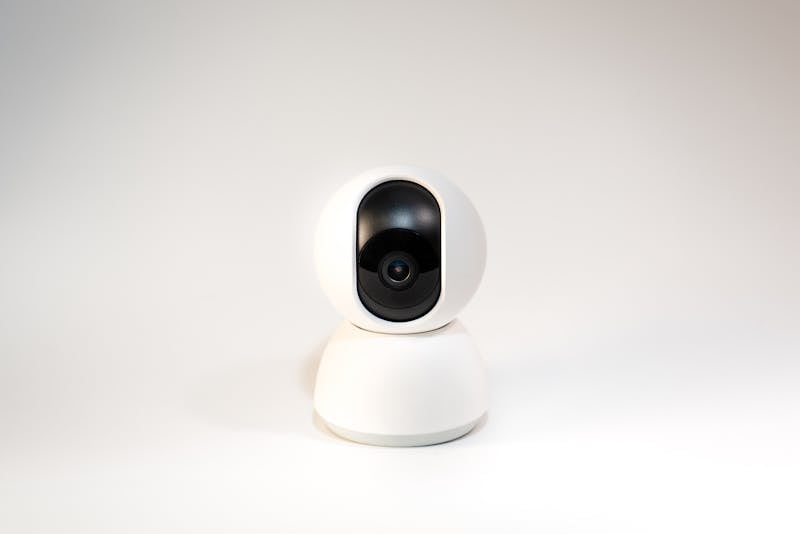
Seattle-based smart home company Wyze put a new camera on sale Tuesday morning, and the pitch is simple: a motorized indoor camera that can see in every direction but physically hides its lens when you tell it to stop looking. The Indoor Cam Pan costs $39.98 and is available starting today through Wyze's online store.
The timing isn't random. Home cameras have spent the past two years collecting microphones, speakers and subscription tiers, and buyers have pushed back on devices that feel like they're always watching. Wyze's answer is mechanical rather than software-based: when you want privacy, the whole lens assembly tilts downward until it disappears inside the camera's body.
A motor under the floor and another behind the lens
Two motors do the work here. The first spins the entire camera through a full circle, so a single unit mounted on a shelf can cover an entire room without anyone touching it. The second motor sits behind the lens and tilts it up or down across 103 degrees — enough to look from the floor to the ceiling of most rooms.
That second motor is also what makes the privacy trick possible. When you trigger privacy mode from the app, the lens module tilts down until it slides completely inside the housing, leaving no view of the room at all. The Verge noted that this makes it impossible for the camera to record anything while retracted, because there is nothing pointing at the room anymore. It's a hardware guarantee, not a promise in a settings menu.
Wyze describes the motors as its quietest yet. Anyone who has owned an older pan-and-tilt camera knows the whirring sound they make when they move, which is why many people unplug them in bedrooms. The company says the Indoor Cam Pan is quiet enough to leave running overnight.
Tracking that knows the difference between a dog and a robot vacuum
The second part of the pitch is smarter tracking. The camera records 2K video, a step up from the 1080p sensor on the Cam Pan v3 that still sells alongside it for $44.98. More important than the resolution jump is what the camera does with the footage: onboard AI tracks people and pets as they move around a room, following them automatically instead of forcing you to drag a control pad in the app.
The tracking comes with judgment. Wyze says the camera can be set to ignore things you don't care about, like a robot vacuum cleaning the floor or activity outside zones you draw in the app. Detection zones let you mark which parts of a room matter — a crib, a front door visible through an interior window, a dog bed — so alerts only fire for movement where you actually want coverage.
Night coverage works through infrared LEDs that use a 940 nm wavelength. Most budget cameras use 850 nm emitters, which give off a faint red glow visible in a dark room. The 940 nm lights are invisible to the naked eye, so the camera doesn't announce itself at night. Recording drops from 20 frames per second in daylight to 15 fps in low light, a trade-off typical of IR-based night modes at this price.
Storage splits between local and cloud. A microSD slot takes cards up to 512 GB, enough for weeks of continuous footage before anything overwrites. People who prefer cloud clips can subscribe to Cam Plus or Cam Unlimited, which add AI descriptions of recorded events and richer alert text.
Why the price matters more than it looks
At $39.98, the new model undercuts the older Cam Pan v3 by $5 while adding resolution and the retracting lens. It also sits below the $59.98 Cam Pan v4, which records in 4K but keeps the same basic form factor.
Budget pricing has been Wyze's identity since it started selling $20 cameras in 2017, and the strategy has worked: the company has sold tens of millions of units and built one of the largest installed bases in American smart homes. That scale is also why the privacy design matters beyond one product. In February 2024, a glitch exposed thumbnail images from about 13,000 customers' cameras to other users, an episode Wyze blamed on the way it handled a third-party service outage. Trust, once dented, is hard to rebuild — and a physical shutter is a more convincing answer than another firmware update.
The broader market is moving the same direction. Competitors have started shipping cameras with physical covers, and Apple is rumored to be preparing its own home camera line with privacy as a stated focus. A $40 camera treating a mechanical lens cover as a headline feature shows how far expectations have moved from the days when an always-on lens was simply the price of cheap monitoring.
What buyers get, and what they don't
There are real limits at $40. There's no weatherproofing, so unlike the IP65-rated Cam Pan v3, this one stays indoors. The camera needs a wall outlet, and there's no battery option. People who want 4K detail will need to pay $20 more for the v4. And the sharpest AI features sit behind the Cam Plus subscription rather than in the box.
Still, the spec sheet reads like a rebuttal to the idea that affordable means bare-bones. You get 2K video, two-axis motorized coverage, on-device subject tracking, zone-based alerts, local storage up to 512 GB, a siren and two-way audio for talking to pets or warning off intruders. For a nursery, a pet cam, or a front-door sightline, that covers most jobs people actually buy these cameras to do.
The Indoor Cam Pan is on sale now through Wyze's online store. Full details are also covered at 9to5Google and The Verge.
For readers weighing it against the rest of the market, our IoT coverage tracks every major smart home release, and our recent explainer on what edge computing means for connected devices explains why cameras like this one increasingly process footage close to home rather than in a distant data center.