TSMC Weighs a Second US Fab Cluster in Texas as Arizona's $265 Billion Commitment Forces a Redraw of American Chipmaking
Introduction
The world's largest contract chipmaker is looking past Arizona. TSMC is evaluating a potential investment in Texas that would establish a second American manufacturing hub, according to two sources familiar with the matter who spoke to Reuters on September 30. The company did not immediately respond to a request for comment, and no plan has been finalised.
If it proceeds, the move would redraw the map of American chipmaking in two ways at once. It would confirm that the reshoring of leading-edge fabrication has outgrown its original single-site framing, and it would put TSMC's most advanced production capacity in a state that already hosts the densest semiconductor cluster in the country outside California. For readers tracking the wider AI infrastructure buildout, the significance is that the geographic hedge against Taiwan risk is becoming a multi-state programme rather than one very expensive campus.
What the Texas Plan Would Look Like
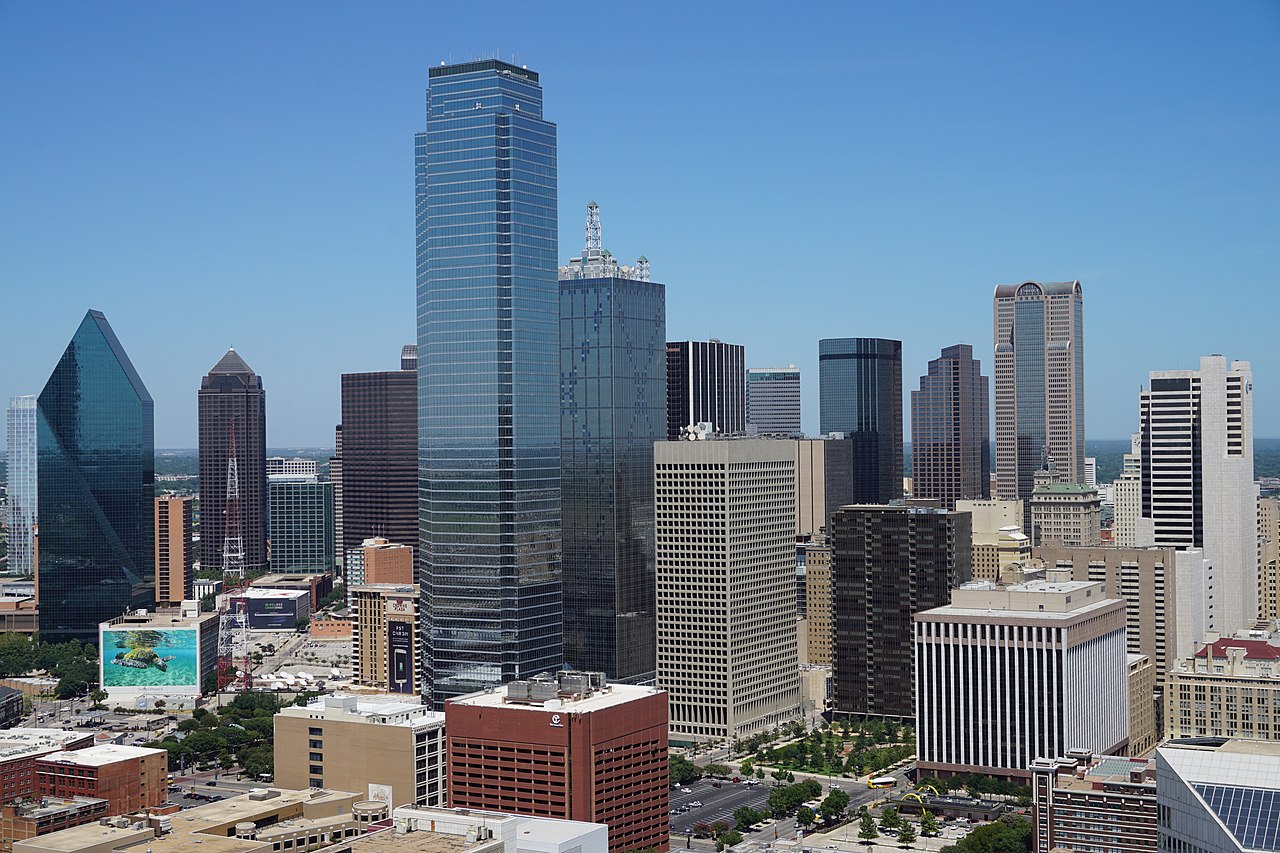
The details remain sourced and unconfirmed, but the reporting gives a reasonably specific shape. Taiwanese outlet Economic Daily News, cited by TrendForce, reported that the second hub could include as many as six advanced wafer fabs, with the Dallas–North Texas region emerging as a potential location. Because newer fabs would be built on more advanced nodes than the Arizona facilities, total investment could exceed the $265 billion already committed to Phoenix.
That last point deserves emphasis. The Arizona commitment was itself an expansion. In July, TSMC announced a further $100 billion on top of prior pledges, taking its US total to $265 billion, and chief executive C.C. Wei said at the time that probably additional four or more fabs would be built, referring to both front-end and back-end facilities. Including current and planned projects, the company's Arizona operations will comprise 12 fabrication and advanced packaging facilities plus a research and development centre. A Texas site would not replace Arizona; it would sit alongside it, and on the reporting available now, at a scale that rivals it.
The pressure driving this is customer demand rather than industrial policy alone. The Economic Daily News reporting names NVIDIA, Intel, AMD and Apple among the large customers pressing for more US-based production. US customers accounted for roughly 75.64% of TSMC's revenue in the first half of 2026, a concentration that makes domestic capacity a commercial question and not merely a geopolitical hedge.
Tariffs are the accelerant. The reporting notes that the Trump administration has renewed threats of levies of up to 200% on chipmakers that do not move manufacturing to the US. That figure is best read as a negotiating posture rather than a settled schedule, but it is large enough to push capital allocation decisions in a direction that would otherwise have moved slowly.
Why Dallas, and Why Now
The Dallas–North Texas region, long promoted as the Silicon Prairie, already has the pieces a leading-edge fab needs. Texas Instruments, Coherent, Samsung and Tesla all operate facilities in the area, and the region has clusters in semiconductor manufacturing, silicon wafer supply, optical communications and defence electronics. For a company whose roadmap now runs through advanced packaging and optical interconnect, having suppliers and research partners within the same metro area is not a minor convenience.
The logic is competitive as much as practical. Building a second US cluster is a claim that the United States can host multiple generations of leading-edge capacity, and doing so in Texas rather than concentrating everything in Arizona establishes that there is no single site whose disruption would halt output. It also gives TSMC leverage in a state-level competition for the subsidies, tax abatements and workforce that any such project requires.
There is a second, quieter reason. TSMC has been steadily raising its overseas investment to address hard constraints at home, including limits on land, water and electricity in Taiwan. Those constraints have not gone away, and they apply to a company trying to serve US customers from US fabs. Adding a Texas site is partly a way to buy optionality against both kinds of constraint at once.
The caveats are equally real. TSMC has not notified suppliers or asked them to make preparations, according to the supply-chain sources, and the company had not responded to comment requests as of late September. Supply-chain rumour in this industry has a poor hit rate, and a plan described as under evaluation can be deferred indefinitely. The most that can be said with confidence is that the question is being asked publicly.
The Context: Capacity Everywhere Is Tight
The Texas deliberation is happening against a backdrop in which nearly every node category is spoken for. TrendForce raised its 2027 outlook for high-bandwidth memory pricing on September 30, projecting that the blended average selling price of HBM will surge 121% year over year as HBM4 takes a larger share of the mix. The firm expects the memory shortage to persist through next year as HBM and conventional DRAM compete for the same advanced process and wafer capacity, and reports that GPU and ASIC designers are already considering trimming HBM capacity per chip because of limited supply and rising system costs.
The downstream effect of that squeeze shows up in foundry economics too. TrendForce reported the same day that Samsung's combined Foundry and System LSI operating loss is projected to narrow 41.8% year over year, from 6.74 trillion won to 3.92 trillion won, helped by HBM4 base-die demand, since those base dies are fabricated on Samsung's 4nm logic process. The report also noted that Samsung signed an agreement with Broadcom in July covering more than $200 billion in cooperation through 2030.
Put those together and the picture is of an industry where the constraint is no longer only transistor demand. It is land, water, power, advanced packaging capacity and packaging substrates all at once. A foundry that can add a campus quickly has an advantage in that market, which is the most concrete commercial argument for the Texas plan being more than politics.
Conclusion
The signal to watch is not whether TSMC announces a Texas fab, but what it announces about scope. A single site would be a hedge. Six advanced fabs plus packaging, financed above the Arizona total, would be an admission that American leading-edge capacity is becoming a multi-region industry rather than a flagship project.
Either way the direction of travel is now hard to miss. TSMC has committed $265 billion to Arizona, told analysts that a further four or more fabs are probable, and is now reported to be weighing a second American cluster in Texas. For a company that has spent four decades running the industry's most concentrated supply chain out of a single Taiwanese complex, distributing leading-edge capacity across two American states is a structural change in how chips get made, and it will shape the sector's cost base, its geographic risk and its politics for years to come.
Images



References
- Reuters — TSMC evaluates potential Texas investment, sources say (September 30, 2026)
- TrendForce — TSMC Reportedly Eyes Texas Expansion That Could Top US$265B (September 29, 2026)
- Digitimes — TSMC reportedly evaluates Texas fabs as US regional competition intensifies (September 30, 2026)
- Seoul Economic Daily — HBM Prices to More Than Double in 2027 on Supply Crunch, TrendForce Says (October 1, 2026)
- TrendForce — Samsung Foundry Loss Reportedly Seen Shrinking 42% YoY in 2026 as HBM4 Base-Die 4nm Demand Rises (September 30, 2026)