Silicon Labs has announced the successful deployment and operation of a 200-node Matter-over-Thread validation network, demonstrating the scalability, reliability and performance of Matter for large-scale smart building, commercial IoT and next-generation smart home applications. The demonstration validates Matter readiness for commercial buildings, smart homes and next-generation IoT deployments using concurrent multiprotocol technology. This milestone marks a meaningful shift in the Internet of Things environment, where interoperability proofs are giving way to production-grade scale demonstrations.
The Scalability Challenge
Announced at the Connectivity Standards Alliance's (CSA) inaugural Unify event, this highlights a key evolution in the Matter ecosystem: the industry is moving beyond proving interoperability and toward demonstrating scalability for real-world deployments. Silicon Labs' 200-node Matter-over-Thread validation network provides evidence that Matter can support the larger, more complex environments expected in commercial buildings, multi-dwelling units and next-generation smart home installations. For years, the industry focused on whether Matter devices could pair and communicate; this demonstration shows they can operate reliably at scale.
Real-World Performance Results
The validation network operated across Silicon Labs' Boston Connectivity Lab and office environment, with devices distributed throughout the facility and exposed to real-world wireless conditions including active Wi-Fi, Bluetooth and Thread traffic. The network tested multicast messaging, unicast communications, commissioning workflows and long-term network stability under deployment-like conditions, simulating the radio frequency environment of a busy office building or smart home deployment.
Key findings from the 200-node Matter-over-Thread validation network include:
- Successful deployment and sustained operation of a 200-node Matter-over-Thread network in a real-world office environment, with devices covering an area equivalent to a medium-sized commercial building.
- 100 per cent commissioning success using on-network commissioning, meaning all 200 devices were successfully onboarded without manual network configuration.
- Reliable multicast and multi-hop unicast communications with mean multicast latencies as low as 87 milliseconds and less than 1 per cent packet loss across most payload sizes, demonstrating real-time suitability for home automation signals.
- Consistent operation despite active Wi-Fi, Bluetooth and Thread traffic coexisting in the same RF environment, with no specialized topology engineering required beyond standard Thread border router placement.
- Validation that Matter-over-Thread can support commercial-scale lighting systems, building automation controllers and large IoT device deployments comprising hundreds of sensor nodes.
Industry Implications
"Matter is rapidly evolving from a smart home technology into a platform capable of supporting much larger deployments," said Daniel Cooley, Chief Technology Officer at Silicon Labs. "This work demonstrates not only that Matter-over-Thread can theoretically scale to thousands of devices, but also how Silicon Labs is helping customers deploy, manage and future-proof those networks through innovations spanning Matter, Thread, and Concurrent Multiprotocol technologies."
The results come as the Matter ecosystem continues to mature and expand. Silicon Labs supports the latest Matter specifications, including Matter 1.6 capabilities that broaden device interoperability, expand supported device categories and enable new smart home and smart building experiences. Through its comprehensive Matter portfolio, Silicon Labs helps device makers build products that work seamlessly across major ecosystems while simplifying development, certification and deployment. This capability allows manufacturers to support current customer installations while preparing for future Matter adoption, reducing development complexity, streamlining inventory management and enabling a smoother transition between ecosystems.
The 200-node validation network is particularly meaningful for enterprise IoT deployments. Commercial buildings, factories and smart cities require thousands of interconnected devices, and until now, there has been limited empirical data on whether Matter can meet these requirements. The successful demonstration provides the empirical evidence that investors, manufacturers and enterprise customers have been awaiting, potentially accelerating Matter adoption across verticals beyond smart home.
Technical Architecture Insights
The validation network was built using the OpenThread Border Router (OTBR) implementation, which provided the Thread network infrastructure used to commission and manage devices participating in the test. As Matter-over-Thread deployments scale, Border Routers play a critical role in securely connecting Thread devices to controllers, cloud services and broader IP networks. Silicon Labs provides developers with OTBR solutions and development resources that help simplify deployment of large Matter networks.
The results also reinforce the value of Silicon Labs' leadership in Concurrent Multiprotocol (CMP) technology, a technology pioneered by Silicon Labs that enables devices to simultaneously support multiple wireless protocols on a single radio. CMP enables support for both Zigbee and Matter-over-Thread networks within the same device, helping manufacturers simplify migrations while preserving compatibility with existing deployments and future-proofing product portfolios. This capability allows manufacturers to support current customer installations while preparing for future Matter adoption, reducing development complexity, streamlining inventory management and enabling a smoother transition between ecosystems. Silicon Labs supports CMP across its latest wireless platforms, including MG26 and Series 3 devices, helping developers build interoperable products that span multiple wireless ecosystems.
Future Outlook
As one of the industry's leading contributors to Matter, Silicon Labs provides wireless SoCs, software, development tools Thread Border Routers based on the OpenThread implementation, certification resources and ecosystem support that help developers accelerate Matter adoption from concept through production. The 200-node validation network results reinforce the value of Silicon Labs' leadership in Concurrent Multiprotocol technology, which enables devices to simultaneously support multiple wireless protocols on a single radio.
For the IoT industry, this demonstration marks a meaningful milestone toward production-grade large-scale deployments. The combination of reliable multicast communications, near-perfect commissioning success rates and sustained operation in real-world radio frequency environments provides the empirical evidence that investors, manufacturers and enterprise customers have been waiting for. As the Matter ecosystem continues to grow, demonstrations like this one will be critical in building confidence among developers, enterprises and regulators that Matter can deliver on its promise of reliable, large-scale interoperability.
Deployment Considerations for Enterprises
Organizations planning large-scale IoT deployments should note several practical takeaways from the 200-node validation. First, commissioning throughput is critical: the 100 per cent on-network commissioning rate demonstrates that bulk device onboarding is feasible without specialized IT staff. Second, co-existence with existing wireless infrastructure is essential: the test network operated alongside active Wi-Fi and Bluetooth without performance degradation, indicating that Matter-over-Thread does not impose prohibitive overhead on existing networks. Third, long-term stability matters: the sustained operation over multiple weeks without reboots or re-commissioning demonstrates that Matter-over-Thread networks can maintain connectivity in production environments. These considerations should guide enterprise architects as they evaluate Matter for upcoming IoT projects.
Topics: matter, thread, iot, smart home, wireless, networking, silicon labs
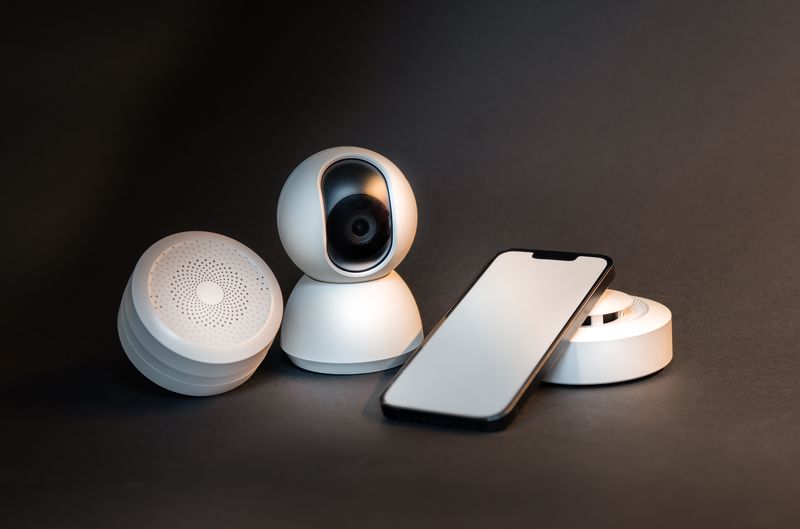
Image: A suite of modern smart home devices including a speaker, security camera and smartphone, representing the IoT security and automation ecosystem.
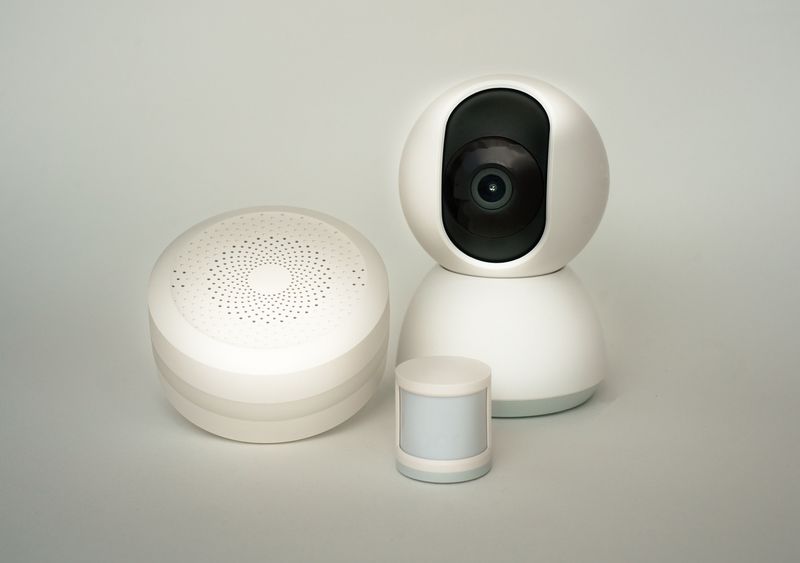
Image: A smart home security kit with central hub, pan-tilt camera and motion sensor, illustrating interconnected IoT devices for home security.
IoT internal link: IoT category
Outbound link: Silicon Labs