Semtech Links AirLink Routers to Palo Alto Networks Industrial IoT Security Stack
Introduction
Semtech has completed a product integration that links its AirLink secure-edge 5G/LTE routers and network-management tools with security technology from Palo Alto Networks. The companies announced the work on September 23, 2026, saying the joint arrangement is intended for utilities, public-sector networks and other critical infrastructure that operate connected assets across wide areas.
The announcement is an industrial IoT story, not a consumer smart-home product launch. AirLink equipment is used to connect remote sites and mobile assets, while Palo Alto's firewalls and trust-security tools are meant to inspect traffic, enforce policy and manage machine identities. The practical question is whether the two product families can work as a coherent security system when a deployment spans cellular, satellite, wired and other links.
Semtech describes the integration as encrypted tunnels from AirLink routers to Palo Alto Networks Next-Generation Firewalls, with visibility through PAN-OS. The announcement also names Next-Generation Trust Security, or NGTS, and Zero Touch Public Key Infrastructure, or ZTPKI, for certificate provisioning, renewal and machine-identity management. Those are company descriptions of the integration. The release does not provide independent test results, a full compatibility matrix or a list of customer deployments.
That distinction matters. A partnership announcement tells technology teams that a new route into their architecture exists. It does not, by itself, prove lower outage rates, better threat detection or lower operating costs. It does, though, put a concrete set of products against a problem that industrial operators already face: thousands of remote devices need connectivity, and the devices cannot all be treated as trusted simply because they sit behind a private network.
Main Content
What Semtech and Palo Alto say was integrated
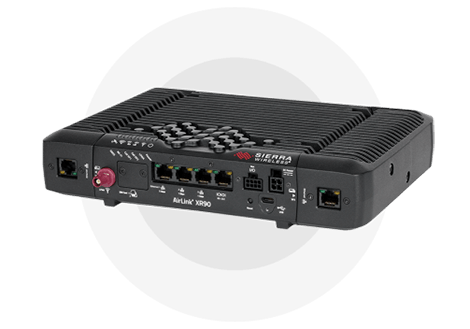
The Semtech release names four connected parts. AirLink secure-edge routers provide the field connection. AirLink network-management products provide the control layer. Palo Alto Next-Generation Firewalls inspect and control network traffic. NGTS and ZTPKI handle cryptographic trust and certificates.
According to Semtech, AirLink routers can establish encrypted tunnels automatically to Palo Alto Networks firewalls. Once connected to PAN-OS, security teams are supposed to see edge traffic and apply real-time threat detection and prevention. Semtech also says certificate provisioning, renewals and machine-identity management are automated through ZTPKI and AirLink management platforms.
A separate Palo Alto Networks technology brief gives the architecture a little more detail. It says AirLink routers provide encrypted connectivity over cellular, satellite and wired networks using IPsec, while supplying device and network context to the security layer. Palo Alto's NGFW products apply App-ID classification and AI-driven threat prevention. NGTS and ZTPKI are used in the described flow to automate certificate lifecycle management and keep remote assets visible.
The wording matters here. The announcement is about an integrated solution, not a new cellular standard and not a replacement for every utility firewall. It is a way to bring an edge connection into a wider security-control environment. Operators would still need to decide which devices belong on which network, what traffic is permitted, how identities are issued and what happens when a certificate expires or a link fails.
Why the utility edge is a difficult place to secure
A utility can operate a fibre network, a private LTE network, a public cellular network and a satellite backup in the same service area. A water operator may have a treatment plant on wired broadband, pumps on remote links and service vehicles moving between towers. The devices are not identical, and a security policy written for an office network does not automatically fit an operational network where a failed update can interrupt a physical process.
Semtech's own AirLink material lists utility use cases including power plants, substations, remote power lines, pumping stations and utility trucks. The common problem is the distance between the device and the team that manages it. A field technician cannot be sent to every router every time a certificate needs attention, and a central operations team cannot safely treat an unknown device as authorised just because it connects through a known carrier network.
The Utility Broadband Alliance's published agenda for its October 2026 Summit and Plugfest describes the scale of the problem in blunt terms. One session says many utilities have deployed tens of thousands of cellular routers over several years and are trying to improve cybersecurity, certificate lifecycle management and compliance without waiting for a complete network replacement. That is an industry event's description, not a universal statistic, but it explains why a gradual security upgrade matters.
The integration is aimed at that middle ground. It does not require a utility to replace every router at once. Instead, the companies are presenting a way to add encryption, policy control and certificate automation around an existing fleet. Whether that works for a particular utility depends on the router models, software versions, backhaul design and operating procedures in its network.
Certificates become an operating concern
Certificates are easy to overlook because they sit in the background. A router, firewall, application or cloud service may use one to prove that traffic comes from a permitted machine rather than an unknown caller. The certificate is not the visible equipment at a substation, but it is part of the trust decision that allows the equipment to communicate.
Palo Alto's March 2026 announcement about NGTS made a related point about certificate lifecycle automation. The company said that certificate lifetimes were becoming shorter and described a 47-day renewal cycle as a pressure point for large networks. It said NGTS was designed to identify and renew credentials before they cause service interruptions, while giving network teams a clearer view of where trust is used.
Those are Palo Alto's claims about its own platform, and the exact renewal cycle is not a universal setting for every AirLink or Palo Alto deployment. The operational lesson is still useful. A large fleet can have a large number of cryptographic identities, and a manual spreadsheet or one-time installation process becomes less reliable as the fleet grows.
ZTPKI is intended to remove some of that manual work. In the joint flow described by Semtech, a device identity and its certificate can be provisioned and renewed through the AirLink management environment and Palo Alto's trust tooling. That can give a utility a more consistent starting point for each connection. It cannot decide whether the identity is appropriate, whether a policy is safe or whether an endpoint has been tampered with. Those decisions still belong to the operator.
What “zero trust” should mean at the edge
Zero trust is easily turned into a slogan. In this context, it should mean that a connected asset does not receive broad access because it happens to be on a private network. The network checks the identity of the user, service or device, applies the policy appropriate to that identity and limits what happens if the endpoint is stolen, cloned or compromised.
The AirLink and Palo Alto arrangement touches several parts of that model. IPsec tunnels protect data in transit. Firewalls inspect traffic and enforce policy. NGTS and ZTPKI manage machine certificates. PAN-OS provides a place for security teams to work with network events. The pieces still need to be tied to an operational plan: inventory, ownership, recovery, logging and a clear response when a remote device starts behaving unlike itself.
The companies say the solution is designed to enforce protections without disrupting critical services. That is the right goal, but it is also a claim to test. A change in a firewall rule, a certificate renewal or a router configuration can produce the opposite result if the deployment is not carefully staged. Operators would want to know how updates are tested, how exceptions are approved, and how a device behaves when it cannot reach the certificate authority or the central firewall.
The announcement also includes an AI element, through Palo Alto's machine-learning-based threat prevention and the companies' references to AI-powered analysis. That does not mean an autonomous system has been given control of a utility network. It means security software is being used to classify traffic and identify threats. The human and procedural controls around that software still matter.
Questions operators should ask before buying or deploying
The release names the product families, but it leaves practical questions open. Which AirLink models are covered? Which PAN-OS, firewall and NGTS versions are supported? Does the integration require a particular AirLink management subscription or a Palo Alto licence? Can a utility see all remote assets in one console, or does the operator still work across separate management systems? What happens during a failed certificate request, a carrier outage or a change to a satellite backhaul?
Those questions are not signs of weakness. They are the normal questions for a production network. A pilot that works in one laboratory can still fail when devices are spread across weather, terrain and several carriers. The October 13-15 UBBA Summit and Plugfest in Fort Worth gives the companies an opportunity to present the solution and answer more detailed questions. Semtech says its representatives will exhibit in the Innovation Zone, with a joint technology session on October 13 from 3:00 to 3:55 p.m. local time.
The timing also points to a broader change in utility communications. Operators are adding connected meters, sensors, vehicles and renewable-energy equipment while trying to keep older equipment online. Secure connectivity is becoming part of maintenance planning, not just a box that sits beside a fibre cabinet. That is why the integration matters even before a customer publishes a case study.
For ordinary smart-home users, none of this changes the way a phone, television or doorbell is set up. The products named in the announcement serve industrial and public-sector networks. The useful lesson is closer to an enterprise lesson: every connected machine needs a defined identity, a current certificate, a limited set of permissions and a way to be monitored when it is far from the people responsible for it.
Conclusion
Semtech and Palo Alto Networks have documented a joint security path for AirLink 5G/LTE edge routers, beginning with encrypted connectivity to Palo Alto firewalls and extending to certificate and machine-identity management. Palo Alto's own technology brief and the September announcement place the solution in the context of utilities, mobile fleets, field sites and critical infrastructure.
The announcement is a concrete architecture to evaluate, not a guarantee of a particular result. Its value will be judged by supported models, licensing, recovery behaviour, visibility and the experience of operators running the network. For now, the important fact is narrower and more solid: the edge router and the security platform are being presented as parts of one managed system, with the work due for further discussion at the UBBA Summit and Plugfest in October.
Images
References
- Semtech Corporation, “Semtech and Palo Alto Networks Secure Industrial IoT with Zero Trust,” September 23, 2026 — official release
- Palo Alto Networks, “Palo Alto Networks and Semtech: Unified Zero Trust Edge-to-Core Security” — technology brief
- Palo Alto Networks, “Palo Alto Networks Introduces Next-Generation Trust Security to Automate and Future-Proof Digital Resilience,” March 23, 2026 — NGTS release
- Utility Broadband Alliance, “2026 UBBA Summit & Plugfest Agenda” — event agenda
- Sierra Wireless, “5G Routers, 4G LTE Routers, Cellular Routers & Gateways” — AirLink product information
- Telecompaper, “Semtech brings Palo Alto next-gen firewalls to AirLink routing line-up,” September 23, 2026 — trade report
For more connected-device and industrial networking coverage, visit IoT.