IoT Market Surges as Smart Street Lighting Hits 38.5 Million Units and Edge AI Redefines Connected Devices
Introduction
The Internet of Things is entering a new phase of infrastructure-scale deployment as connected devices move beyond consumer gadgets into city streets, industrial plants, and vehicle fleets. New data from Berg Insight, processor announcements from Qualcomm, and a landmark Q3 issue of IoT Now magazine all point to the same conclusion: IoT is no longer a niche category but a core component of how cities, factories, and automakers operate. From 38.5 million smart street lights worldwide to edge AI processors that bring intelligence directly to the device, the IoT landscape of September 2026 reflects a sector that has matured from pilot projects to mass deployment.
Smart Street Lighting Reaches Infrastructure Scale
The global installed base of individually controlled smart street lights reached 38.5 million units at the end of 2025, with Berg Insight forecasting growth to 87.6 million units by the end of 2030 at a compound annual growth rate of 17.9 percent. This is not a slow climb: it represents a doubling of the installed base within five years, driven by municipalities and utilities that are increasingly including lighting control units as a standard specification in LED modernisation projects.
Europe leads adoption with 36 percent of the worldwide installed base, followed by North America at 29 percent and China at approximately 15 percent. The shift is significant because it marks the moment when connectivity is no longer bolted on as a separate digitalisation layer but embedded directly into the infrastructure upgrade itself. Every time a city replaces a conventional light with an LED fixture, the control unit comes with it, expanding the connected base incrementally and organically.
Signify holds the largest installed base at roughly 6.2 million units, a position solidified after its acquisition of Telensa in 2021. Itron and China's Fonda Technology round out the top three, with half of Fonda's controllers deployed domestically. The wider market remains fragmented, with Berg Insight identifying more than 100 vendors, yet the top three alone account for nearly one-third of all deployed units — a concentration that signals the market is maturing toward tier-one suppliers even as niche players thrive in specific regions.
On the connectivity front, cellular technologies are gaining ground against proprietary RF mesh. The plug-and-play characteristics of cellular, combined with broad network availability and increasingly attractive cost structures, make it the fastest-growing connectivity category. For municipalities managing thousands of geographically distributed lights, the difference between an RF mesh architecture that requires its own local communications infrastructure and a cellular solution that rides on existing public mobile coverage is becoming a decisive procurement factor.
Qualcomm Dragonwing Processors Bring Edge AI to IoT
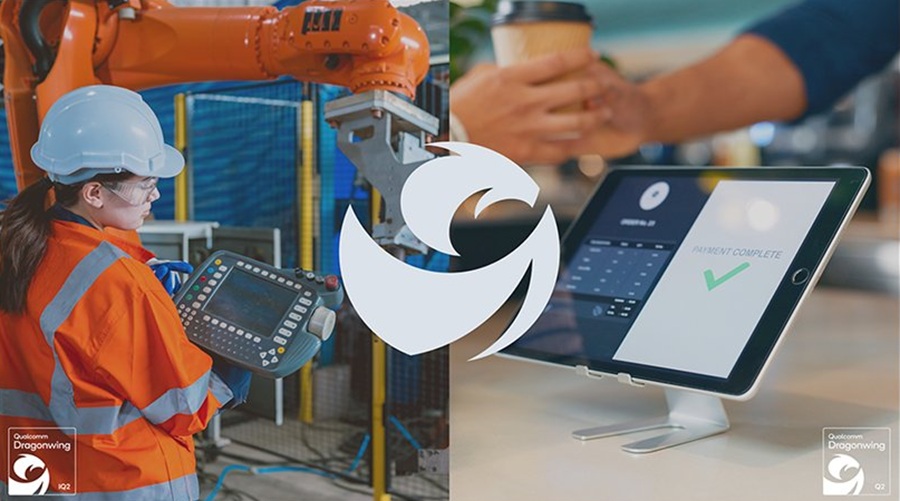
Qualcomm Technologies announced the Dragonwing Q-2390 and IQ-2390 processors ahead of IFA 2026, targeting two distinct segments of the IoT market. The Q-2390 is designed for consumer, commercial, and enterprise IoT products where cost, power, and size constraints govern design decisions. It integrates application compute, on-device AI, camera and display support, LTE Cat 4, GPS, and extensive I/O capabilities into a single platform that reduces system complexity for device makers.
The IQ-2390 is the first processor in Qualcomm's new IQ2 Series, a family of industrial edge AI processors built for applications that demand reliable operation, real-time responsiveness, and long product lifecycles. With dual Gigabit Ethernet and Time-Sensitive Networking, the IQ-2390 targets industrial automation, oil and gas, utilities, and energy sectors where environmental conditions are extreme and downtime is unacceptable. The processor supports an extended temperature range of -30°C to +115°C and is built to withstand the vibration and shock of industrial environments.
Both processors share a common hardware foundation: a quad-core Qualcomm Kryo CPU, an Adreno 704 GPU, a real-time RISC-V MCU, and support for Linux, Android, and Zephyr OS. The Hexagon DSP delivers 1.1 TOPS of AI compute, enough to run inference workloads locally without relying on cloud connectivity. For IoT device manufacturers, this means the intelligence that was once confined to data center servers can now run on the device itself, reducing latency, improving privacy, and lowering bandwidth costs.
IoT Now Q3 2026: The Edge Computing Bottleneck
The latest issue of IoT Now magazine, published September 23, 2026, tackles the challenges that most IoT suppliers prefer not to discuss. The central theme is that where IoT data is processed fundamentally shapes latency, cost, and compliance outcomes. As physical AI moves from laboratory proofs of concept to real-world deployments, the link between IoT devices and edge AI infrastructure has emerged as the critical bottleneck that determines whether a project succeeds or stalls.
The magazine highlights three underappreciated dimensions of this challenge. First, Kai Hackbarth identifies five crucial questions that connectivity and platform buyers should ask before signing any contract — questions about latency guarantees, data residency, failover behaviour, and total cost of ownership that are rarely addressed in vendor presentations. Second, Counterpoint Research ranks satellite IoT providers not by coverage alone but by execution capability, regulatory readiness, and device ecosystem maturity — a more realistic assessment framework for organisations planning global IoT deployments. Third, an exclusive Analysys Mason report examines why the connection between IoT devices and edge AI infrastructure is so often treated as an afterthought rather than a foundational design decision.
The Q3 issue underscores a broader industry pattern: IoT deployments are no longer limited to sensor data collection and cloud dashboarding. The most ambitious projects now require on-device inference, real-time control loops, and autonomous decision-making at the edge — capabilities that demand a fundamentally different approach to platform architecture.
Connected Vehicles and the Industrial IoT Edge
The connected vehicle installed base is expected to surpass 1 billion units by 2035, doubling from 2025 levels, as LTE-based connectivity approaches its end-of-life and manufacturers accelerate the transition to cellular-based telematics. This transition has profound implications for IoT infrastructure: connected vehicles are essentially rolling IoT endpoints that generate continuous streams of telemetry data, requiring edge computing nodes capable of processing and filtering that data in real time.
On the industrial side, FourJaw's approach to factory IoT prioritises machine coverage over sensor data richness, a philosophy that reflects the reality that many industrial IoT deployments fail not because of poor sensor quality but because of incomplete machine coverage. The lesson is pragmatic: a smaller number of well-deployed sensors that capture the critical parameters of each machine is more valuable than a dense array of sensors that leaves gaps in the data picture.
Qualcomm's parallel acquisition of PickNik to advance open robotics and physical AI further illustrates the convergence happening at the edge of IoT. As robots and autonomous systems become more capable of physical reasoning and manipulation, the boundary between IoT sensing and IoT action blurs. The same edge processors that run inference on camera feeds can also coordinate robotic actuators, closing the loop from perception to execution without cloud round-trips.
Conclusion
The IoT sector in September 2026 is defined by a single dynamic: the transition from connected devices to connected infrastructure. Smart street lighting has crossed the threshold from pilot to mass deployment, with nearly 39 million units already in the field and 87.6 million projected by 2030. Qualcomm's Dragonwing processors bring AI inference to the device level, reducing reliance on cloud connectivity and enabling real-time decision-making in industrial environments. The IoT Now Q3 issue frames the remaining challenge as an architectural one: how to build edge AI infrastructure that keeps pace with the data generated by billions of connected endpoints.
For organisations planning IoT deployments, the implications are clear. Connectivity architecture, device lifecycle management, and operational simplicity have become first-order purchasing considerations, not afterthoughts. The market is maturing from a landscape of hundreds of niche vendors into a consolidated ecosystem where the top three suppliers account for nearly one-third of deployed units — and where the winners will be those that treat edge computing not as a feature but as a foundation.
Images


References
- Berg Insight, "Global Smart Street Lighting Market," September 2026 — https://media.berginsight.com/2026/09/23160837/bi-streetlighting4-ps.pdf
- IoT Business News, "Smart Street Lighting Installed Base to Reach 87.6 Million by 2030," September 23, 2026 — https://iotbusinessnews.com/2026/09/23/smart-street-lighting-installed-base-to-reach-87-6-million-by-2030/
- Qualcomm, "Dragonwing Q-2390 and IQ-2390 Processors," September 2026 — https://www.fonearena.com/blog/491067/qualcomm-dragonwing-q-2390-iq-2390-features.html
- IoT Now Magazine, "Q3 2026: Edge Computing Challenges," September 23, 2026 — https://iot-now.com/2026/09/23/158514-iot-now-magazine-q3-2026/
- Qualcomm, "Qualcomm to Acquire PickNik for Open Robotics," September 23, 2026 — https://www.qualcomm.com/news/releases/2026/09/qualcomm-to-acquire-picknik-to-advance-the-future-of-open-roboti
- IoT Business News, "Connected Vehicle Installed Base to Surpass 1 Billion by 2035," September 23, 2026 — https://iotbusinessnews.com/2026/09/23/connected-vehicle-installed-base-to-surpass-1-billion-by-2035-as-lte-shutdown-approaches/
- IoT Business News, "The Best Data Point in the Factory Doesn't Come from a Sensor," September 23, 2026 — https://iotbusinessnews.com/2026/09/23/the-best-data-point-in-the-factory-doesnt-come-from-a-sensor/