Satellite-Backed LoRaWAN Pushes Smart Agriculture Past the Reach of Cell Towers
Farmers have always measured what they could see. This year the industry is wiring the parts of a farm nobody can watch in person: distant pumps, grazing land miles from the barn, soil that dries out between visits. The LoRa Alliance made its case this month for LoRaWAN as the shared radio layer that ties those scattered assets together, and satellite operators are stitching coverage onto the same standard so a sensor keeps reporting even where no tower reaches.
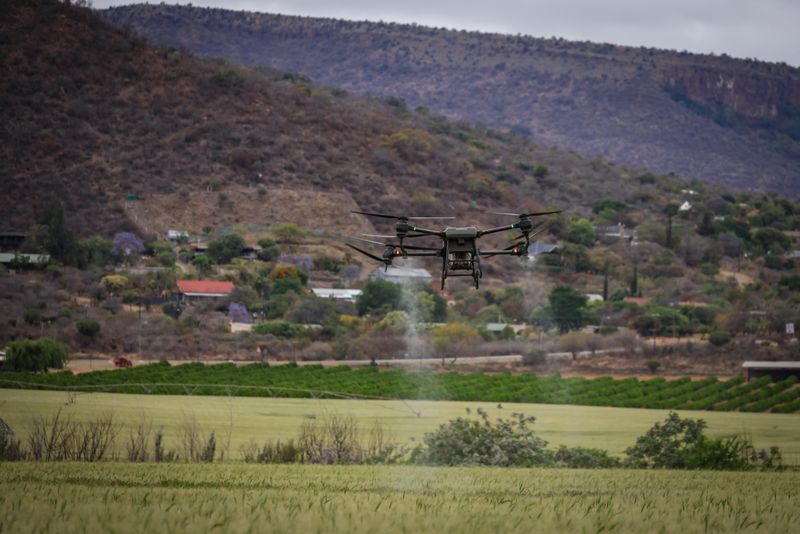
IoT Business News reported on July 8 that the alliance is pitching LoRaWAN not as a single field sensor, but as reusable farm infrastructure. The group points to crop disease detection, livestock tracking, irrigation control and estate monitoring as workloads that can run on one network built from long-range gateways and low-power devices. Read the LoRa Alliance's agriculture case
Why farms strain conventional wireless
Most wireless tech assumes a person nearby with power and a signal. Fields break that assumption. The assets worth monitoring sit exactly where infrastructure is weakest: open acreage, remote pasture, orchards on slopes, reservoirs and storage sheds with no mains power. Coverage is only half the problem. The bigger drag is the cost of keeping battery devices alive across wide areas and the chore of standing up a fresh connectivity design every time a new measurement matters.
That is why so many smart-agriculture projects stall after a pilot. When each application needs its own radio plan, power budget and service contract, the math stops working. A grower who wants soil moisture this season and tank levels next season ends up rebuilding the network twice.
The LoRaWAN case: one network, many jobs
LoRaWAN answers that with a different shape. A farm starts with a few gateways placed where they reach, then attaches low-data-rate devices that sip microamps and run for years on a cell. The standard runs in unlicensed spectrum, so there is no carrier plan to negotiate for the local hop. Add a satellite backhaul and the same nodes reach the internet from places a gateway never could.
The LoRa Alliance says the approach has moved past the LPWAN niche. RCR Wireless, citing alliance figures on June 22, reported 125 million LoRaWAN connections with annual growth near 25 percent. MarketsandMarkets puts the broader LoRa and LoRaWAN market at $8.0 billion in 2024, climbing to a forecast $32.7 billion by 2029. Those numbers matter because they signal a supplier base that will still be around when a farmer wants to add a third or fourth application. More on the LoRaWAN market
Satellites close the last gap
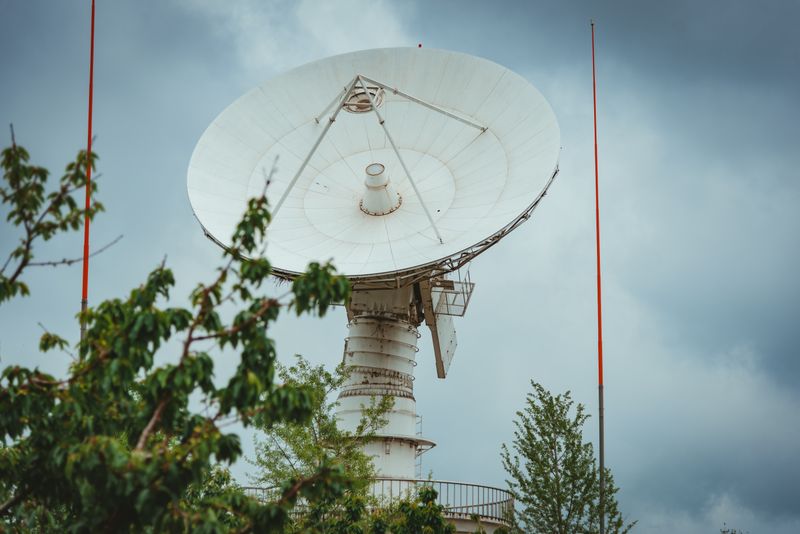
A gateway solves the local hop. It does nothing for the pivot irrigator at the edge of a 2,000-hectare property, or the telemetry on a barge, or the soil station in a valley with no signal. Non-Terrestrial Networks (NTN) fill that hole by linking devices straight to orbiting relays. The move from curiosity to product came with 3GPP Release 17, which extended cellular standards to satellites so a plain NB-IoT module can hand off from a tower to a bird overhead using the same SIM and the same management console. The 3GPP standards body
Sateliot, a Spanish low-Earth-orbit operator, sits at the center of the push. The company closed a €100 million Series C in April 2026 and has launched six satellites, with five more planned this year. Backers include the European Investment Bank. Sateliot bills itself as the first operator to offer IoT connectivity over standard 5G NB-IoT, meaning a device needs no custom antenna or special firmware to reach the constellation — provided it supports the relevant 3GPP release. Sateliot's NTN service
A chip that talks to both tower and sky
Hardware has caught up. Nordic Semiconductor's nRF9151, an NTN-ready cellular module, completed chip-to-cloud communication through Sateliot's satellites, a milestone the companies cite as proof that low-power cellular IoT can span from a field sensor to orbit without bespoke gear. Nordic's nRF9151 module Com4, a Norway-based connectivity provider, paired with Sateliot to sell hybrid cellular-and-satellite service under one plan. LORIOT, a LoRaWAN network server vendor, struck its own alliance to bind satellite-fed LoRaWAN to enterprise-grade network management for remote sites. Com4 on hybrid NTN
For the grower, the practical result is a single device that reports over the local gateway when one is in range and flips to satellite when it is not. No second radio. No second contract. The same platform shows both feeds.
What it means for the field
Pull the thread and the use cases line up with the alliance's list: soil moisture probes that warn before a crop stresses, irrigation valves that open on a schedule set from town, weather stations on the far ridge, water-tank levels, livestock tags that flag a stray animal, gate sensors, cold-store temperature logs. None is exotic on its own. The change is that they can share one quiet radio network instead of each demanding its own.
0G IoT Solutions offered a related data point from outside farming: it scaled past 500,000 endpoints in Mexico by mixing Sigfox, LoRaWAN and NB-IoT for utilities, a reminder that hybrid LPWAN is already running at national scale. The same pattern — pick the cheapest local radio, back it with satellite where the map goes blank — is what the agriculture push borrows. Browse more IoT coverage
The multi-operator eSIM deals reported earlier this month show carriers racing to give IoT devices one identity that works across borders. Thales, Singtel and Bridge Alliance eSIM network Satellite NTN is the other half of that story: not just one identity, but one identity that works where there is no border at all.
None of this erases the hard parts. Battery life in a cold store, antenna placement on a metal-roofed shed, and the cost per megabyte from orbit still set the limits. But the standards piece has fallen into place faster than most growers expected a year ago. A farm that could not justify a connected pump because the nearest tower was three kilometers away now has a credible path: a LoRaWAN node, a satellite backhaul, and one dashboard. Semiconductor angle: the NTN-ready modem
The Alliance's bet is simple. Treat connectivity as farm infrastructure, like fencing or a well, and the applications will keep arriving on their own.