Samsung has told buyers there's no easy way out of the memory squeeze coming in 2026. Wonjin Lee, the company's president and head of global marketing, said in a Bloomberg interview in early January that chip shortages will push prices higher across the whole electronics industry — and that even the world's largest memory maker can't shield its own products from the climb.
"In 2026, there's going to be issues around semiconductor supplies, and it's going to affect everyone, not just Samsung," Lee said. "I think it's an industry-wide reality that we're going to see some supply issues."
That's a blunt admission from a company that spent years acting as a buffer for the tech supply chain. When Samsung says it can't absorb the shock anymore, PC makers, phone brands, data center operators, and eventually shoppers all feel it.
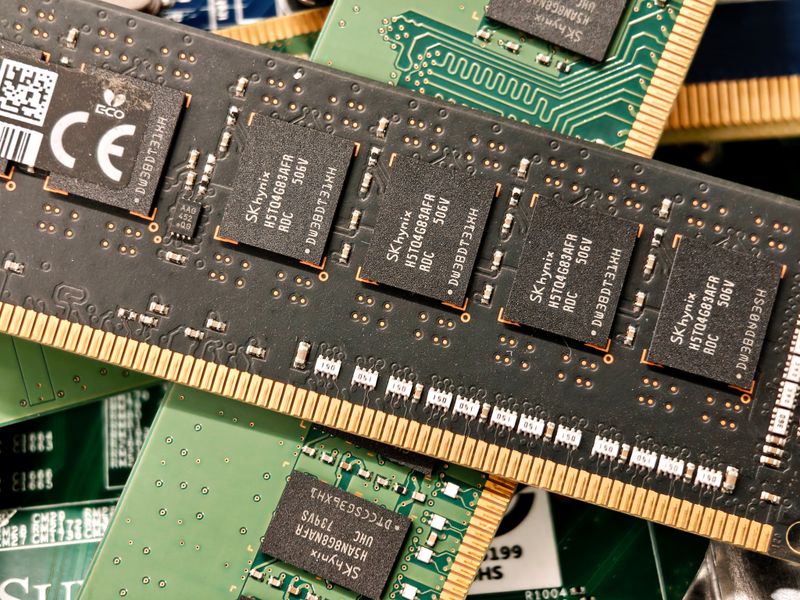
Why the shortage is different this time
Past memory gluts and shortages ran on a familiar cycle: demand spiked, makers added capacity, prices crashed. This one has a different driver. AI data centers need high-bandwidth memory, or HBM, the stacked DRAM that sits next to accelerators like Nvidia's GPUs. HBM sells at fatter margins than plain DRAM, so Samsung, SK Hynix, and Micron have all been shifting wafers toward it.
The problem is that HBM is a wafer hog. A Micron executive has said HBM eats roughly three times the wafer capacity of standard DRAM per gigabyte. Every wafer that moves to HBM pulls supply away from the ordinary DDR5 that goes into laptops, servers, and phones.
"Memory manufacturers once functioned as shock absorbers for the tech ecosystem, using scale, inventory discipline, and long-term contracts to provide pricing and supply predictability," said Manish Rawat, a semiconductor analyst at TechInsights. "Samsung's inability to cushion volatility despite its unmatched capacity indicates a market in disequilibrium."
Kanishka Chauhan, a senior principal analyst at Gartner, framed it in plain supply-and-demand terms. "Demand for memory is strong, driven by ongoing AI investments," he said. "High Bandwidth Memory, which is used in AI applications, demands stronger pricing compared to traditional and legacy memory, leading vendors to allocate more production capacity to HBM."
The numbers behind the squeeze
The reallocation has already moved prices. Samsung raised the price of its 32GB DDR5 modules to $239 from $149 in September — a 60% jump. Contract pricing for DDR5 has more than doubled, reaching around $19.50 per unit against roughly $7 earlier in 2025.
DRAM prices have climbed about 50% year to date, according to Counterpoint Research, which expects another 30% in the fourth quarter of 2025 and a further 20% in early 2026. The firm figures DDR5 64GB RDIMM modules, common in enterprise servers, could cost twice as much by the end of 2026 as they did at the start of 2025. Gartner's own forecast puts DRAM prices up 47% across 2026, blamed on undersupply in both current and legacy DRAM.
Capacity is effectively spoken for. SK Hynix said on its October earnings call that its HBM, DRAM, and NAND output is "essentially sold out" for 2026. Micron went further and exited the consumer memory market entirely to concentrate on enterprise and AI customers, which removes one more source of chips for retail buyers.
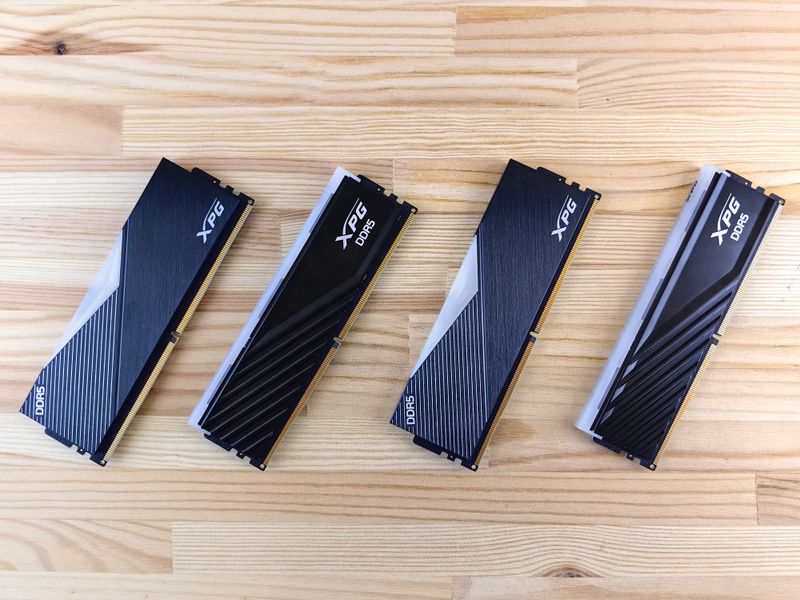
What it means for buyers
For consumers, the effect shows up as fewer discounts and thinner configurations. Analysts expect memory costs to bite into PC and smartphone volumes through 2026, with vendors either eating the extra cost or passing it on. Tom's Hardware reported that the price surge started to cool late in the cycle as shoppers hit an affordability ceiling, but DRAM contract prices were still projected to rise 13% to 18% quarter-over-quarter in the third quarter of 2026, with NAND flash up 10% to 15%. Cooling isn't the same as falling.
Enterprise buyers face a harder math problem. Rawat said scale alone no longer guarantees stability. "As supply becomes more contested in 2026, procurement bargaining power will hinge less on volume and more on strategic alignment," he said. Hyperscale cloud providers lock in supply through long-term deals, capacity reservations, and direct fab investments, so they get priority and lower cost. Mid-market firms lean on shorter contracts and spot buys, chasing whatever capacity the big players leave behind.
"This imbalance creates a dual constraint for the mid-market: higher input costs and longer delivery timelines," Rawat said. "Both directly limit their ability to scale infrastructure, deploy new workloads, or innovate at pace."
Relief isn't coming soon
New supply takes years to build. Samsung has announced a fresh memory production line at its Pyeongtaek plant in South Korea, but mass output won't start until 2028. That timeline leaves a gap of at least two years where AI demand keeps pulling wafers toward HBM and everyone else competes for what's left.
The situation ties memory pricing directly to the AI buildout. As long as data center operators keep ordering accelerators — and the current spending pace shows no sign of easing — HBM will keep commanding wafer priority. Standard DRAM and NAND stay tight as a side effect. That's a structural shift, not a passing spike, and it changes how buyers at every level plan hardware purchases.
The memory story also connects to the wider chip build-out happening in fabs worldwide. Companies expanding advanced packaging and leading-edge nodes are the same ones deciding how much wafer capacity goes to HBM versus commodity memory. For readers tracking those moves, our semiconductors coverage follows the fab expansions and supply decisions shaping prices, and our AI coverage tracks the demand side driving them.
For now, the message from the largest player in the market is straightforward: budget for higher memory costs, and don't count on a quick correction. Samsung, SK Hynix, Micron, and Nvidia did not immediately respond to requests for comment on the pricing outlook. More detail on the industry-wide warning is available via Network World's report.