Netmore Extends LoRaWAN with Kinlis Satellite Connectivity for Global IoT Coverage
By IoT News Desk | September 4, 2026
Terrestrial LPWAN networks work well when devices remain inside a predictable coverage footprint. The equation becomes more difficult for mobile assets, remote infrastructure or environmental monitoring systems that may operate far from gateways—and extending the terrestrial network is not always technically or economically practical. For logistics operators managing assets that cross international borders, for water utilities overseeing treatment facilities in mountainous terrain, and for mining companies monitoring equipment in open-cut pits, the gap between cellular coverage and operational need has long been a costly problem to solve.
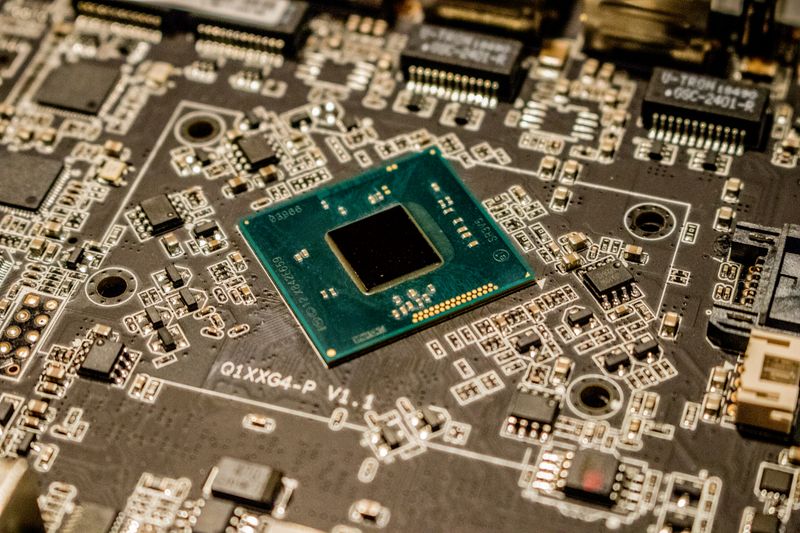
A wireless IoT gateway with directional antennas, providing long-range connectivity for sensors across a geographic area.

A satellite communications dish positioned in an open field with clear sky view, illustrating the line-of-sight requirements for non-terrestrial network connectivity.
Kinlis Satellite Integration via ThingPark Platform
Netmore Group is addressing that coverage boundary through a strategic partnership with European satellite IoT operator Kinlis. Under the agreement, Kinlis connectivity will be available through Netmore across the 18 countries where the LPWAN operator currently operates, with satellite and terrestrial connectivity delivered through Netmore's ThingPark platform. The partnership brings together two LoRa Alliance members with complementary strengths: Netmore's established terrestrial LPWAN infrastructure and Kinlis's dedicated constellation of 25 IoT-focused satellites.
Kinlis operates a constellation of 25 satellites dedicated to IoT and AIS services. The partnership is designed to let a connected device communicate over terrestrial LoRaWAN where coverage is available and use satellite connectivity when it moves outside that footprint. According to the companies, switching between the two networks is automated rather than requiring manual intervention.
This is the aspect that differentiates the announcement from a conventional satellite IoT partnership. Netmore is not simply adding a separate satellite service alongside its terrestrial network. The companies are positioning satellite connectivity as an extension of the existing LPWAN environment, with both connectivity paths presented through the same platform. For network operators and application developers, that means managing a single connectivity contract rather than juggling separate terrestrial and satellite relationships.
Hybrid Connectivity Architecture
That architecture is particularly relevant for applications where coverage conditions can change during the lifetime or movement of an asset. A logistics tracker, for example, may spend most of its time within terrestrial LoRaWAN coverage but still need to report once transported through remote areas. Similar requirements can arise with water infrastructure, tanks, industrial installations and environmental sensors.
Another notable element is that the partnership is not dependent entirely on future device development. Kinlis says hybrid LoRaWAN/satellite products are already available from several vendors, including Track Value and Beepings for asset tracking, Sentiv for water and infrastructure monitoring, and Dryad for environmental monitoring and wildfire detection. For OEMs and system integrators, having existing hardware designed for the two connectivity environments potentially removes part of that integration burden and makes hybrid connectivity applicable to projects that cannot justify a dedicated hardware development program.
The partnership also sits within an emerging effort to make terrestrial and satellite LPWAN technologies work more coherently. Netmore and Kinlis are both members of the LoRa Alliance, and the companies point to planned Satellite Discovery Enhancements intended to standardize how commercial LoRaWAN devices discover and connect with satellite constellations.
Market Forecast and Growth Trajectory
Omdia is forecasting satellite IoT connections to reach 197.6 million by 2035, underscoring the growing role of non-terrestrial connectivity in the wider IoT market. The composition of that growth is also notable: Omdia's application forecast shows automotive becoming by far the largest source of satellite IoT connections by 2035, accounting for more than half of the projected total. Transportation and logistics represents another substantial share, while environmental monitoring and agricultural applications are expected to grow rapidly.
That context gives weight to the Netmore-Kinlis announcement. At almost 200 million connections, satellite IoT cannot be understood only through the lens of high-value terminals or specialist remote monitoring systems. The connection volume implies a need for lower-cost devices, simplified onboarding and transparent multi-network operation—the exact characteristics this partnership targets.
Cost Dynamics and Accessibility
Satellite connectivity has traditionally come at a premium that priced it out of all but the highest-value applications. A dedicated satellite modem alone could cost more than an entire IoT deployment unit—before adding sensors, enclosures or batteries. That cost structure drew a line across the IoT coverage: everything inside cellular coverage got real-time connectivity, and everything outside it got manual intervention or no data at all.
The equation is shifting. Non-Terrestrial Networks standardized in 3GPP Release 17 let normal NB-IoT devices communicate with satellites using the same protocol stack they already use for terrestrial cell towers. No proprietary satellite radio. No second modem bolted onto the board. The Nordic nRF9151, for instance, supports NTN through a firmware update—the same silicon that handles terrestrial NB-IoT handles satellite connectivity too, with the same antenna and SIM slot. Complete hardware solutions can now be assembled for approximately €450 (including enclosure), representing a 90% reduction compared to dedicated satellite-only systems that once cost €5,000 or more.
Technical Requirements and Limitations
Unlike terrestrial NB-IoT, which works indoors or in a pocket, NTN connectivity requires the antenna to have a clear line of sight to the sky—no roof, no dense tree cover, ideally outdoors and away from tall buildings. This is a fundamental physical constraint that differentiates NTN from terrestrial LPWAN deployments.
Satellite type matters for application design. GEO satellites at roughly 36,000 km altitude offer continuous coverage and low throughput (around 1-2 kbps), suited for infrequent small messages like alarms. LEO satellites at 600-800 km offer higher throughput (20-40 kbps) but require a constellation of dozens to hundreds for always-on coverage. Monogoto's hybrid approach combines both: GEO via Skylo and Viasat, LEO via OQ Technology.
Connection registration also differs from terrestrial expectations. A terrestrial NB-IoT device attaches in seconds; NTN registration typically takes 30-60 seconds outdoors. Designing for NTN means planning around a registration process that can take minutes, not the near-instant assumption terrestrial deployments can make.
Industry Impact and Future Outlook
The practical implication of developments like the Netmore-Kinlis partnership is that satellite IoT may increasingly become a coverage layer within LPWAN deployments rather than a completely separate connectivity architecture. For utilities, infrastructure operators and enterprises, that could make network design less dependent on achieving universal terrestrial coverage: terrestrial LoRaWAN can handle locations where infrastructure exists, while satellite provides a fallback for assets or sites beyond it.
The value of the Netmore-Kinlis agreement will therefore depend less on the theoretical availability of satellite coverage than on how transparently devices, network services and application platforms can operate across both environments. By bringing the two paths into ThingPark and supporting existing hybrid devices, the partnership targets that operational layer directly.
As 3GPP Release 17 NTN capabilities mature and more chip vendors add firmware support for satellite operation, the cost and complexity barriers that have kept satellite IoT in specialist niches are likely to continue falling. The question for network operators and IoT architects is no longer whether satellite connectivity belongs in their toolkit, but how to design for transparent multi-network operation.
Future Outlook and Connectivity Standards
As 3GPP Release 17 NTN capabilities mature and more chip vendors add firmware support for satellite operation, the cost and complexity barriers that have kept satellite IoT in specialist niches are likely to continue falling. The question for network operators and IoT architects is no longer whether satellite connectivity belongs in their toolkit, but how to design for transparent multi-network operation. For further analysis on connected device architectures, see our dedicated IoT Connectivity Hub.
Source: IoT Business News, September 4, 2026 Additional reporting: ISURLOG Technical Documentation, August 2026 Report by the IoT News Desk covering global connectivity innovations