Microsoft's Hyderabad Region Goes Live as Its Fourth India Cloud Hub
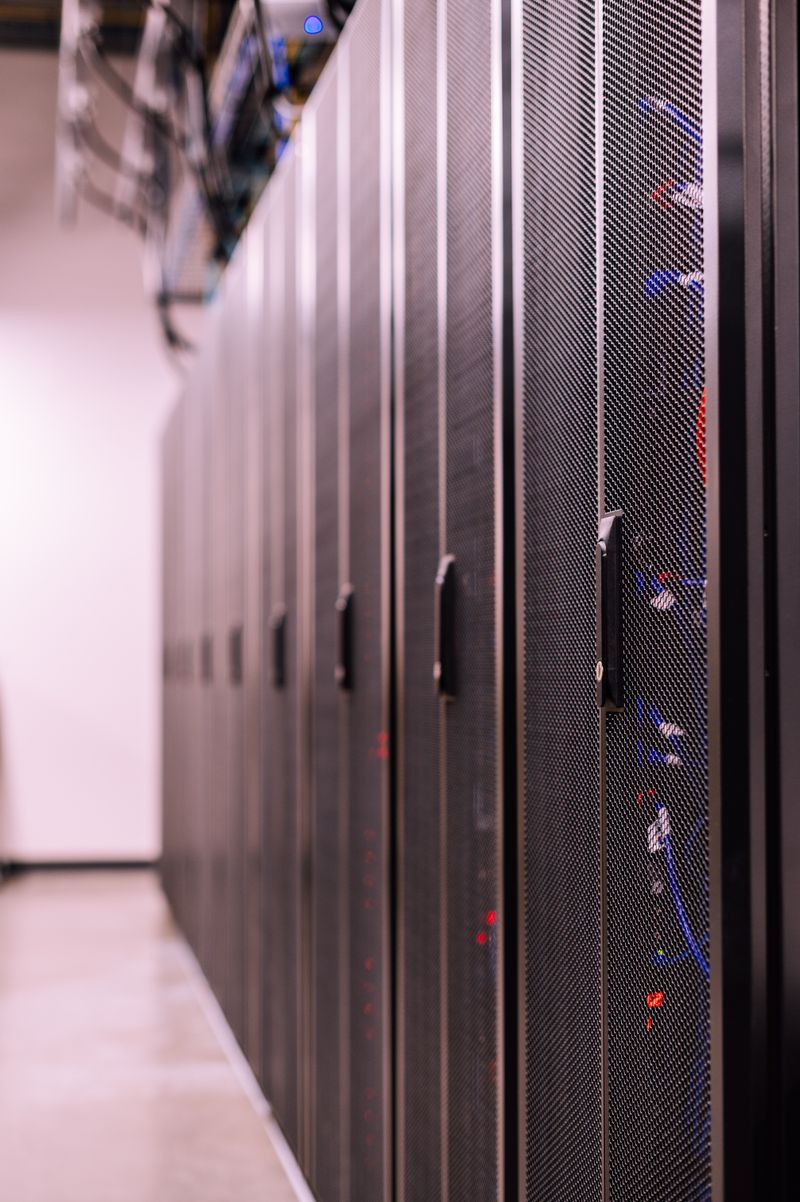
Microsoft turned on its newest India cloud region this week, and the timing says a lot about where the company thinks the country's AI market is heading. The India South Central region in Hyderabad reached general availability on August 6, giving customers three availability zones designed to anchor mission-critical workloads. It is Microsoft's fourth full cloud region in India, after Pune, Chennai and Mumbai, and the company says the four regions give it the largest hyperscale footprint of any cloud provider in the country.
Three Zones, Seismic Rules, and a Disaster-Recovery Pair
The Hyderabad region runs three availability zones, each built to hold up even when the others fail. Microsoft designed the facility around India's regulatory and seismic requirements rather than dropping in a generic template, which matters for banks, insurers and government-adjacent customers that must keep data inside national borders. Data residency was the single biggest driver of the new region's early demand, and the three-zone layout lets customers run active-active workloads instead of paying for a disaster recovery site that sits idle most of the year.
AZs matter more in India than in most markets because the country's cloud buyers have been burned by outages before. A zone is a physically separate data center with its own power, cooling and network, and a region with three of them lets an application fail over between zones without leaving the country. HDFC Bank plans to treat Hyderabad as the disaster-recovery pair for its Central India footprint, exactly the pattern Microsoft is selling: keep both copies in-country, keep the distance short, and let the bank's own software decide which zone runs live at any moment.
That early customer list already includes some of India's largest companies. Adani Group, Bajaj Finserv, HDFC Bank and payments firm PB Pay took early access ahead of the general availability announcement. Bajaj Finance's CIO described the region in terms of data residency, resilience and room to scale AI workloads. PB Pay's chief executive said enterprise-grade infrastructure closer to customers is what lets his team ship compliant financial products at the pace the market wants. These are not pilot projects — they are production workloads for regulated financial institutions.
The $20.5 Billion Question Behind the Region
The launch sits inside a much larger money commitment. Microsoft has pledged US$20.5 billion to India's cloud and AI infrastructure, stacking a $3 billion commitment announced in January 2025 on top of a $17.5 billion follow-up in December 2025. The new region is the physical answer to that check.
IDC expects India's public cloud spending to hit US$45.7 billion by 2030, growing at 22.2 percent annually, and AI-related spending is compounding at roughly double that rate, according to William Lee, senior research director at IDC. Lee described the new region as part of a shift in how hyperscale capacity is being localized for the AI era, with proximity and sovereignty becoming baseline requirements rather than differentiators.
The early demand signals back that up. More than 90 percent of NIFTY 100 companies in Microsoft's own analysis use Microsoft 365 Copilot, and the big IT services firms — Infosys, TCS, Wipro and LTIMindtree — have signed up for more than 400,000 Copilot seats combined. Microsoft says those numbers show enterprise AI in India moving from pilots to production workloads, which is the moment when a local region stops being a nice-to-have and starts being a requirement. Globally, Microsoft 365 Copilot has crossed 30 million paid seats as of the company's fiscal Q4 results.
Cooling, Power and the Zero-Water Push
The Hyderabad region also runs cooler than the typical data center. Microsoft equipped the facilities with air-cooled chillers and enhanced mechanical cooling, part of a company-wide move toward next-generation data centers that consume no water for cooling. That is not a small point in a country where data center water use has become a contested issue, and it dovetails with Microsoft's February 2026 announcement that it matched 100 percent of its annual global electricity consumption with renewable energy.
Getting the green power to India is its own project. Microsoft has signed multi-year power purchase agreements covering more than 1,000 megawatts of new solar, wind and hybrid energy capacity, with more than 630 megawatts already operating. ReNew and Amplus are among the developers involved. The ReNew contract also directs about $15 million of revenue toward community projects — rural electrification, water quality, women's livelihoods — an unusual clause for a cloud deal.
The company is stacking its India skill pipeline on top of the same numbers. Microsoft has committed to equipping 20 million Indians with AI skills by 2030 and says it has already trained 5.6 million people since January 2025, helping more than 125,000 individuals reach new jobs or entrepreneurial work.
What Hyderabad Means for the Rest of Asia
The launch continues a pattern that cloud watchers keep pointing to: hyperscalers are building fast in Asia rather than importing compute from elsewhere. Microsoft's global footprint already spans more than 80 regions across 34 countries, more than 500 data centers, roughly 800,000 kilometers of terrestrial and subsea fiber, and over 20 million miles of network cable. The two Jio partnership data centers — Jio India West and Jio India Central — backstop the four public regions.
Microsoft India and South Asia president Puneet Chandok says the company is not building infrastructure to keep up with demand — it is betting on India's ability to set the pace. Whether Hyderabad becomes the anchor of that remains to be seen, but the early customer list is real: four large financial and industrial names confirmed on day one.
For Indonesia and the broader region, the move reinforces the trend our Cloud & Edge Computing coverage has been tracking all week: hyperscaler capacity keeps moving onshore across Asia, and power plus data residency are the two constraints deciding where it lands. The India South Central region gives Southeast Asia another regional hub to route around, and another data point on the same arc that has seen Microsoft commit billions to the subcontinent. Microsoft's own announcement is available on the corporate news blog, and the region's live service list sits at Microsoft's datacenter map.
The Bottom Line
The real significance of the Hyderabad region is not the concrete — it is the pattern. When a cloud provider plants a three-availability-zone region in a specific city, it is pricing that city's enterprises, regulators and energy markets as stable enough to anchor production AI workloads. India now has four such regions plus two Jio-partnered centers; the country is not waiting for permission to become an AI market, and the financial sector's early adopters have already written the first checks. For enterprises across Asia tracking where to run their workloads, the answer is shifting steadily from "anywhere" toward "as close to the data as local regulation demands."