Nvidia's PAIR Turns Idle Home Computers Into a Personal AI Data Center
Nvidia is making a contrarian bet: the most useful AI infrastructure of 2026 is not a $20 billion hyperscale campus. It's the desktop sitting in the den. At IFA 2026, the company introduced PAIR (Personal AI Router), a free, open-source tool that networks idle home computers into a personal, on-premise AI data center capable of running local inference workloads across heterogeneous hardware — GeForce RTX cards, DGX Spark systems, Apple M4 silicon, all in the same pool.
The launch comes at a moment when both cloud GPU pricing and grid strain around new data center campuses are pushing consumers and developers to look for cheaper ways to run small models locally. Pairwise, Nvidia's strategy signals a clear pivot: the same Tensor Cores already shipped into millions of gaming PCs can be turned into a private inference fabric, with PAIR acting as the orchestrator that has, until now, been missing.
What PAIR Is — and Isn't
Despite the name, PAIR is not a hardware router. It is open-source software developed by Nvidia that discovers compatible machines on a local network, binds them together, and dispatches inference requests across them using existing tools like Ollama and LM Studio. The beta launched this week with support for Windows, Linux, and macOS.
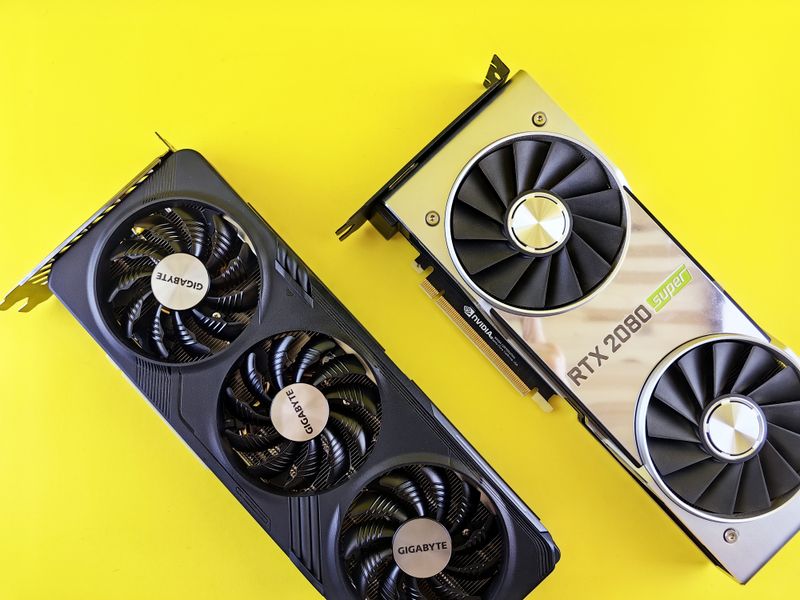
The supported hardware matrix is broad. PAIR works with Nvidia GeForce RTX 20-series cards and newer, RTX Pro GPUs, and DGX Spark systems. Apple's M4 chips and later are also compatible, allowing households to mix a MacBook Pro with a Windows gaming tower without abandoning either ecosystem.
Nvidia product manager Seth Schneider described the system's potential in a media briefing. A theoretical household containing an RTX Spark laptop, a DGX Spark desktop, an RTX 5090 laptop, a MacBook Pro, and a gaming desktop could collectively offer around 165 teraflops of underutilized compute, much of it sitting idle for most of the day. "It's truly a treasure trove of free tokens just sitting in homes today," Schneider said, even after accounting for typical household electricity costs.
How the Cluster Functions
PAIR is designed around idle-time scheduling. When a user starts playing a game on a desktop, opens a heavy workload on a workstation, or simply steps away from a machine, PAIR automatically adjusts the cluster's contribution. Devices join and leave the pool without manual reconfiguration, and the system is built to absorb churn — exactly the conditions present in any real home network.
Security is built into the onboarding. All devices are paired using a six-digit code, and the channel between them is then secured with mutual TLS (mTLS), creating an encrypted, authenticated link in both directions. The model is closer to consumer-friendly mesh-networking than to enterprise cluster orchestration, but it is purpose-built for the new wave of small-language-model and agentic AI workloads.
Rather than running a single large model on a single machine, PAIR distributes inference across devices. Complex agentic workflows — tasks broken into many sub-problems that can be processed in parallel — benefit most, since each sub-task can be routed to whichever node is currently available. This kind of disaggregation has been a research topic for years; Nvidia is now shipping it as a consumer product.
The Ecosystem Push Behind PAIR
PAIR is not arriving in isolation. At the same event, Nvidia announced simplified local setup experiences for three major AI agent platforms: Perplexity Portable Computer, Hermes Agent, and OpenClaw. The integrations are designed to compress the configuration burden that has slowed adoption of on-device AI, letting users launch local agents in a few clicks rather than wrestling with Python environments and model weights.
This reflects a wider industry trend: in 2026, every consumer hardware player is trying to lower the cost of running AI locally. The market for compact open-weight models has matured, and a network like PAIR offers a path to running larger models than any single device could host. For Nvidia, the strategic value is less about selling PAIR itself (it is free) and more about fueling continued demand for RTX and DGX hardware. If consumers see a clear return from upgrading their gaming PC, the cycle strengthens.
What This Means for Cloud and Edge
PAIR is, functionally, an edge-computing play. By pushing inference to the network edge — to individual homes and small offices — it sidesteps three of the most acute problems in the AI buildout: cloud GPU scarcity, data-center power constraints, and the latency of round-tripping every query to a regional cloud region. The same trend has driven telcos to host inference at cell-tower sites, and hyperscalers to build micro data centers in second-tier cities. Nvidia is taking that logic to its logical conclusion: the edge is the desk, the kitchen counter, the home office.
The economics are also notable. Cloud inference pricing for a comparable model can run into hundreds of dollars per million tokens for premium models. Local inference on idle hardware is, in effect, free after the upfront GPU cost. For users running personal assistants, transcription jobs, or coding tools that lean heavily on inference, PAIR changes the cost calculus materially.
There are real implications here for developers. A standard RTX-equipped workstation can now participate in inference clusters without specialized networking hardware. The tool is open source, which means third parties can extend the orchestrator to support additional runtimes, scheduler policies, or hardware targets. Nvidia's bet is that the community will fill in the gaps.
Caveats and Unknowns
The beta has limits. Nvidia acknowledges that most realistic PAIR users will own something like one laptop and one gaming PC, not the five-machine household Schneider used as a thought experiment. Power consumption, while modest compared with a hyperscale data center, is not zero; households running heavy inference overnight will see a meaningful bump in their electricity bill, though it is unlikely to approach the cost of cloud GPU time.
The tool also has not yet been benchmarked at scale. Real-world performance will depend heavily on network conditions, machine-to-machine latency, and how well the scheduler handles heterogeneous hardware. RTX 20-series cards are supported, but the Tensor Core capabilities vary widely across generations, and throughput bottlenecks may emerge as the cluster grows.
The bigger question is whether PAIR will become a true consumer phenomenon or remain a tinkerer's tool. Local AI adoption has been growing, but the path from "developer side project" to "product feature in a mass-market device" has historically been slow. Nvidia's decision to launch PAIR as free, open-source software, rather than a paid service, suggests the company sees it more as a demand driver for its hardware than as a standalone business.
There are also competitive considerations. AMD has been pushing its own local inference story around ROCm and consumer Radeon cards, and Apple's Metal Performance Shaders give M-series Macs a smooth path to on-device models without any orchestration layer. PAIR's differentiation is the aggregation itself: no single vendor's toolkit currently does a good job of pooling machines of different brands and ages into one inference resource. That is a genuinely open gap, and Nvidia has moved first to claim it. Developers experimenting with the beta in the first weeks will set the tone for how seriously the ecosystem treats it.
All of this lands against a fast-moving situation across the broader cloud market. Hyperscalers are racing to add GPU capacity, neocloud startups are raising billions to build AI-focused facilities, and grid operators in several countries are warning that power delivery, not silicon, is becoming the binding constraint on new data center growth. Every one of those trends makes distributed, on-premise inference more attractive, and PAIR arrives at a moment when the economics are shifting in its favor.
The Bottom Line
PAIR is the first mainstream attempt to bring cluster-scale AI inference into a consumer living room. It is free, it works on hardware millions of people already own, and it lowers the barrier to running local agents in a way no prior product has. Whether it sparks a wave of household AI clusters or remains a niche tool for developers, the direction of travel is now unmistakable: the edge of the AI network is moving from the cell tower into the home, and Nvidia wants to be the infrastructure layer underneath.
Sources
Nvidia — Personal AI Router product page