Microsoft's cloud business just had its best quarter in four years. Azure revenue jumped 43% in the fiscal fourth quarter, pushing full-year Azure revenue past the $100 billion mark for the first time. The company posted overall revenue of $90 billion for the quarter, up 18% from a year ago.

The results, released Wednesday after markets closed, blew past analyst expectations. Wall Street had predicted Azure would grow around 40% — the actual 43% figure represents the fastest quarterly clip since early 2022 and the pace is still accelerating. CFO Amy Hood told analysts on the earnings call she expects Azure growth to hit roughly 45% in the current quarter.
"Demand continues to exceed available supply," Hood said during the call.
The $100 Billion Azure Milestone
Azure's revenue crossing the $100 billion annual threshold marks a turning point for Microsoft's cloud strategy. The Intelligent Cloud segment, which includes Azure along with server products and enterprise services, brought in $39.3 billion in Q4 alone — up 32% year over year. Microsoft Cloud revenue as a whole hit $59.3 billion for the quarter, a 27% increase.
Satya Nadella, Microsoft's chairman and CEO, framed the results around the company's AI bet. "We are advancing the frontier on the cost-to-outcome curve, ensuring every customer can turn tokens into business results," he said. "This year, Azure revenue surpassed $100 billion for the first time, and Microsoft 365 Copilot reached over 30 million paid seats."
For the full fiscal year 2026 ending June 30, Microsoft reported $331.8 billion in revenue, up 18%, with net income of $133.7 billion — a 31% jump. Operating income hit $155.2 billion. Microsoft's official earnings release detailed the full breakdown.
The Cost of Keeping Up
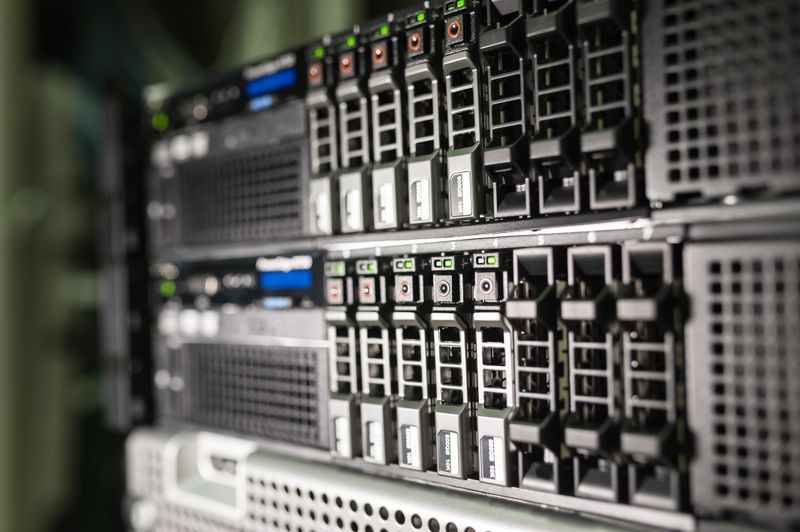
That growth doesn't come cheap. Microsoft spent $41 billion on capital expenditures in Q4 — a 70% increase from last year — virtually all of it going toward data centers, GPUs, and networking gear to handle the AI workload explosion. For the full year, total CapEx landed around $175 billion, after an accounting adjustment extended the useful life of data centers and office buildings by 10 years.
Hood said the company's underlying investment expectations "remain unchanged" even with that accounting tweak. The message to investors: Microsoft is not slowing its infrastructure buildout.
That $41 billion quarterly spend puts Microsoft alongside Amazon in a two-horse race no one else can match. Amazon is expected to invest roughly $200 billion in AI infrastructure this year as well, making the two hyperscalers responsible for a combined $400 billion in annual data center spending.
The spending spree has rattled Wall Street in recent weeks — Alphabet shares fell after hiking its own outlook, and Meta dropped after increasing its CapEx forecast. But Microsoft's stock rose about 8% in extended trading Wednesday, suggesting investors are willing to tolerate the burn rate as long as the revenue keeps growing.
Gartner Puts AWS, Google, Microsoft, and Oracle at the Top
The earnings land the same week Gartner published its 2026 Magic Quadrant for Cloud AI Infrastructure, naming 17 providers that are building the backbone of the AI industry. Amazon Web Services, Google Cloud, Microsoft Azure, and Oracle all ranked as Leaders — the highest category for both execution and vision.
Google took top marks for both execution and vision, driven by its custom TPU chips and the AI Hypercomputer architecture that combines TPUs, GPUs, and high-performance networking into a single platform. AWS ranked second in both dimensions, praised for its global infrastructure footprint and managed AI services like Amazon Bedrock and SageMaker HyperPod.
Microsoft ranked third in vision and fourth in execution. Gartner highlighted Microsoft's strength in linking Azure AI services with the broader Microsoft ecosystem — a major advantage for organizations already running Office 365, Dynamics, and the Power Platform. Its weaknesses? The Maia AI processor plays a smaller role in model training compared to the custom silicon at Google and AWS.
"Cloud AI infrastructure is in high demand for both clients and for partners like ourselves," said Sepehr Noorizadeh, president of BizCloud Experts, a solution provider and AWS Premier partner, in CRN's coverage of the Gartner quadrant. "Organizations need the infrastructure and partners to manage, service, and control it — to make it scalable, secure, and automated."
Other notable names on the quadrant: CoreWeave, Nebius, and Crusoe made the Visionaries category, while Vultr, OVHcloud, and Tencent Cloud landed as Challengers. Niche Players included Lambda, Cloudflare, and Nscale.
Edge Computing Gets Its Own Inflection Point
While hyperscalers grab headlines with billion-dollar data center campuses, a quieter shift is underway at the network edge. Telefónica just finished rolling out 17 edge computing nodes across Spain — a project it calls the Edge Plan — giving the country one of the most distributed compute footprints in Europe.
"Networks are critical to the country and the foundation of its digital sovereignty," said Borja Ochoa, CEO of Telefónica España, announcing the completion at the DigitalES Summit in late June. Each node is already live for business-to-business service delivery.
Edge computing processes data close to where it's generated rather than routing everything to a distant hyperscale data center. For manufacturing, logistics, drone operations, and digital twin applications, that cuts latency to milliseconds and keeps sensitive data within national borders. Telefónica's edge network is already being used for BVLOS drone missions, wildfire detection, and Industry 4.0 factory automation.
The project carries an IPCEI designation — a Project of Common European Interest — meaning the European Commission recognizes it as critical infrastructure. For European enterprises and public sector bodies worried about data residency and dependence on US-based cloud platforms, a domestic edge node offers something the hyperscalers cannot: sovereign control over where data is processed.
Estimates suggest roughly 34% of Kubernetes deployments now run on edge devices, from Raspberry Pi clusters to NVIDIA Jetson boards, using lightweight distributions like K3s. That number is climbing as more workloads shift toward real-time processing at the network perimeter rather than round-tripping through a central cloud region.
What It All Means for Cloud Customers
The Q4 numbers from Microsoft tell a simple story: AI is pulling cloud demand through the roof, and the hyperscalers are spending whatever it takes to keep up. For enterprise customers, that cuts both ways.
On one side, the infrastructure buildout means more capacity, faster innovation, and falling per-unit costs for AI compute. On the other, the concentration of AI infrastructure among a handful of US-based providers is pushing sovereign-cloud interest in Europe and Asia. Telefónica's edge play is just one example — Orange and Morrison recently announced a 3 billion euro data center push targeting 400 MW of French capacity, and Google signed a $30 billion deal with SpaceX for AI compute.
For Cloud & Edge Computing readers watching the space, the key takeaway is this: the $400 billion annual hyperscaler spend is creating opportunities beyond the big three. Edge infrastructure providers, sovereign cloud operators, and niche AI infrastructure players are all riding the same wave — and the wave is still building.
The gap between demand and supply for AI compute is not closing. Microsoft's Hood said it plainly: demand continues to exceed available supply. That's why CapEx is still climbing, why Azure is growing at 43%, and why the cloud infrastructure market shows no signs of cooling off.
Read more about AI, Semiconductors, and EV coverage.