Ikea sells smart light bulbs for less than ten dollars. Aqara's latest multi-sensor can detect whether anyone is in the room. Samsung ships built-in Thread radios in its fridges and TVs. Three years after the Connectivity Standards Alliance launched Matter 1.0, the smart home protocol has reached a turning point — more than 750 certified products, a growing roster of professional-grade backers, and a version 1.5 that finally adds video cameras to the mix.
But talk to anyone who has actually tried to set up a cross-brand smart home in 2026, and you will hear a different story. The Bilresa remote from Ikea does not work with Google Home. The Klippbok water detector ignores Amazon Alexa entirely. A robot vacuum that cleans specific rooms on Apple Home still cannot do the same on Android. The Matter standard is making real progress under the hood. On the surface, though, it often feels like the same old fragmentation.
"This is the natural tension in an open standard," says Ann Olivo, Head of Marketing at the Thread Group, which manages the low-power wireless protocol that underpins much of Matter’s network layer. "The specification moves fast. Platform adoption takes longer."
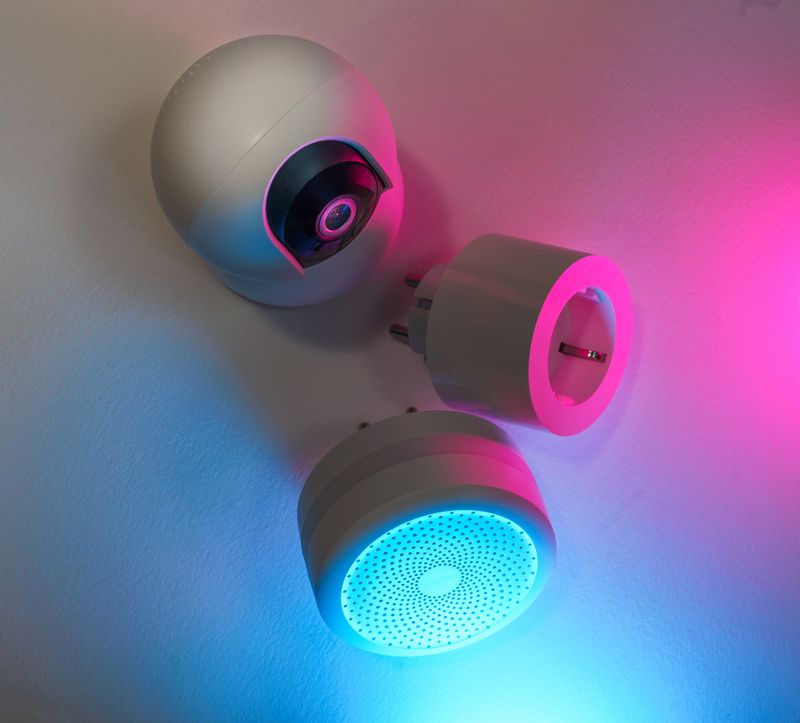
Thread 1.4 Brings Real Improvements to Battery Life and Network Stability
The biggest technical leap this year lives inside the Thread protocol. Version 1.4, finalized in late 2024 and now mandatory for all new border router certifications, fixes one of the most annoying problems in multi-vendor smart homes: parallel mesh networks.
Before Thread 1.4, every new border router — the device that connects a Thread network to Wi-Fi — would automatically create its own mesh. A home with an Apple TV, a Samsung SmartThings hub, and an Ikea Dirigera could end up with three separate Thread networks competing for the same radio spectrum. Devices hopped between meshes unpredictably. Batteries drained faster as sensors woke up repeatedly to search for a connection.
Thread 1.4 standardizes how credentials are shared between border routers. New routers now join the existing mesh instead of building a new one. SmartThings rolled out support first, followed by Ikea. Apple has embedded Thread 1.4 in tvOS 26, and Google is expected to follow later this year.
Battery-powered devices benefit directly from these changes. Matter 1.4 introduced power-saving modes that let sleeping sensors — things like door contacts, motion detectors, and wireless buttons — check in less often without losing their place in the network. Aqara’s FP300 multi-sensor, for example, can run up to two years on a single battery with Thread, though the company still quotes three years for the same sensor on Zigbee.
Olivo told The Verge in a recent interview that the Thread Group will no longer accept border router applications based on Thread 1.3 after January 1, 2026. The Connectivity Standards Alliance has followed suit, requiring Thread 1.4 certification for all border routers and network infrastructure managers since Matter 1.4.2.
The Platform Gap Remains the Standard’s Biggest Problem
Technical progress at the protocol level does not automatically translate into a smooth user experience. The four major smart home ecosystems — Apple Home, Google Home, Amazon Alexa, and Samsung SmartThings — support different subsets of Matter at different version levels, and they do a poor job of telling buyers what works and what does not.
SmartThings has been the fastest mover. Samsung’s smart home platform announced full Matter 1.5 support just weeks after the specification was published, making it the first ecosystem to support video cameras over Matter. Apple Home runs most of Matter 1.4’s service-area features — robot vacuums that can clean a specific room, for instance — but still lags on other 1.4 capabilities. Amazon claims Matter 1.4 SDK support but ships only a selection of the available device types. Google Home has not even enabled the generic smart switches that shipped with Matter 1.0.
The result is a confusing patchwork. A consumer who buys a Matter-certified water leak sensor from Ikea will find it works perfectly with Apple Home and SmartThings but shows up as an unrecognized device in Alexa. A Bilresa remote with four programmable buttons might handle single and double presses on one platform but ignore triple and quadruple presses on another.
"Some of these problems will fade as platforms catch up," says a developer who works on Home Assistant’s Matter integration and asked not to be named because they are not authorized to speak publicly. "But right now, the certification label on the box tells you almost nothing about what the device can actually do in your specific setup."
Matter-smarthome.de, an independent tracking site that maintains an updated product database, lists over 750 Matter-certified devices as of mid-2026. Many of those entries come with footnotes about platform compatibility gaps.
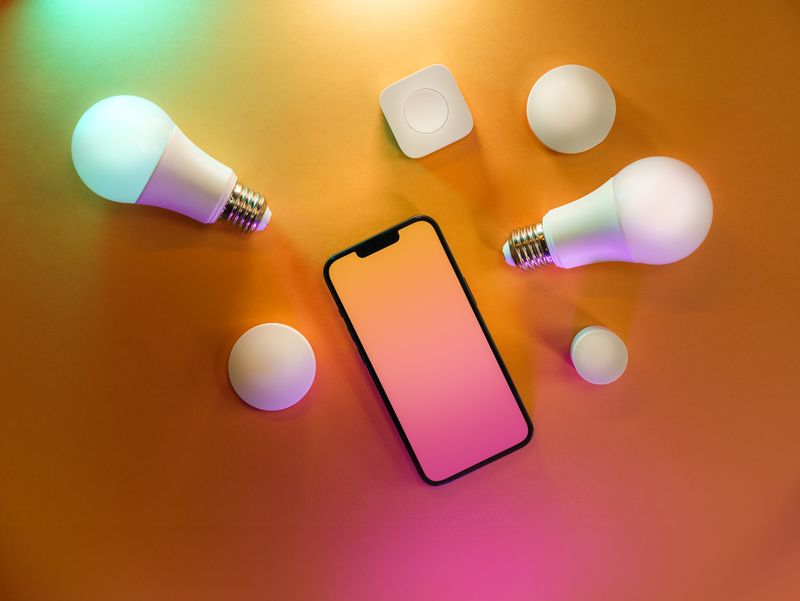
Ikea’s Thread Offensive Is Changing the Volume Game
Swedish furniture giant Ikea has emerged as an unlikely driving force for Matter adoption. After years of cautious support, the company launched more than 20 new Thread-based products in a single wave — bulbs, plugs, sensors, remote controls, and a new Dirigera hub update that supports Thread 1.4 credential sharing.
The pricing matters. Ikea sells Matter-certified smart bulbs for under $10, undercutting Philips Hue by a wide margin and putting connected lighting within reach of mainstream buyers rather than early adopters only. The Bilresa remote control, which includes a rotating disc wheel for dimming and scrolling, costs roughly $15.
"Ikea is the first mass-market manufacturer to treat Matter as a primary platform, not an experiment," says the product database editor at matter-smarthome.de. "They have the distribution, the pricing, and the product range to make Matter visible to people who would never walk into an electronics store."
Other manufacturers are following. Aqara, Bosch, Level, Meross, Philips Hue, and Yale have all released new Matter-certified devices this year. In the professional segment, ABB (through its Busch-Jaeger brand), Maco, and Warema have joined the alliance, signaling that Matter is moving beyond the consumer smart home into building automation.
The Long Road to a Truly Unified Smart Home
Matter’s supporters argue that the standard is following a familiar adoption curve: early enthusiasm, a messy middle where reality fails to match the marketing, and eventual stabilization as the installed base grows large enough to force platform convergence.
There are real signs that convergence is happening. The Distributed Compliance Ledger (DCL), a blockchain-based directory maintained by the CSA, now lists devices before they hit store shelves, giving developers and reviewers early access to certification data. New chip designs from Nordic Semiconductor — the nRF54 series — promise to close the battery-life gap between Thread and the older Zigbee protocol, which has had two decades of optimization work behind it.
Home Assistant, the open-source smart home platform, has introduced its own Matter server that bypasses some of the platform fragmentation by talking directly to devices at the protocol level. Homey offers a similar approach. Both options appeal to technical users but remain too complex for the mainstream audience that Matter was supposed to serve.
"The standard is growing from the bottom up," Olivo says. "It is not a top-down mandate. That means it takes longer, but the foundation is more solid."
For now, the advice for anyone building a smart home in 2026 is straightforward: check platform compatibility before buying, prefer Thread 1.4 certified devices where possible, and accept that some features will only work inside a single ecosystem until the platforms catch up with the specification. The technology is ready. The ecosystems are catching up. And three years in, Matter has already reshaped the smart home more than any standard before it.
Read more about IoT and smart home developments
For more context on Thread 1.4 certification requirements, see The Verge’s coverage of Apple’s Thread 1.4 implementation.