Matter Goes Native: LIFX Flips Old Bulbs to Thread, and Carriers Get a Standard API for the Smart Home
For years the smart home has looked unified on the box but fractured in the home. A light bought for Apple Home wouldn't talk to a hub built for Google. A router couldn't see the gadgets sitting on its own network. Two moves in the last two weeks — one from a lighting maker, one from a broadband standards body — point to the same fix: put the network itself in charge of the smart home, and let the radio inside the device decide how it connects.
On August 25, LIFX opened a public beta that lets owners of its current Matter-enabled lights switch from Wi-Fi to Thread without buying new hardware. Days earlier, on August 18, the Broadband Forum published TR-517, the first standardized "Matter Service API" that gives a broadband gateway a complete, vendor-neutral view of every Matter device on a home network. Together they show where the connected home is actually heading: a quiet mesh, run by the infrastructure, not by a dozen competing apps.
LIFX's Thread beta: the radio was there all along
LIFX first said it would bring Thread to its current products at CES 2026. The promise was simple — owners of newer Matter lights would get a choice of Wi-Fi or Thread, with no new hardware. The beta makes good on that. According to LIFX, any product that shipped with Matter support already carries a chip able to run over either transport. In other words, a bulb sold as "Matter over Wi-Fi" has held Thread-capable silicon inside it the whole time.
That matters because LIFX products won't run Wi-Fi and Thread at the same time. A user picks one. Most owners will stay on 2.4 GHz Wi-Fi at first; once they join the beta, a "Switch to Thread" button appears in the LIFX app and migrates the device onto the home's Thread mesh. LIFX says response times stay about the same — smart lighting commands need almost no bandwidth, so Thread's lower throughput is rarely a limit. The real win is structural: a dedicated low-power mesh for devices, and fewer gadgets competing for a slot on the family Wi-Fi router.
Thread is an IPv6-based mesh protocol built for IoT. Mains-powered devices form a self-healing network, and a Thread Border Router bridges that mesh to the rest of the local IP network. For Apple Home users, that border router is already in the house — the HomePod mini, the second-generation HomePod, and recent Apple TV 4K models all carry one. The hardware to run a proper smart-home mesh has been sitting in living rooms for years. LIFX is just the first big lighting brand to put it to use on gear people already own.
The carrier's view: one API for every brand
LIFX is solving the radio problem from the device side. The Broadband Forum is solving the management problem from the network side. TR-517, published August 18, ties the forum's User Services Platform (USP, also known as TR-369) to the Matter protocol. The result is a single, consistent API a service provider can call to see and manage every Matter device on a customer's network — Apple, Google, Amazon, or Samsung — without writing a custom integration for each ecosystem.
Jason Walls, co-director of the forum's Connected User Work Area and director of technical marketing at QA Cafe, put the gap plainly: industry work on Matter has made devices interoperate, but access to those devices is still locked inside proprietary clouds and apps. TR-517 is meant to change that. Because the model tracks Matter's own evolving device definitions, a provider gains a framework that absorbs new device types — cameras, energy managers, appliances, sensors, shading — as the standard adds them.
Orange Innovation's Xavier Roubaud spelled out why carriers care. Many Matter deployments, he noted, stay tied to proprietary cloud platforms and vendor apps, leaving providers with a fragmented picture when they try to build services across brands. With a common service layer, gateways and hubs become stable platforms for monetizable features — diagnostics that catch a failing sensor before the customer notices, automation, and energy tools delivered at scale.
The timing lines up with a broader shift in broadband thinking. The forum's own August note pairs TR-517 with an "Unlocking Matter" webinar and leans on the same theme repeated across its member meeting: automation only scales in multi-vendor networks when everyone agrees on how data is represented and managed. That is exactly the problem Matter set out to solve at the device layer, and TR-517 extends to the operator layer.
Why this is the same story
Step back and the two announcements are two halves of one design. LIFX moves the device onto a shared, local mesh. The Broadband Forum gives the gateway a shared, standard way to see that mesh. Both push control away from closed cloud apps and toward the home network itself.
That shift has real consequences for buyers. A smart home that runs on Thread, behind a border router, keeps working when the vendor's cloud has an outage — the lights don't need the internet to respond to a switch. A gateway that understands Matter through one API can offer support and diagnostics the way a utility offers them, instead of punting users to a different app for every brand. For the first time, the people who run the pipe are getting the tools to run the home too.

The security shadow that comes with the convenience
More devices on a local mesh, managed by the carrier, also widens the attack surface — and the warnings are fresh. On August 21, CISA published an advisory on Rently Smart Home, a platform property managers use for lockboxes, thermostats, and access codes. The flaw, tracked as CVE-2026-75960, is an insufficiently protected credentials issue in versions 20.1.0 and earlier. An attacker could pull the master PIN and override normal user permissions. CISA scored it 8.1 on CVSS v3.1 and 8.7 on v4.0 — high in both scales. Rently says it patched the issue in late June with no user action required, but the episode is a reminder that "smart home" often means "internet-exposed home," and that a single credential leak can hand over the front door.
CISA's guidance is blunt: keep control systems off the public internet, put them behind firewalls, and isolate them from business networks. That advice sits awkwardly next to the industry's push to make every device remotely manageable. The resolution the standards bodies are betting on is local-first control — Thread meshes and border routers that keep device traffic on the home network, with the cloud as a convenience rather than a requirement. Done right, TR-517-style management reinforces that model instead of undermining it, because the gateway manages devices it can already see on the LAN.
What buyers should actually do
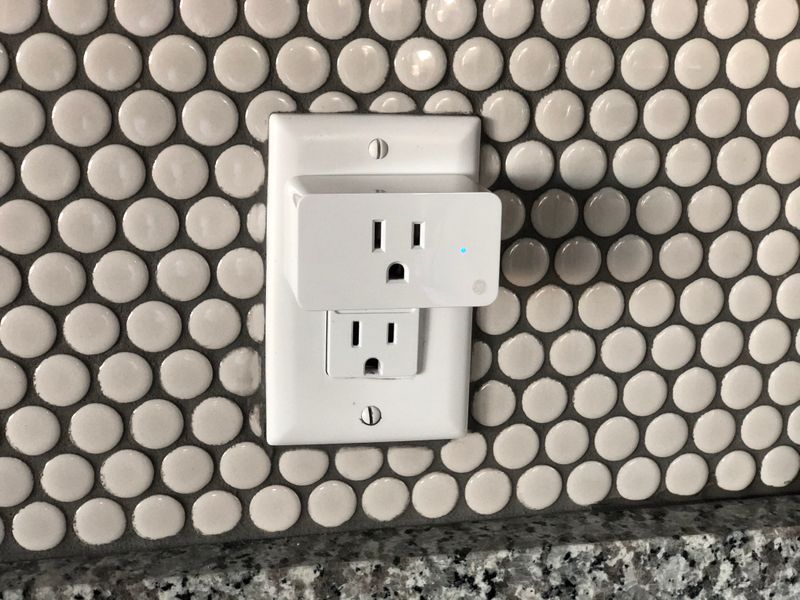
If you own LIFX Matter lights, the Thread beta is low-risk to try — it doesn't void anything, and you can stay on Wi-Fi if the mesh in your home is thin. The catch is that Thread needs a border router with enough mains-powered devices around it to stay healthy; a single bulb at the far end of a long house may prefer Wi-Fi until you add a plug or two to extend the mesh. A smart plug is the cheapest way to thicken a Thread network, and it doubles as a remote-controlled outlet.
For people choosing a system now, the practical takeaway is to favor gear that speaks Matter and sits on Thread where possible, and to run it through a border router you control — a HomePod, an Apple TV, or a capable broadband gateway — rather than a vendor cloud you don't. As carriers adopt TR-517, the gateway you already rent may soon surface a single "smart home" panel that lists every device, flags the ones that have drifted offline, and lets support act before you pick up the phone.
The connected home has spent a decade promising one app to rule them all and delivering ten. The fix was never another app. It was a common radio and a common API — and in the span of a week, two different corners of the industry shipped both.
The bigger picture
None of this is a finished product. LIFX's Thread support is a beta, limited to devices that shipped with Matter silicon. TR-517 is a standard carriers must still build into shipping gateways. Rently's patch shows how slowly the security side moves once a flaw is public. But the direction is clear, and it finally points one way: the smart home is becoming a property of the network, not the app store.
For the IoT category as a whole, that is the story worth watching in the back half of 2026. The standards fights are largely over. What's left is execution — getting Thread meshes dense enough to trust, getting gateways to speak Matter without a per-vendor plugin, and keeping the convenience from outrunning the security. The Semiconductors supply chain that builds these radios, and the Cybersecurity practices that keep them safe, will decide how fast it arrives.
Sources: LIFX via HomeKit News (Aug 25, 2026), Broadband Forum TR-517 announcement (Aug 18, 2026), and CISA ICS advisory ICSA-26-237-01 on Rently Smart Home (Aug 21, 2026).