The cloud computing world got a wake-up call this week. Google agreed to pay SpaceX roughly $920 million a month — close to $30 billion through June 2029 — for access to AI compute capacity at xAI's Memphis data center campus. The deal, first reported by Bloomberg, is one of the largest single compute leases in corporate history and signals just how far the hyperscalers will go to lock down GPU supply.
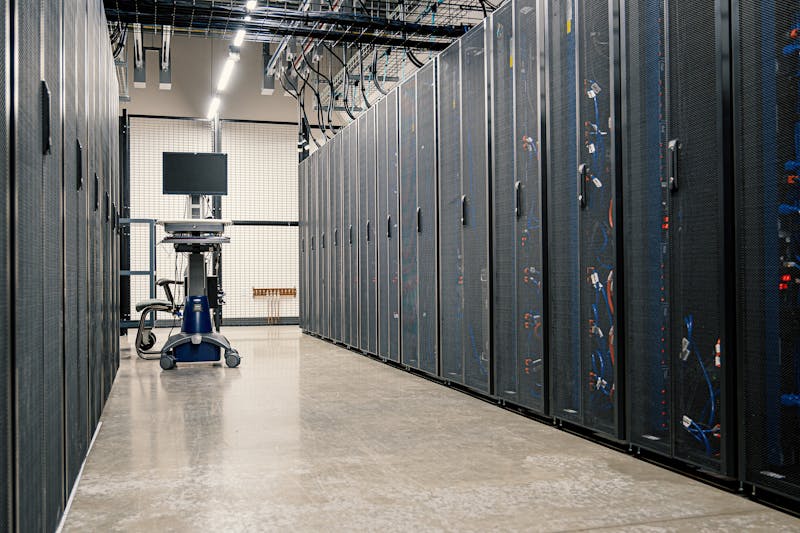
A $30 Billion Bet on Outsourced Compute
The monthly sticker — $920 million — towers over any comparable deal in the industry. For context, Anthropic's multi-year agreement with SpaceX was reported in the hundreds-of-millions range. Google's arrangement is roughly an order of magnitude larger, reflecting both the scale of Gemini's training requirements and the scarcity of available GPU clusters at a time when every hyperscaler is fighting for access.
"Sourcing compute externally at this scale is a major strategic shift for Google," said Dan Ives, an analyst at Wedbush Securities. "They've spent years building one of the largest cloud infrastructure footprints on earth, and now they're effectively renting someone else's data center to keep up with internal demand. That tells you how tight the GPU market still is."
xAI broke ground on the Memphis campus in early 2025 and has since expanded it to an estimated 4.5 gigawatts of critical IT load — making it one of the largest single AI computing sites in North America. The facility runs primarily on Nvidia hardware but is also testing Dojo 2 chips, xAI's in-house AI accelerator, according to Bloomberg.
The deal also marks a departure from Google's usual approach of building its own infrastructure. The company spent $80 billion on capital expenditures in 2025 alone, much of it on data center construction. But with lead times for new facilities stretching to 24 months and GPU delivery windows even longer, renting existing capacity has become the fastest path to growth.
Spacex's Cloud Revenue Before a Potential Ipo
The deal throws a spotlight on SpaceX itself, which has quietly built a compute-leasing business that analysts say could generate more than $10 billion in annual revenue by 2027 — a sizable chunk from the Google contract alone. SpaceX is widely expected to pursue an IPO within the next 18 months, and the recurring revenue from this deal could meaningfully shape its valuation.
"This transforms the narrative around SpaceX from a launch and satellite company into a compute infrastructure provider," noted industry analysts at The Register. Starlink, SpaceX's satellite internet division, already runs a cloud-adjacent business through its direct-to-cell and enterprise connectivity services. Adding a three-year compute lease with Google broadens the company's addressable market into cloud services, positioning it as a direct competitor to traditional colocation providers like Equinix and Digital Realty.
The Memphis campus itself has been a source of controversy. Local residents and environmental groups have raised concerns about water usage for cooling and the strain on the Tennessee Valley Authority's power grid. xAI has responded by investing in on-site gas turbine generation and exploring small modular nuclear reactors for future phases — a move that mirrors similar efforts by AWS and Google at their own multi-gigawatt campuses.
The Broader Cloud Infrastructure Arms Race
Google's deal with SpaceX is the latest and most dramatic example of a broader trend: hyperscale cloud providers are exhausting their own build capacity and turning to third-party colocation and compute leasing to bridge the gap. Across the industry, the numbers are staggering.
OpenAI's own cloud spending is projected to hit $750 billion through 2030, according to a Wall Street Journal report published Monday. That figure includes not just its primary contract with Microsoft Azure but also secondary deals with Oracle, CoreWeave, and potentially Google Cloud itself. OpenAI's Sam Altman has been vocal about the need for "astronomical" capital expenditure to stay competitive, warning that the cost of running frontier AI models will continue to climb.
Amazon Web Services, meanwhile, continues to build at a breakneck pace. The company announced a fresh $13 billion investment in India last week, and CEO Andy Jassy has said AWS will double its global capacity by the end of 2027 — a $200 billion expansion that includes new regions in Saudi Arabia, Chile, and Malaysia. In Southeast Asia specifically, AWS has been aggressively expanding its Singapore and Jakarta presence, positioning itself to serve the region's fast-growing digital economy.
Meta has also signaled it may enter the cloud computing business. Mark Zuckerberg told CNBC last week that a Meta cloud business is "definitely on the table," citing excess data center capacity built for AI training that could be monetized. The company's $10 billion compute lease with Anthropic, under discussion since July, would put Meta in the unusual position of being both a cloud infrastructure lessor and an AI model developer — competing with AWS and Google on one front while remaining a major customer on the other.
What It Means for Enterprise and Edge Customers
The scramble for hyperscale compute has a downstream effect on edge and enterprise cloud customers. As the big three — AWS, Microsoft Azure, and Google Cloud — divert more of their internal capacity toward AI workloads, availability for traditional enterprise computing services is tightening.
"GPUs aren't the only constrained resource," said Urs Hölzle, Google's former infrastructure SVP, in a 2025 interview. "Power, cooling, networking gear, even the concrete to build data centers — everything is in short supply at this scale."
Edge computing providers are stepping into the gap. Companies like StarlingX, which released version 12.0 this month with support for mixed-hardware edge deployments, are positioning their platforms as alternatives for workloads that don't need full hyperscale latency. The Robotics and Drones and IoT sectors are among those most affected by the capacity crunch. Real-time applications increasingly demand local processing that bypasses congested cloud routes, and with cloud capacity squeezed, these sectors are turning to edge solutions.
For the Southeast Asian market, where Google has invested heavily through its $8 billion commitment to Malaysia and growing data center presence in Singapore and Indonesia, the SpaceX deal could mean faster access to Gemini-powered cloud services — but also fiercer competition for local GPU allocation as Google prioritizes its own AI training over regional enterprise needs.
The Bottom Line
Google's $30 billion deal with SpaceX marks a turning point: the cloud infrastructure market has grown so large that even the biggest operators need to rent capacity from outsiders. The ripple effects — higher GPU prices, tighter enterprise availability, a boom in third-party compute leasing, and SpaceX's emergence as a cloud infrastructure player — will shape the industry through the end of the decade.
The deal also raises questions about concentration risk. With a handful of providers — Google, Microsoft, Amazon, and now SpaceX — controlling the majority of high-end AI compute, smaller players and startups face an uphill battle. Regulators in the EU and the US have already begun probing AI computing market concentration, and the Google-SpaceX deal is likely to attract further scrutiny.
For now, the message is clear: in the race for AI dominance, no price is too high, and no partner is off limits. The $30 billion Google-SpaceX deal is the biggest single compute lease ever signed, but it won't be the last. With AI workloads doubling roughly every 100 days, according to Epoch AI estimates, the demand for high-end compute will continue to outpace supply for the foreseeable future. Every hyperscaler — and every startup that wants to compete — will need to get creative about where and how it sources its GPU capacity.
Sources: Bloomberg, WSJ, CNBC, The Register. This article was researched and written on July 27, 2026.