Foundation Future Industries Builds America's First Armed Humanoid Robots — And the Debate Is Getting Louder
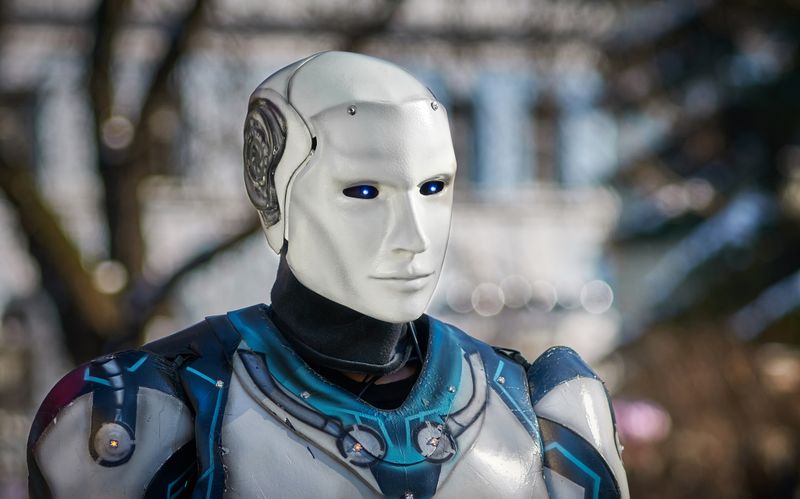
A San Francisco startup backed by Eric Trump is racing to put armed humanoid robots into the hands of U.S. soldiers — and it has already started testing them in a real war zone. Foundation Future Industries, founded just two years ago, says it plans to unveil weaponized capabilities for its Phantom humanoid within months, positioning itself as the first American company explicitly targeting the military market for human-shaped machines.
CEO Sankaet Pathak told The Independent he would arm the robots "tomorrow" if the Pentagon asked, calling objections to the idea "backwards." The company now holds roughly $24 million in government research contracts across the Army, Navy, and Air Force, and plans to deploy its machines with U.S. forces within the next 12 to 18 months.
That timeline has drawn sharp criticism from human rights organizations, robotics scientists, and even some defense analysts — who question whether the technology is ready, whether the ethical guardrails exist, and whether the political entanglements around the company complicate its military ambitions.
The Phantom: What Foundation Is Actually Building
Foundation's core product is the Phantom MK1, a roughly six-foot-tall humanoid robot painted in matte black. It can carry payloads approaching 90 pounds, and it perceives its surroundings through a camera array mounted on its head that captures a full 360-degree field of vision.
The robot can operate autonomously using embedded AI or be piloted remotely by a human operator. According to Reuters, Phantom units already assisted in the production of more than 24,000 vehicles last year at industrial facilities ranging from Atlanta to Singapore, though Foundation has declined to name its commercial clients.
A second-generation model, the Phantom MK2, is under development and expected to debut later this year. Foundation disclosed in late July that AMD's Ryzen AI Embedded X100 Series processors will power the MK2's perception, reasoning, and control systems. The chips combine Zen 5 CPU cores with RDNA 3.5 graphics and an XDNA 2 neural-processing unit, allowing the robot to run AI workloads locally without cloud connectivity — a critical requirement for battlefield operations where network access may be unreliable or compromised.
Industrial customers will lease each Phantom for roughly $100,000 per year, according to a Reuters report carried by Yahoo Finance. Defense variants, configured for materials handling and reconnaissance, carry a $300,000 price tag. Foundation plans to open a factory in October capable of producing 5,000 units annually, with a second facility starting construction early next year that could eventually output 50,000 robots per year.
From Boardwalk Robotics to the Pentagon
Pathak founded Foundation in 2024 after the collapse of his previous venture, Synapse, a fintech platform that declared bankruptcy. He teamed up with Arjun Sethi, former CEO of Tribe Capital, and Mike LeBlanc, a co-founder of Cobalt Robotics. Months later, Foundation acquired Boardwalk Robotics, a Florida-based company that had worked closely with the Institute for Human and Machine Cognition (IHMC), a nonprofit research lab known for its humanoid robotics work.
That acquisition brought inherited government contracts and technical expertise — but also raised questions about how much of Foundation's defense business is genuinely new. When WIRED asked for specifics about the $24 million Pentagon figure, the company shared details of two contracts inherited from Boardwalk and three that came through IHMC. Foundation does not appear to have independently secured new government funding.
Eric Trump, the president's second son, invested in the company and serves as its chief strategy adviser. A Foundation spokesperson described him as "an engineer at heart" who does "milling and things like that at his home." Eric Trump has publicly promoted the robots on Fox Business, describing their fist-bump capabilities and touting unlimited applications across industry, military, and hospitality.
The arrangement has drawn scrutiny from Democratic Senator Elizabeth Warren, who called the government contracts "corruption in plain sight." The Trump family has also invested in other defense-tech startups, including drone companies XTEND and Unusual Machines, creating a web of defense investments that overlaps with Pentagon procurement decisions under the current administration.
Ukraine Testing: Real-World Lessons in a Combat Zone
Foundation sent two Phantom MK1 units to Ukraine for a pilot demonstration, which the company described as the first known deployment of humanoid robots in a combat theater. The ongoing tests, reportedly backed by the U.S. government and conducted with Ukrainian officials, focused on logistics in hazardous areas, as CNBC reported in May.
According to Pathak, the MK1 testing proved the robot's potential to perform supply pickups — tasks that routinely expose soldiers to danger near the front line. But the MK1s remain limited: they carry only about 44 pounds, lack waterproofing, and have insufficient battery life for sustained field deployment.
The Phantom MK2 aims to address these shortcomings, with Pathak promising "superhuman abilities" and double the payload capacity. Foundation plans to send updated units to Ukraine later this year.
Kateryna Bondar, a senior fellow at the Wadhwani AI Center at CSIS, noted that humanoid robots could theoretically offer advantages in modern urban combat spaces. "Modern urban combat spaces — where there are stairwells, ladders, basements and narrow corridors — were created for human movement, which could give humanoid systems an advantage over tracked or quadruped robots in certain scenarios," she told CNBC.
The Ukraine war has served as a proving ground for military robotics broadly. Ground robots deliver supplies to front-line positions, while autonomous and AI-augmented drones handle precision strikes and reconnaissance. Humanoid robots represent the next step in that evolution — but many experts say the technology remains far from ready for the battlefield.
The Skeptics: Can Humanoids Actually Fight?
Robert Griffin, a senior research scientist at IHMC who worked on a project involving Boardwalk Robotics and served as a technical adviser to Foundation, told WIRED that "there's a bunch of challenges, spanning the whole gamut of robotics, for the idea of building an actual human soldier."
Perception and navigation remain key obstacles. Although humanoids have advanced in recent years thanks to cheaper motors, sensors, and AI algorithms that enable agile moves like parkour, they still require specialized training for different terrain types. Physical manipulation — crucial for tasks like picking up objects, opening doors, or operating equipment — remains a major unsolved problem.
Rodney Brooks, a robotics pioneer and professor emeritus at MIT, expects it will take more than a decade for humanoids to operate reliably in complex and unfamiliar settings. Even in controlled lab environments, a combat robot would need to traverse rubble-strewn stairs, push through blocked doorways, and handle unpredictable terrain. "Going from a solid lab demo to initial deployment in robotics is always at least 10 years," Brooks said.
Melanie Sisson, a senior fellow at Brookings, questioned whether human-shaped robots are even the right form factor for military use. "Making robots look like humans is a complex and expensive engineering challenge, and what Ukraine has taught us is the opposite — that we need the ability to adapt rapidly and manufacture quickly and cheaply," she said.
Toby Walsh, chief scientist at the University of New South Wales's AI Institute, agreed that autonomous machines will likely replace human forces in some roles, but added that humanoid terminators remain "a science fiction trope."
The Ethics Question: Who Draws the Line?
The debate around armed humanoids cuts deeper than technical readiness. The Catholic Church opposes autonomous weapons and armed robots, as does the United Nations. UN Secretary-General António Guterres has called for international law to ban "killer robots." In 2022, major robotics companies including Boston Dynamics signed an open letter committing not to weaponize their creations — a pledge Foundation never signed.
Verity Coyle, deputy director of Human Rights Watch's Crisis, Conflict and Arms Division, warned that Big Tech and government partners have pursued a Silicon Valley-style "move fast and break things" approach that risks "catastrophic effects" without proper legal safeguards. Technology tends to proliferate as it matures, she noted — look at how drones went from classified military hardware to consumer gadgets available for a few hundred dollars.
Autonomous weapons relying on imperfect AI could make targeting errors while avoiding the kinds of accountability that human soldiers face. Electronic jamming, already a constant problem in Ukraine, could sever the link between a robot and its human operator at a critical moment. And the speed of robotic combat could compress decision timelines, giving civilians less time to flee.
Joe Costa, a former senior Pentagon official now at the Atlantic Council, raised a different concern: cheap, expendable robotic soldiers could lower the political cost of starting wars. "In a world where you have humanoid robots, you don't have to send a human actually into battle," he told The Independent. "That very conceivably means you could have a bunch of robots invade a country or a city and it comes at less political cost to a nation."
A Broader Vision: Mega-Cities and Post-Work Utopias
Foundation's ambitions extend well beyond the battlefield. The company is named after Isaac Asimov's Foundation novels, and Pathak has outlined plans to funnel profits into robot-built, green mega-cities that would offer residents "really good housing, pretty much for free." The vision calls for settlements combining high-tech military dominance with post-work city-states where humans pursue art and exploration while machines handle dangerous and tedious labor.
This vision — blending defense technology, classical architecture, and libertarian governance — has found a receptive audience among certain tech investors and political figures. The Trump administration has contracted with multiple Silicon Valley defense companies while pursuing a new "warrior ethos" for the Pentagon. Right-wing investors have poured millions into Praxis, a self-styled "digital nation" that aims to build a defense-tech city within Vandenberg Space Force Base in California.
Pathak's concern, meanwhile, centers on a different threat: a populist backlash against the tech industry. He fears that proposed billionaire taxes and fears that workers could become a "permanent underclass" due to AI could trigger a "populist mutiny" — a scenario he called "quite terrible."
The question now is whether Foundation can deliver working combat robots before the political and ethical debates overtake the technology. The company says it will unveil its weaponized capabilities in the coming months. Whether the Pentagon, Congress, or the public is ready for that is another matter entirely.
For a broader look at the policy shifts surrounding military robotics, see our coverage of the US ban on foreign-made humanoid robots and ongoing reporting on autonomous systems and defense technology.