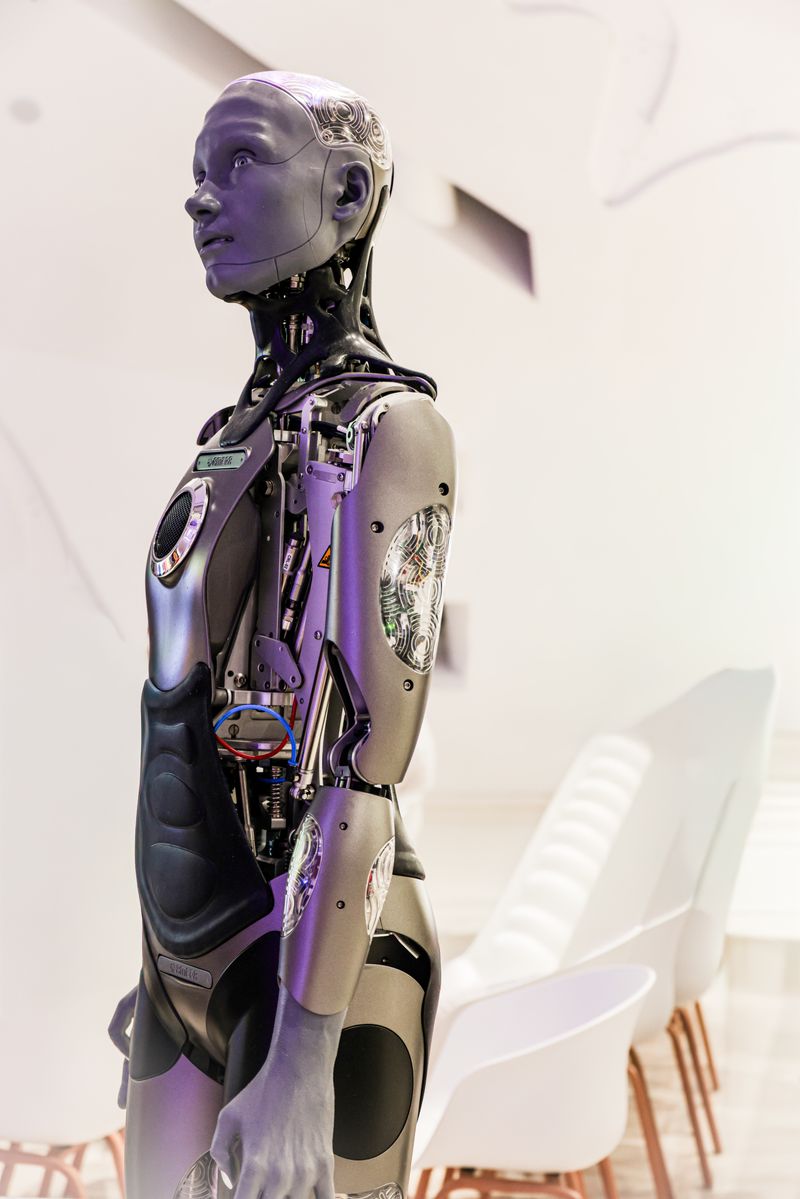
The U.S. Federal Communications Commission is banning imports of new foreign-made humanoid robots and quadruped robots — sometimes called robot dogs — citing national security risks. The move, announced Tuesday, directly targets China, which controls roughly 85 percent of the global humanoid robot market.
The ban also covers power inverters, devices used to convert direct current electricity into alternating current for renewable energy systems, data centers, and household appliances. The FCC said offshore production of such equipment leaves American supply chains open to disruptions.
The Scope of the Ban
FCC chairperson Brendan Carr said the restrictions apply to "new versions" of humanoid and quadruped robots manufactured outside the U.S. The agency argued that advanced robots pose cybersecurity and espionage risks because they contain sensors, cameras, and data-processing components that could be used for surveillance or information theft.
Existing units already in the country are not affected. Companies can continue selling models that were previously approved by U.S. authorities. The ban only covers new imports, a distinction meant to limit disruptions for American businesses that already rely on Chinese robotics platforms.
The rules follow a pattern of widening U.S. restrictions on Chinese technology imports. The FCC previously banned Chinese drones under similar security grounds, and the Commerce Department has restricted exports of advanced chips and semiconductor gear to China. The White House is also weighing rules on how American firms use Chinese open-source artificial intelligence models.
For more context on these restrictions, read the full AP News report on the FCC ban.
China's Dominance in Humanoid Robotics
Of the roughly 15,000 humanoid robots shipped globally in 2025, two Chinese companies — Unitree and AGIBOT — each shipped more than 5,000 units. Their American counterparts, such as Tesla and Figure AI, shipped a few hundred apiece or fewer, according to technology research firm Omdia.

Unitree, best known for its G1 and H1 humanoid models and its robot dog lineup, was recently added to the Pentagon's list of Chinese companies with alleged ties to the People's Liberation Army. The company denied the claim. AGIBOT, another fast-growing robotics startup, has raised hundreds of millions of dollars from Chinese state-backed funds and expanded its factory capacity to produce thousands of humanoid units per year.
Morgan Stanley analysts forecast China's humanoid robot market could hit $15 billion by 2030. Chinese manufacturers have scaled production and cut costs faster than most overseas competitors, putting them in a strong position even without the U.S. market.
Industry Reaction and Fallout
The ban sent shockwaves through the robotics industry. Nvidia, the American chip designer, had just revealed a humanoid robot reference design in June that uses a chassis built by China's Unitree. It is unclear whether that collaboration, or future partnerships involving U.S. tech companies and Chinese robotics firms, will be affected under the new rules.
Lian Jye Su, a chief analyst at Omdia, said the restrictions could interfere with cross-border technology collaborations. "Many U.S. companies have been working with Chinese manufacturers to prototype humanoid platforms," he told reporters. "That relationship just became a lot harder to sustain."
Kangyuxiao Li, an analyst at Morningstar, was blunt about the impact: "Restricting their access to the U.S. removes an important future market and protects U.S. developers from potential price competition. However, it will not materially slow China's overall humanoid development, given the size of its domestic manufacturing base and opportunities in other export markets."
Morningstar's Cheng Wang noted the power inverter ban is unlikely to create major shortages in the U.S., since existing devices can still be used and previously approved models can still be sold.
China Fires Back
China's Foreign Ministry quickly condemned the move. Spokesperson Mao Ning told reporters in Beijing on Wednesday that "protectionism does not make the U.S. more competitive, and it will only hurt the interests of U.S. companies and consumers." She said China would take "all measures necessary" to defend the legitimate rights and interests of Chinese businesses.
Beijing accused Washington of stretching the concept of national security to suppress Chinese technology companies. The response is likely just the opening salvo in what could become a protracted standoff between the two countries' robotics sectors ahead of a planned summit between Chinese leader Xi Jinping and President Donald Trump in September.
What This Means for the Robotics Industry
The ban is a double-edged sword. For American robotics companies like Tesla, Figure AI, and Agility Robotics, removing cheap Chinese competition could open the domestic market to higher-priced U.S.-made machines. But it also cuts off access to affordable, mass-produced components and chassis that many American startups depend on for prototyping.
For China's robotics giants, the U.S. market was a promising but not essential growth driver. Unitree and AGIBOT have built strong domestic demand through China's sprawling manufacturing sector, and both companies have been expanding into Southeast Asia, the Middle East, and Europe. Excluding them from the U.S. may slow their global revenue growth but is unlikely to hurt their core business.
The ban also extends to quadruped robots, the four-legged machines used for industrial inspection, search-and-rescue, law enforcement, and increasingly by the military. Companies like Boston Dynamics (U.S.) and Unitree (China) have been the main players in this space, but Chinese-made robot dogs have been gaining ground due to lower prices.
Samm Sacks, a senior fellow at the New America think tank focused on Chinese technology policy, called the situation "a steady drumbeat of potential flashpoints heading into the Trump-Xi summit planned for September." The robot ban is the latest in a string of tech-related trade disputes between the two countries, and it shows no signs of cooling down.
Broader Implications
The humanoid robot ban is not happening in isolation. It is part of a wider push by the Trump administration to lock down critical technologies that Washington sees as vital to national security and economic competitiveness. From semiconductor export controls to drone bans to the possible restriction of Chinese AI model usage, the U.S. is systematically walling off its technology sector from Chinese influence.
Chinese robot makers, for their part, are likely to accelerate their expansion into markets where U.S. influence is weaker — Africa, Central Asia, and Latin America — and deepen their relationships with European companies that have been more cautious about adopting American restrictions.
The coming months will determine whether this protectionist approach helps American robotics companies catch up or merely pushes Chinese competitors to innovate faster elsewhere. Either way, the global robotics industry just shifted. Keep up with Robotics & Drones coverage as both sides adjust to the new rules in the weeks ahead.