Edge AI Startup Puts GPUs Inside Telecom Sites to Beat Cloud Latency
SwiftInference rolled out its edge AI platform to the public on August 4, betting that inference will increasingly run inside telecom carrier buildings rather than in giant cloud regions. The Menlo Park startup places GPU-based compute at carrier edge sites, keeps requests inside the local metro, and promises a sub-100ms P90 turnaround that it says beats the cloud on both speed and consistency. For developers tired of paying a latency tax on every AI call, the pitch is simple: swap one URL, keep your OpenAI-compatible code, and move the math closer to the user.
Why Inference Is Moving Out of the Cloud
Training still happens in giant data centers, but the industry's focus has shifted to what happens after a model is built. Grand View Research projects the AI inference market will hit $254 billion by 2030, and a growing share of that spend is landing away from centralized regions. The logic is easy to follow: a model that answers a customer's question in 200 milliseconds loses to one that answers in 80, and the spread matters even more for voice calls and autonomous agents where a stall reads as a failure.
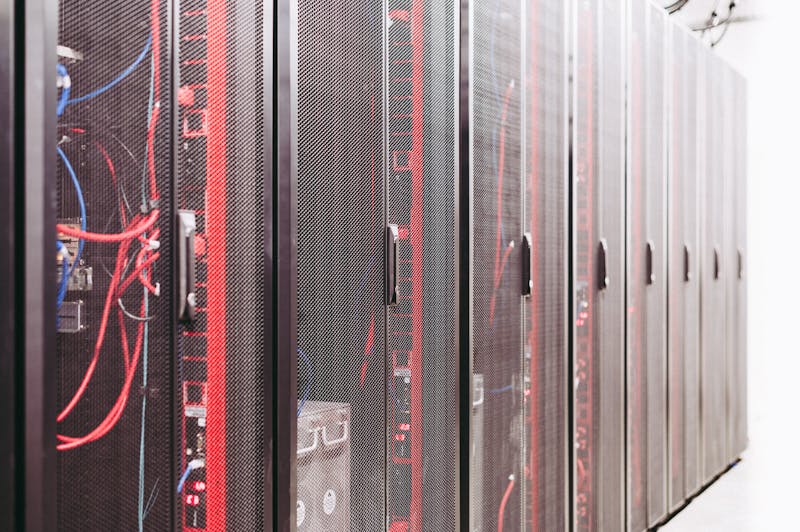
SwiftInference puts its servers in carrier facilities, tapping the existing physical footprint of telecom providers. That placement is what shrinks the distance between the user and the model. The company says its routing layer checks model availability, current load, and geographic proximity for every request, then sends each one to the node that can answer fastest. Requests stay inside the metro area instead of crossing jurisdictional lines, which hands regulated customers a simpler answer on data residency questions.
Co-founder and CEO Kendall Ananyi, who previously built Tizeti before the company went through Y Combinator, argues that edge inference closes the gap between what a local box can do and what a cloud API provides. "You get the speed of local compute with all the simplicity of a cloud API," he said in the launch statement. The API itself is OpenAI-compatible, so existing apps migrate by editing a base URL rather than rewriting calls.
BYOG: Turning Idle GPUs Into Live Inference Fast
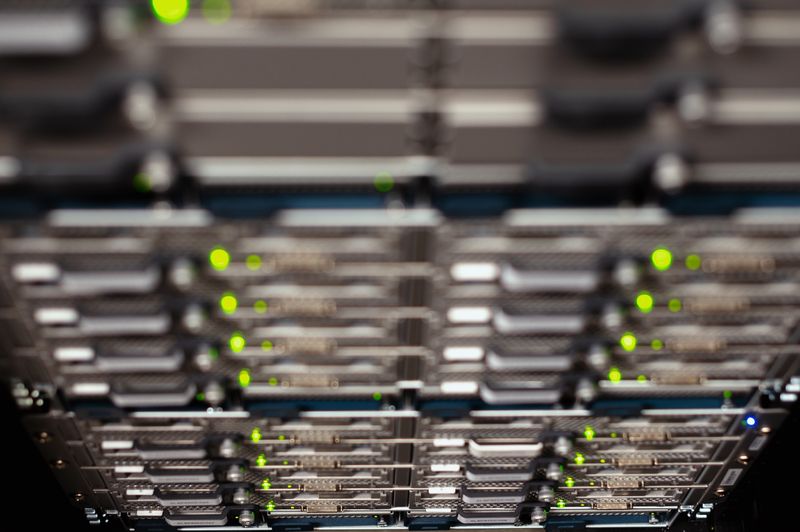
The more unusual part of today's announcement is Bring Your Own GPU (BYOG). SwiftInference will accept unused NVIDIA accelerators from a customer, install them at a carrier edge site, and hand back a production-ready inference endpoint in five business days. The company compares that to a U.S. data center timeline that now stretches 18 to 36 months, a wait that has become one of the market's defining complaints.
The idle-hardware angle is smart because a lot of expensive silicon is sitting unused. Enterprises buy GPU clusters for a training run or a burst of demand, then watch capacity go quiet — often for a large share of the quarter. BYOG converts that dormant metal into a working endpoint, and the hardware owner gets a 50/50 revenue split on any third-party traffic the node carries. SwiftInference shoulders the deployment, the network integration, and the operational upkeep.
That arrangement is not charity. It gives the young company supply without buying servers at the current jacked-up prices, and it gives GPU owners a way to monetize hardware that is otherwise idle spending. Several regulated industries are already interested: finance and health care want low latency, and government buyers care about keeping inference inside their own boundaries rather than sending it to a far-flung region.
The Cost and Consistency Case for Edge Inference
Latency on its own is a hard sell, because plenty of workloads are happy with a slightly slower response. SwiftInference is pushing consistency as the second reason to switch. Cloud latency varies with network traffic, region routing, and the shared load on a given facility; that variance, the company says, is about 3.7 times higher in the cloud than on its edge. For agentic workflows that chain several model calls together, a stable 80-millisecond answer beats a flickering 150 that spikes to 400.
The pricing logic follows. Edge nodes skip the markup of central data centers, and BYOG hardware costs whatever the owner chooses to charge. The combination aims at teams whose products break when response times swing. Voice assistants that clip a syllable, computer-vision systems that flag a hazard a beat too late, and agent pipelines that retry on every timeout all get smoother on this kind of setup.
There are limits, too. Edge nodes cannot hold the largest frontier models, which still live in the cloud, so the product focuses on workloads that fit and on the classes of inference that actually run at the edge now. The company positions itself for the period when inference overtakes training as the dominant AI cost, which most forecasters say is already starting for deployed products, not the immediate future.
What This Means for the Cloud Market
The launch lands at a moment when the pendulum is swinging back toward distribution. Earlier this year saw hyperscalers keep posting record growth, with AWS expanding more than 37 percent and global cloud infrastructure spend climbing roughly 43 percent year over year, but a wave of startups is now chasing the tail of the trend with decentralized capacity. If a developer can get near-cloud speed from a node down the street, the big regional data centers that earn their margins on scale have to figure out what the edge eats away.
For telecom carriers, the model is a potential new revenue line. Their real estate has historically been dumb, housing regional switching gear and radio gear but rarely monetized GPU compute. Bringing AI capacity into those sites turns passive land into an active cloud asset. It is the same basic bet that drove other edge ventures, and the field is otherwise crowded these days.
For most developers, though, the change is invisible on purpose. The code does not change, the models stay compatible, and the caller just gets a faster answer. Whether the edge really undercuts the cloud on cost at industry-wide scale is still unproven, but SwiftInference has given the market a transparent test: point a workload there and measure the latency sample for yourself. For anyone whose product lives or dies on response, a one-URL change is a cheap experiment.
Read the SwiftInference launch announcement on Yahoo Finance