A Satellite Lift for LoRaWAN: The Hestia A2 Gateway That Drops the Cellular Backhaul
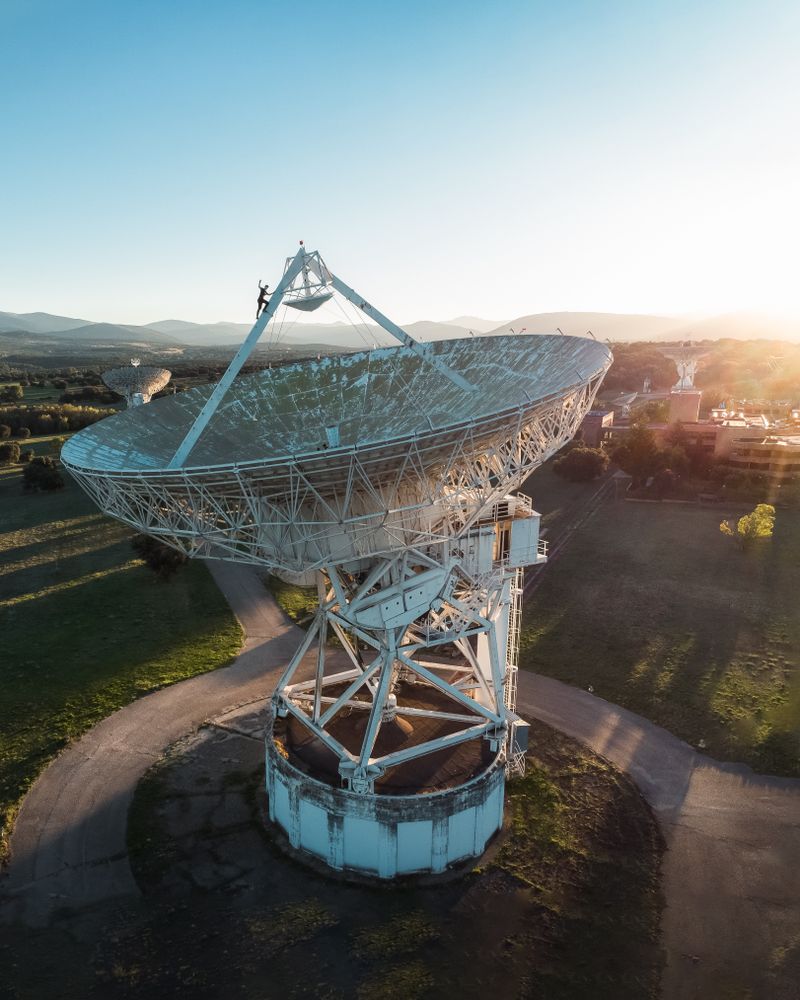
Field cameras, water sensors, and utility meters have a dirty secret: most of them sit inside cellular range, and the ones that don't are both expensive and hard to keep online. A new piece of hardware aims to close part of that gap. Creative5, a maker of satellite IoT gear, has won Skylo certification for a gateway it calls the Hestia A2, which it bills as the world's first LoRaWAN gateway to carry its backhaul over a satellite link.
The device pairs two radio technologies that usually live on opposite ends of the IoT spectrum. LoRaWAN is the low-power, long-range protocol built for battery-operated sensors that transmit small packets over wide areas. It is everywhere in agriculture, logistics, and building automation. Its weakness is the second half of the name: a gateway still needs a terrestrial backhaul, usually cellular or Wi-Fi, to push its aggregated data up to a LoRa network server in the cloud. When a project site sits outside cell coverage, that link simply is not there, and the network goes dark.
The Hestia A2 swaps that terrestrial backhaul for Skylo's satellite service. Skylo runs a 3GPP Release 17 non-terrestrial network, the standard that lets an ordinary IoT radio talk to a satellite using licensed spectrum and standard protocols rather than proprietary satellite hardware. In practical terms, the gateway behaves like a LoRaWAN base station that happens to route its traffic through orbit instead of a tower. Creative5 markets it as an "NTN-LoRaWAN gateway dongle": plug it in, register your LoRa nodes, and sensor data flows over Skylo's network to the company's CeresHub cloud service.
Why the pairing works
LoRaWAN wins on power and cost. Its sensors sip energy and can run for years on a battery, and the protocol is designed to move small, infrequent packets without expensive infrastructure. Skylo's NTN brings the reach that LoRaWAN lacks. Put the two together, and you get a sensor network that keeps its low-power economics while gaining genuinely global coverage.
The numbers matter for a deployment. The Hestia A2 aggregates data from as many as 16 LoRaWAN nodes, each transmitting payloads around 256 bytes, with a transmission window of two to thirty seconds. Peak power sits under one watt, low enough that the box can run off a power bank or a small solar panel, which is the configuration Creative5 recommends for long-term remote monitoring. That combination of sub-watt draw and solar input means the gateway can sit in a field for months without attention.
Cost is the other selling point. High-bandwidth satellite terminals such as Starlink deliver far more throughput than a network of small sensors needs, and they charge accordingly for the hardware and the data plan. The Hestia A2 is aimed squarely at the gap below that: applications that only need to move a few kilobytes a day, in places where nobody wants to pay business-class satellite bandwidth for a handful of temperature readings.
Solving the backhaul bottleneck
The clearest way to see the problem is to follow a single packet. A LoRaWAN sensor reads its environment and sends a short message to a nearby gateway. That gateway is the choke point. If it cannot reach a router or a cell tower, the message dies there, and the sensor has no idea its data never arrived. For a monitoring station in a forest, an offshore asset, or a rural utility meter, that is a daily reality.
Satellite backhaul removes the choke point. Instead of hunting for a cell signal that is not there, the Hestia A2 connects straight to Skylo's network and routes the payload to the cloud. The conservative estimate from Creative5 is that the gateway can aggregate traffic from up to 16 nodes in a single site, which is enough to cover a modest sensor field without running a data link per device.
Coverage comes from Skylo's network, which relies on Inmarsat's high-orbit satellites plus Skylo's own partner capacity. Because the whole link runs on 3GPP Release 17 NTN, the service is standards-based rather than a one-off proprietary tunnel. That is a meaningful point for enterprises that want interoperability and multi-year contracts they can plan around.
Where the hardware actually goes
The practical appeal shows up in the use cases Creative5 lists. Water utilities are the obvious early adopter: a reservoir monitor or a remote pump telemetry box rarely has a convenient cellular signal, and the data volume is tiny. Environmental sensing follows the same pattern, with temperature, humidity, and CO2 readings trickling in from stations that are hard to visit. Agriculture and animal husbandry are close behind, where GPS location and SOS tracking matter more than bandwidth. The same reasoning applies to smart utilities and critical infrastructure, where a sensor that cannot phone home is worse than no sensor at all.
For industrial sites, the Hestia A2 leans on RS-485 and Modbus RTU, the workhorse serial protocols of factory and infrastructure gear. That means an operator can attach existing wired sensors through a single box without ripping out installed equipment. A separate Control Suite web tool handles device registration and firmware updates, including over-the-air updates on the models that support them, so a deployed gateway does not force a truck roll every time the software changes.
The gateway also plugs into the broader Hestia family, which spans the same NTN backbone with different local radios. The Hestia A3 pairs satellite with BLE Mesh for short-range sensor meshes, and the Hestia A4 uses DECT NR+, a newer unlicensed-band standard. All of them share the same satellite core, which lets a single connectivity plan stretch across very different physical networks.
What it does and does not do
It is worth being precise about the limits. The Hestia A2 is not a replacement for a broadband satellite dish and it does not carry images or video. Each transmission is capped near 256 bytes, which suits telemetry but rules out anything data-heavy. It also needs an active satellite subscription, sold by Creative5 or an authorized provider, on top of the hardware. And it uses a built-in antenna, so there is no option to bolt on a bigger external dish for marginal coverage areas.
Even with those limits, the direction is clear. Satellite IoT has spent years as a niche served by proprietary hardware with sky-high price tags. Creative5 and Skylo are pushing in the opposite direction: a standards-based, low-power gateway that treats a satellite link as just another backhaul option, interchangeable with cellular or Wi-Fi depending on where the job happens to be.
That is the real story, and it is bigger than one box. If a LoRaWAN gateway can quietly ride a 3GPP Release 17 satellite link, then the "signal dark" zones that have always been the hard edge of IoT deployments stop being a separate category of problem. A forest, a desert, or an open stretch of ocean starts to behave like just another coverage area, and the sensors get to work. The Hestia A2 is an early example of that shift, and it is the kind of incremental hardware change that tends to matter more than it first appears.
The certification matters to anyone running remote field operations, and the takeaway is simple: low-power sensors and satellite backhaul are no longer an either/or. For more on how the wider IoT ecosystem is standardizing and connecting, browse the IoT section. Creative5 documents the gateway's capabilities and its satellite IoT platform in detail on its product pages, and Skylo's newsroom covers the certification announcement and the standards behind the network.