Volkswagen's ID Polo Hits 25,000 Pre-Sales as ID Cross Arrives — But Job Cuts Cast a Shadow
Volkswagen is living a tale of two headlines this month. The German automaker's electric lineup is taking off — its ID Polo racked up 25,000 pre-sale orders before the first car reached a driveway, and the brand-new ID Cross compact SUV just hit the market. But the good news sits alongside grim cost-cutting plans that could see up to 100,000 workers lose their jobs as VW struggles to compete with Chinese EV makers.
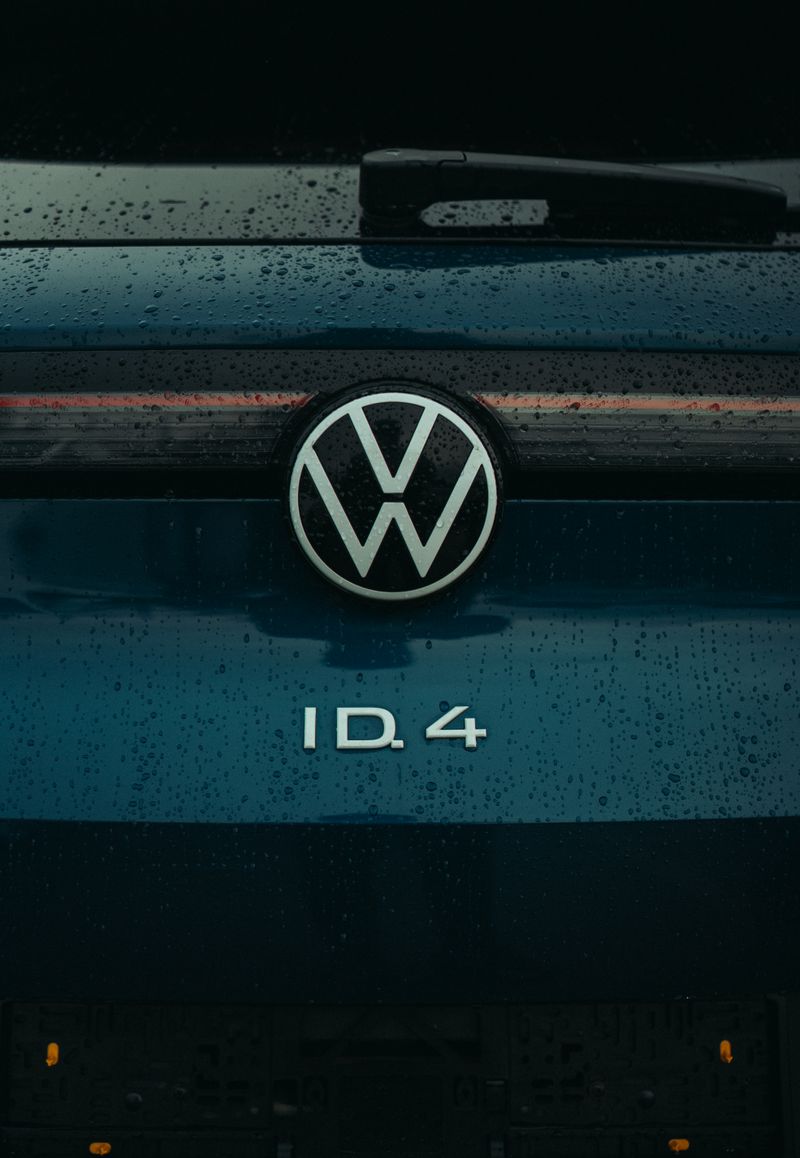
ID Polo: Small Car, Big Numbers
Volkswagen unveiled the all-electric ID Polo in late April, and it's already one of the brand's fastest-selling EVs. The 155 kW, 52 kWh NMC (nickel-manganese-cobalt) version went into pre-sales first and booked 25,000 orders in just a few months. That beats VW's own internal targets and signals that Europe's appetite for affordable electric hatchbacks is stronger than many analysts predicted.
Now Volkswagen has opened pre-sales for a second, cheaper variant. The 37 kWh ID Polo Trend starts at €24,995 — roughly Rp 425 million — and comes in Trend, Life, and Style trim levels. That price point puts it head-to-head with the Renault 5 E-Tech, the upcoming Fiat Grande Panda Electric, and Chinese competitors like the MG4. The 85 kW output on the base 37 kWh version makes it a capable city car, while the 155 kW version competes with hot-hatch performance.
The ID Polo rides on VW's MEB Small platform, a shortened version of the scalable MEB architecture that underpins the ID.3, ID.4, and ID. Buzz. That platform carries a 52 kWh NMC battery for the long-range version and the smaller 37 kWh pack for the entry-level variant. WLTP range figures stand at about 280 km for the 37 kWh model and 380 km for the 52 kWh. Fast charging on the 52 kWh pack reaches 100 kW, delivering 10-to-80 percent in roughly 30 minutes.
Thomas Schäfer, CEO of the Volkswagen brand, called the ID Polo pre-sales "very encouraging" and said the car proves there's a mass market for affordable electric motoring in Europe. Delivering those pre-orders starts soon, with the first customer cars expected on European roads before the end of the third quarter. Right-hand-drive markets including the UK and Australia are slated for early 2027.
ID Cross Joins the Lineup
Volkswagen didn't stop at the Polo. The company held the world premiere of the ID Cross last week — an all-electric compact SUV that slots below the ID.4 in size and price.
The ID Cross measures 4,153 mm long, 1,581 mm tall, and 1,794 mm wide, with a 2,601 mm wheelbase. That makes it shorter than the ID.4 but roomier inside than a T-Cross with a combustion engine — 475 liters of cargo space, 20 liters more than the T-Cross. The design follows Volkswagen's latest ID family language with a closed grille, full-width LED light bar, and a clean, smooth profile.
Three power levels will be available: 85 kW, 99 kW, and 155 kW, paired with 37 kWh or 52 kWh batteries. The top-spec version covers up to 427 km on the WLTP cycle. Fast charging hits 90 kW for the 37 kWh pack and 105 kW for the 52 kWh pack, juicing from 10 to 80 percent in roughly 23 to 24 minutes.
Every ID Cross comes standard with vehicle-to-load (V2L) capability at up to 3.6 kW, meaning owners can power camping gear, work tools, or household appliances directly from the car. That's a first for VW's ID lineup and a feature that's popular on Chinese EVs like the BYD Dolphin and Atto 3.
Pre-sales for the ID Cross opened immediately at the world premiere. The Life and Style trims with the 155 kW motor and 52 kWh battery start at €36,525 — about Rp 620 million. Lower-powered variants with the 85 kW or 99 kW motors and 37 kWh packs will follow in early 2027, priced closer to €28,000 at entry level.
The Dark Side: Up to 100,000 Jobs at Risk
The rosy product launches sit against a tough situation. Reuters reported in late June that Volkswagen is considering shutting down four German factories and slashing up to 100,000 jobs — roughly a quarter of its domestic workforce. Members of VW's supervisory board were briefed on the plans, which were discussed at a July 9 meeting.
CEO Oliver Blume followed up with an internal memo to staff, seen by Reuters, warning the company may need to cut an additional 50,000 jobs beyond the 50,000 already targeted in a 2024 restructuring program. The memo pins the blame on Chinese competition: BYD, SAIC, and other Chinese automakers have flooded the European market with cheaper EVs that undercut VW on price while matching it on range and tech. VW's European market share in EVs has slipped from roughly 22 percent in 2024 to about 18 percent in mid-2026, according to Schmidt Automotive Research.
VW's supervisory board pushed back against the factory closure plans, rejecting the proposals in a subsequent meeting. But the broader cost-cutting trajectory remains — Blume has said VW needs to become leaner to survive, and that includes reducing headcount, simplifying the model lineup, and consolidating production. The company's passenger car division currently employs about 280,000 people in Germany alone.
The company is investing heavily in new EV platforms and battery technology. Its Salzgitter battery cell plant in Germany is ramping up, and VW is building a second gigafactory in Valencia, Spain. These projects add cost pressure even as VW tries to lower expenses. VW Group's net profit fell 14 percent in the first half of 2026 versus the same period a year earlier, according to preliminary figures, as margins on EVs remain thinner than on combustion-engine vehicles.
What This Means for the EV Market
Volkswagen's situation reflects a broader tension in the global auto industry. On one hand, EV sales are climbing — Europe's battery-electric car registrations rose about 22 percent year-on-year in the first half of 2026, driven by new affordable models like the Dacia Spring, Renault 5 E-Tech, and VW's own ID series. On the other hand, legacy OEMs are bleeding cash trying to retool factories, develop new platforms, and compete against Chinese entrants that didn't have decades of combustion-engine overhead.
The ID Polo's success shows there's real demand for small, cheap electric cars in Europe. At under €25,000, it's one of the few Western-branded EVs in that price bracket. The ID Cross extends VW's reach into the compact SUV segment — the hottest category in Europe right now. But neither model will fix VW's structural cost problem overnight.
Analysts at Bloomberg NEF estimate that Chinese automakers now have a 15 to 20 percent cost advantage over European rivals on comparable EVs, driven by cheaper batteries, vertical integration, and faster development cycles. VW is trying to close that gap through its joint venture with XPeng and its own unified cell format, but those efforts won't bear fruit until 2027 or 2028.
For now, Volkswagen is doing something many legacy automakers haven't managed: selling real volumes of affordable EVs while simultaneously staring down existential cost pressures. Whether the math works out depends on how many ID Polos and ID Cross units it can push before the next phase of Chinese competition arrives. The ID Polo's 25,000 pre-orders represent just a fraction of the roughly 600,000 Polos VW used to sell annually at the car's gasoline-powered peak, but the transition is early — and the direction is clearly electric.
Read more about EV developments and Semiconductor and automation trends. The full story from The Driven also covers the Volkswagen ID Cross launch and job cut reports.