Volkswagen ID. Tiguan: Electric SUV to Replace ID.4, Debut October 2026
By Tech Desk | August 2026
Volkswagen is set to rebrand its ID.4 electric crossover as the ID. Tiguan, with the facelifted model scheduled for official unveiling in October 2026. The change marks the latest step in VW's strategy to replace its alphanumeric EV naming convention with familiar internal-combustion model names, beginning with the ID. Polo and ID. Cross, and continuing with the ID.3 to ID. Neo transition.
Why the Name Change Matters
The ID. Tiguan name has been confirmed by IG Metall's Emden branch, which represents workers at VW's Emden plant where the model will be produced exclusively through 2031. The shift from ID.4 to ID. Tiguan is more than cosmetic — it signals Volkswagen's intent to tether its electric lineup to established nameplates that carry consumer recognition and emotional appeal. See how this fits into the broader EV market.
"The first model of this new era was confirmed around the IAA Mobility 2025, when the name ID. Polo was announced for the near-production study of the small electric car," noted Electrive in its coverage of the facelifted ID.4. The accompanying SUV model was renamed from ID.s2 X to ID. Cross, similarly referencing the internal combustion T-Cross, positioned as an SUV in the Polo segment. Read the original analysis on Electrive.
MEB+ Platform and Technical Overhaul
Under the skin, the ID. Tiguan will ride on Volkswagen's updated MEB+ platform, which underpins the ID. Polo and ID.3 Neo. Key technical upgrades include:
- A new entry-level motor replacing the previous base unit
- Battery chemistry shift toward more cost-effective LFP (lithium iron phosphate) cells for the base variant
- Replacement of recessed door handles with traditional pull handles
- A more traditional SUV-like shape with a squared-off front end, distinct from the ID.4's more aerodynamic profile
"With the facelift, all ID. Tiguan models will come from Emden," Electrive reports. "The ID.4 was originally produced exclusively at VW's Zwickau plant in Saxony, which the group had fully converted to manufacture MEB-platform electric vehicles. Later, an additional production line for the ID.4 was established in Emden, initially running alongside the internal combustion models Passat and Arteon (both in Germany)."
The ID.4 production in Zwickau is being phased out, while the Saxon plant will retain the Audi Q4 e-tron and likely also the Cupra Born and partially the VW ID.3. This consolidation means all ID. Tiguan models will be built at a single facility, streamlining production but concentrating risk at one site.
Production and Pricing
The ID. Tiguan will be produced exclusively in Emden, with manufacturing expected to continue until the end of 2031. This represents a substantial change from the ID.4's split production between Zwickau and Emden. The move to a single production line could improve quality control and reduce logistical complexity, but it also means the model's success is tied to one plant's capacity.
Volkswagen has not yet released detailed pricing for the ID. Tiguan, but the shift to LFP batteries for the base variant should help maintain competitive pricing against rivals like the Hyundai IONIQ 5 and Kia EV6, which already offer LFP-equipped trims. The ID. Tiguan's position in the compact SUV segment — below the ID.4 in the current lineup — suggests it will target buyers who want electric capability without the premium pricing of larger models. Autoweek's detailed segment analysis confirms this positioning, noting the ID. Tiguan will sit between the affordable ID. Up and the larger ID.4 in VW's growing EV range.
Volkswagen's planned electric small car for 2027, with a base price likely around €20,000, is expected to be named ID. Up, furthering the company's new naming convention that begins with the ID. Polo at the small end of the range.
Design and Styling
Spy images and leaked photos have revealed that the ID. Tiguan will feature a more angular front end with a continuous light signature, hallmarks of Volkswagen's current design language as seen in recently launched vehicles for the Chinese market. The rear design appears less fragmented than the ID.4, with angular lights and a more cohesive visual language.
"Visible through the foil, the front end becomes more angular and features a continuous light signature — both hallmarks of Volkswagen's current design language," noted automotive photographer Thomas Majchrzak, who published a video showcasing the partially camouflaged prototype.
The side profile shows new doors and more traditional-style door handles that pop out, moving away the ID.4's flush recessed handles. The overall silhouette is more conventional SUV-like, with a squared-off rear end and a more traditional cargo area configuration.
Release Timeline and Market Position
Volkswagen plans to fully unveil the ID.4's successor on 9 October 2026, with the world premiere revealing complete technical specifications. Sales are expected to begin early in 2027, replacing the ID.4 in VW's European lineup and potentially expanding to other markets depending on regional demand.
The ID. Tiguan occupies a strategic position in VW's EV hierarchy. Below the ID.4, it targets buyers who find the ID.4's pricing prohibitive but who still want electric SUV practicality. Above the upcoming ID. Up (priced around €20,000), the ID. Tiguan offers more space, more range, and more established brand recognition.
"According to Volkswagen, the shift to familiar model names with the ID. prefix is intended to add emotional appeal to the electric models and create a closer connection to the established model ranges — something that the ID.3 or ID.4 never fully achieved," noted Autoweek in its analysis of the naming strategy.
Driving Range and Performance
While Volkswagen has not released official EPA or WLTP range figures for the ID. Tiguan, the platform updates suggest improvements over the current ID.4. The current ID.4 RWD version achieves an EPA-estimated 291 miles with its 82 kWh battery, while the AWD model drops to around 263 miles. Under WLTP conditions, the 2026 ID.4 achieves up to 351 miles.
With the switch to LFP chemistry and the MEB+ platform's improved efficiency, the ID. Tiguan is expected to range competitive figures, potentially reaching 280–320 miles EPA depending on battery configuration and motor selection. The new entry-level motor should also improve 0–60 mph times compared to the base ID.4, which takes approximately 8.5 seconds.
"Recent battery and electric powertrain updates should improve driving range and charging speeds compared to the current ID.4," noted Electrive. "Volkswagen has yet to reveal specifics, but the technology overhaul is notable."
Charging speeds are also expected to improve, with the MEB+ platform supporting faster DC fast-charging rates. The ID.4 can accept up to 125 kW on public DC fast chargers, adding approximately 100 miles of range in 15 minutes. The ID. Tiguan's updated architecture should match or exceed this capability.
Conclusion
The Volkswagen ID. Tiguan represents the next evolution in VW's electric offensive, combining technical upgrades from the MEB+ platform with a naming strategy that connects electric models to familiar internal-combustion heritage. With its October 2026 debut and early 2027 on-sale date, the ID. Tiguan will slot below the ID.4 in VW's European EV lineup, offering a more affordable entry point to electric SUV ownership while sharing much of the underlying technology that makes the ID.4 competitive in the compact crossover segment.
For buyers who find the ID.4's pricing prohibitive but who still want electric capability, the ID. Tiguan offers a compelling middle ground — especially if the LFP-based base trims can deliver range and performance figures competitive with the segment's best. As Volkswagen continues to rename its electric lineup using established model names, the ID. Tiguan is the latest proof that the company is committed to making its electric future feel like a natural extension of its past, rather than a completely separate identity.
Keywords: Volkswagen, ID. Tiguan, electric SUV, ID.4, MEB+, LFP, Emden, October 2026, EV pricing, compact crossover
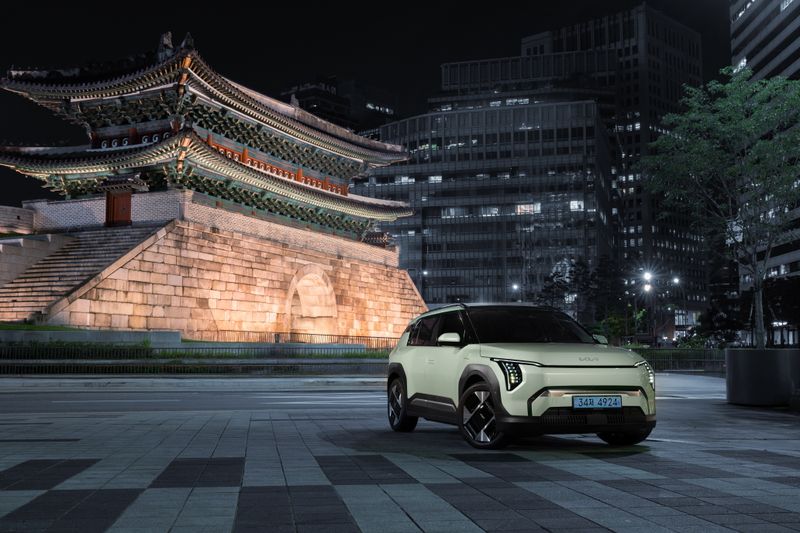
An electric SUV charging at night — representative of the evolving electric SUV market segment the ID. Tiguan will enter.
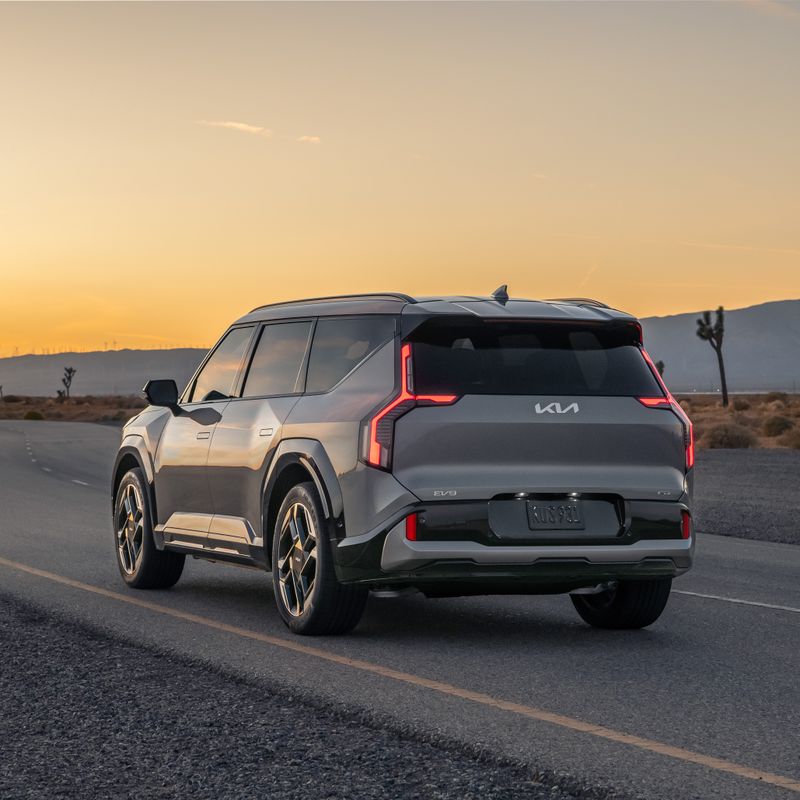
The Kia EV9 on highway — another electric SUV in the competitive compact crossover segment.