US Grid Battery Storage Posts a Record Quarter — and 2026 Could Set an All-Time High
The United States installed 20.2 gigawatt-hours of new battery storage between April and June this year, the largest quarterly figure the industry has ever recorded, according to a market outlook published this month by the Solar Energy Industries Association (SEIA) and Benchmark Mineral Intelligence. The report, released on September 1 as the U.S. Energy Storage Market Outlook Q3 2026, also lifted its cumulative forecast through 2030 and put the country on pace to add roughly 71 gigawatt-hours across all of 2026 — an all-time high for a single year.
The scale of the second-quarter jump is worth slowing down for. The 20.2 gigawatt-hours landed at more than double the previous quarter's 9.7 gigawatt-hours, and alone equaled more than a tenth of everything the United States has ever installed. Arizona led every state with 6.2 gigawatt-hours, which the firms describe as the strongest quarter for any single state on record. Texas added 3.8 gigawatt-hours and California 3.6, with Utah also finishing among the top contributors. Seven projects of a gigawatt-hour or more came online during the quarter — four of them in Arizona, two in California, and one in Utah.
The deployment is no longer a purely coastal story. More than 74 percent of the capacity installed in the quarter was built in states carried by Donald Trump in the 2024 presidential election, driven mainly by growth in Arizona, Texas, and Utah. That geographic spread is one of the quiet signals that grid batteries have moved out of the early-adopter phase and into mainstream infrastructure work, a theme that has run through our Battery Tech coverage for months.
Utility-Scale Projects Are Doing the Heavy Lifting
Almost all of the growth came from large, front-of-meter installations. Utility-scale storage accounted for roughly 18 gigawatt-hours of the quarter's total — the report's press release puts the figure at 17.9 gigawatt-hours while the report page itself rounds to 18.0. Commercial and industrial storage added 1.8 gigawatt-hours, and residential storage contributed 657 megawatt-hours, a 27 percent fall year on year and the only segment to shrink.
SEIA calculates that utility-scale capacity has nearly doubled over the past 18 months, climbing from 88 gigawatt-hours to 165 gigawatt-hours between January 2025 and the end of June 2026. That is a utility-scale measure rather than a whole-market one, a distinction that some of the earlier coverage of the report blurred. In total utility-scale capacity at the end of the first half, California leads with 62 gigawatt-hours and Texas follows with 33.1, and both states leaned on batteries during heat waves to keep prices from spiking, SEIA said.
Shan Tomouk, the battery energy-storage lead at Benchmark Minerals, framed the geographic shift bluntly: energy storage is no longer just a California and Texas story. He pointed to a growing pipeline in Arizona, Nevada, Oregon, and Colorado. Canary Media, covering the release the same day, put the quarter's instantaneous power at roughly 6.7 gigawatts — close to the output of seven conventional nuclear reactors — and reported that about 44 percent of the new capacity was built alongside solar plants, a co-location figure that trade title Energy-Storage.news put on utility-scale capacity specifically.
A close look at the quarterly components shows how much the market has accelerated. The first quarter of 2026 delivered 9.7 gigawatt-hours; the second delivered more than twice that. Stacked together, the two quarters come to just under 31 gigawatt-hours and 10.3 gigawatts, a 23 percent rise in gigawatt-hours year on year. The publishers' own components sum slightly differently across releases — the quarterly figures add to 29.9 gigawatt-hours rather than 30.8 in one reading — a small inconsistency that does not change the trajectory.
Why Demand Is Climbing
The boom sits on top of two long-running trends: the rapid buildout of solar power and climbing electricity demand from data centers. A rising number of data centers are installing batteries to smooth out rapid swings in their power draw and to cover short-duration outages, which ties grid storage directly to the artificial-intelligence infrastructure buildout. Battery energy storage has gone from a relatively small part of the American power system as recently as 2020 to one of its fastest-growing capacity sources.
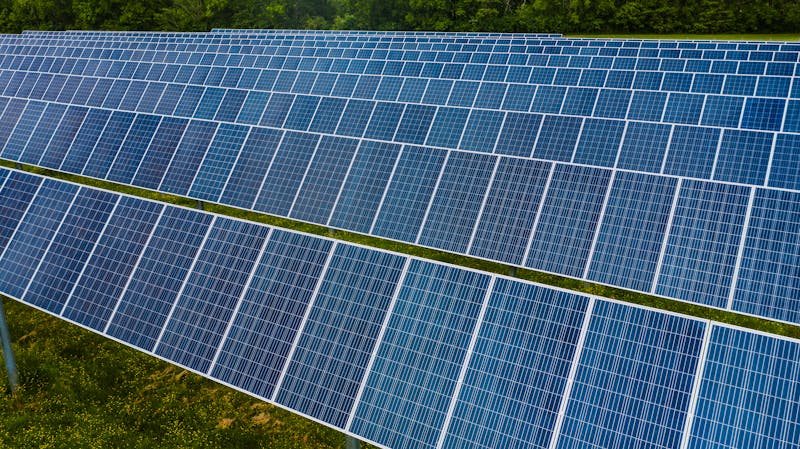
The co-location figure matters here. Roughly 44 percent of the new utility-scale capacity was built alongside solar plants, with the remaining 56 percent standalone. That pairing is what lets a solar farm keep feeding the grid after the sun goes down, and it is the reason storage is now treated as a companion to generation rather than an afterthought. The record deployment comes as U.S. solar continues to break its own records too, so the two technologies are effectively scaling together.
The demand has moved the forecast. The Q3 2026 edition of the SEIA-Benchmark outlook puts cumulative installations through 2030 at 683 gigawatt-hours, an 11.5 percent increase on the previous quarterly edition, which projected more than 610 gigawatt-hours back in May. The inaugural edition, published in February, forecast more than 600 gigawatt-hours. In other words, the industry's own planners have had to keep revising upward every time they publish, and the direction of the revisions is consistently one way.

Manufacturing Is Following the Deployment
The supply side is moving too. The quarter saw two new battery cell plants announced in Ohio and Tennessee, plus a 50 gigawatt-hour battery module facility in Texas. The report puts planned North American battery storage manufacturing capacity at more than 250 gigawatt-hours, a number that will matter as the domestic industry wrestles with tariffs and new tax-incentive rules that cap how much equipment can be sourced from China.
The headwinds are real. On August 26, an executive order took effect restricting foreign-produced bulk power components — including batteries, transformers, inverters, and related digital products — from connecting to the U.S. grid. BloombergNEF analysts told Utility Dive that battery storage faces more near-term risk from that order than most other industries do, a cautionary note sitting alongside an otherwise strong deployment picture. The same week produced the report itself, so the announcement and the caution arrived almost simultaneously.
Tim Pawlenty, president and chief executive of SEIA, framed the work in reliability terms. Storage strengthens energy security, meets rising demand, and pushes back on electricity bills, he argued. The global numbers line up with that view: the International Energy Agency found that battery storage reached a record 108 gigawatts worldwide in 2025, and the mechanics of how these systems earn money are increasingly well understood as the American market matures.
What Comes Next
If the second half of 2026 keeps pace with the first, the year ends as the biggest for U.S. grid storage on record. The 2030 forecast climbing right along with the quarterly numbers is the clearest sign yet that the industry expects this to be a long building cycle rather than a short spike. The record quarter also arrived alongside a new federal restriction on foreign power components, which means the segment is entering its scale-up phase with a tougher sourcing environment than it has known before — a tension the next few quarterly reports will have to resolve.
For readers following where batteries fit into the broader energy transition, the takeaway from this quarter is straightforward: the economics are supporting growth in states far beyond the usual suspects, the manufacturing base is starting to catch up, and the main open question is whether the new trade rules slow the momentum. The numbers so far say no, but the second half will tell.