A September storage tender in Renqiu, Hebei, put two battery chemistries on the same price sheet, and the result wasn't close. Sodium-ion systems drew an average bid of about $153 per kWh. Lithium iron phosphate (LFP) drew $79. The 40 MWh sodium lot was roughly a tenth the size of the 360 MWh LFP lot, so the comparison isn't a clean one. CNESA, which published the tender data, said the numbers were real bids from real buyers.
That spread is the reason to pay attention right now. Sodium-ion is no longer a lab curiosity. It has gigafactories, customer orders, and a place in China's industrial plans. The numbers still say it's an expensive option. CATL, the world's largest battery maker, is driving the transition from China's eastern coast, and its plans are ambitious. The company has added 40 GWh a year of sodium-ion capacity at Fuding, signed a three-year, 60 GWh supply deal with energy storage company HyperStrong on 27 April 2026, and planned its first storage deliveries in September. By early October, no independent source had confirmed a completed delivery under that agreement.
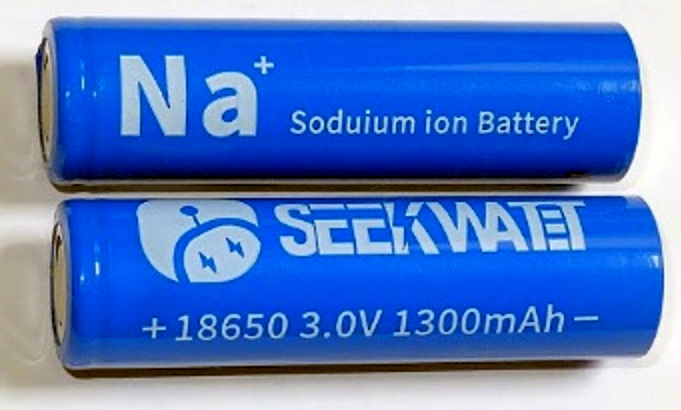
CATL's Naxtra cells reach up to 175 Wh/kg by the company's own figure, a number that puts sodium-ion close to the pack-level energy density of LFP. That's the chemistry point. A sodium-ion cell works like a lithium-ion cell in every mechanical sense. Ions move between electrodes through an electrolyte during charge and discharge. The ion is different: sodium atoms are larger and heavier, so the same volume of cell stores less energy. Getting 175 Wh/kg out of that physics is a real engineering result.
What CATL is shipping, and what it isn't yet
In February 2026, CATL and Changan unveiled what they call the first mass-production passenger car with sodium-ion batteries, targeting over 400 km of range and a mid-2026 market debut. HiNa Battery and Tonly delivered a 676 kWh sodium-ion mining truck to Sanyou Mining in July. BYD says its sodium-ion cells are rated for up to 10,000 cycles. Peak Energy in the US has had a 3.1 MWh grid storage system live since 2025.
The announcements outpace the confirmed deliveries. CATL said in June 2026 that it planned 1 GWh of cumulative sodium-ion storage shipments by the end of the year. The trade publication Battery-Tech Network, which reviewed the field on 10 October, found no independent report of a completed delivery. That gap matters for anyone sizing up this market. A supply contract is a paper commitment. A confirmed delivery is a fact about the market.
Natron Energy is the cautionary case. The US sodium-ion pioneer ceased operations on 3 September 2025 after failing to raise funding, abandoning a planned $1.4 billion factory in North Carolina. The factory was never built. A chemistry with real promise and a funded business plan can still die on capital.
Why lithium prices are pushing sodium forward
The pressure on lithium is doing a lot of the work here. Lithium carbonate rose above $25,000 per tonne (170,000 yuan) in early 2026, a level that pushed CATL and BYD to move sodium-ion from a research line to a production line. CarNewsChina reported in January 2026 that both Chinese makers were fast-tracking the shift as a result.
Chinese policy adds to the push. The government exempts sodium-ion and solid-state batteries from a new battery consumption tax until the end of 2028, while lithium-ion pays 2% starting in September 2026 and 4% from 2027. The published summaries don't say whether semi-solid cells count as solid-state under the rule, which is a gap worth watching.
Material costs are also falling. Industry estimates put hard-carbon anode costs at $5,200 to $5,900 per tonne (35,000 to 40,000 yuan) in 2026, down from $8,900 to $10,400 (60,000 to 70,000 yuan) in 2024. Cheaper inputs help. The Renqiu tender still shows sodium at roughly twice the LFP system price. That gap isn't closed by one line item.
Cold weather is where sodium-ion has a genuine engineering advantage. CATL says Naxtra keeps more than 90% of its capacity at minus 40 C, delivers nearly three times the discharge power of a comparable LFP battery at minus 30 C, and still functions at minus 50 C. A sodium-ion heavy truck from FAW Jiefang and HiNa covered more than 15,000 km in road tests and retained more than 90% of its usable capacity at minus 40 C. For high-altitude sites, cold-climate storage, or arctic mining operations, that performance profile is worth a price premium.

The solid-state comparison is less settled than the headlines suggest
Every solid-state battery shipped at commercial scale in 2025 was a semi-solid hybrid, according to a white paper from research firm EVTank dated 31 July 2026. The paper counts 8.0 GWh of solid-state shipments that year, up 51.9% year over year. WeLion and Qingtao led with nearly half the market between them. WeLion's 150 kWh semi-solid pack sits in NIO cars. Qingtao's cells are in the SAIC MG4. Chinese regulators prepared to rename these products "solid-liquid batteries" so buyers don't confuse them with the fully solid kind.
A buyer who thinks they're getting a fully solid cell today is getting a hybrid. All-solid-state mass production is dated to 2027 at the earliest. Samsung SDI plans to start sulfide cell mass production in Ulsan from the second half of 2027. BYD plans small-batch trials in roughly 1,000 vehicles around 2027. QuantumScape opened its Eagle pilot line in San Jose in February 2026 to build cells for customer samples, not for sale.
Slipped dates are the norm in this field, not the exception. Toyota first targeted all-solid-state for 2020, then 2023, then 2026, and now sits at 2027 to 2028. QuantumScape aimed for commercial production in 2024 when it went public in 2020. Neither history supports treating a 2027 date as a schedule. It's a target.
What buyers actually have to decide
Global lithium-ion shipments reached 2,280.5 GWh in 2025, by EVTank's count. Against that base, 8.0 GWh of semi-solid and any amount of sodium-ion is a rounding error. Neither new chemistry moves the market this decade. The relevant question for a procurement officer is narrower: does the specific use case justify the premium?
For grid storage in a temperate climate with plenty of LFP supply, the answer today is usually no. LFP packs were more than 40% cheaper on average than NMC alternatives per kWh in 2025, according to the International Energy Agency's Global EV Outlook 2026, and sodium is running above LFP. HiNa's general manager puts sodium-ion at $74 to $104 per kWh against $45 to $74 for lithium on the company's own cost basis, with convergence expected in 2027 or 2028. That's a company forecast, not a confirmed price.
For a mining truck at minus 30 C, or a telecom tower backup in a cold highland, the cold-weather performance is a real differentiator. Those are the segments where sodium-ion is being tested first, and that's where a premium makes sense.
The honest read is that sodium-ion has crossed from research to production and hasn't yet crossed from premium product to commodity. Whether the Renqiu gap narrows depends on hard-carbon costs falling further, lithium staying above $25,000 per tonne, and the Chinese tax exemption holding through 2028. If all three move in sodium's direction, the 2027 cost convergence HiNa is forecasting could hold. If lithium prices fall back, sodium-ion could find itself back where it was in 2021: technically ready, economically uncompetitive.
More on how these chemistries compare is in our desk coverage. For market context, the trade publication's assessment of sodium-ion in 2026 is the most detailed public tally of who's shipping and who isn't. Reuters has followed the solid-state timeline for years. The watch item for the next quarter is whether CATL completes and confirms a storage delivery under the HyperStrong deal before the 1 GWh year-end target, and whether a second public tender repeats the Renqiu spread.