The Edge-Cloud Convergence: How $11.6B Akamai-Anthropic Deal and Microsoft's Maia Expansion Signal New Infrastructure Battleground
Introduction
Two landmark announcements in October 2026 reveal a decisive shift in enterprise AI infrastructure strategy: Akamai's $11.6 billion edge computing deal with Anthropic and Microsoft's multi-gigawatt expansion of its Azure Maia custom AI silicon. Together, these developments signal the maturation of a new battleground where edge cloud providers and hyperscalers compete not just for raw compute power, but for optimized infrastructure spanning from silicon to systems to agent-level workloads. The convergence points to enterprises demanding end-to-end efficiency as AI training gives way to inference-driven deployment at unprecedented scale.
The Akamai-Anthropic Deal: Edge Cloud Takes Center Stage
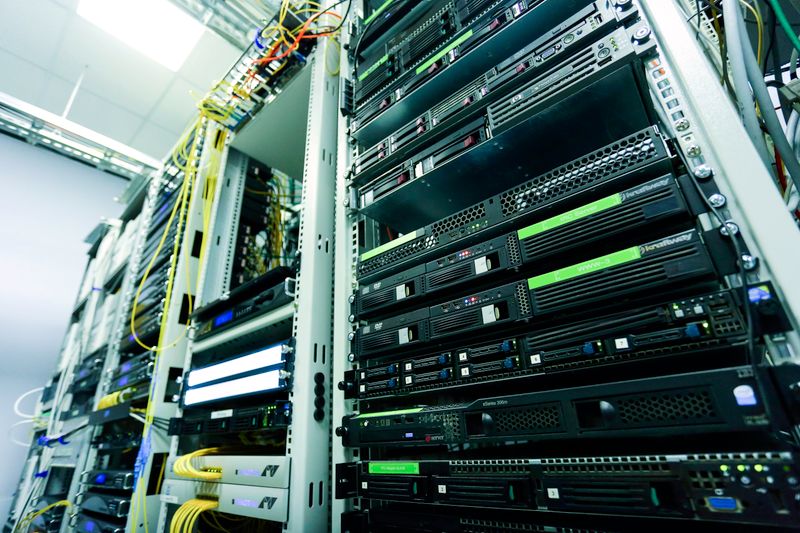
Akamai Technologies locked in a seven-year, $11.6 billion infrastructure agreement with Anthropic on September 24, 2026, marking the largest contract in the CDN pioneer's history and a watershed moment for edge infrastructure. The deal, which could grow to $20 billion with additional spending options, commits Anthropic to leverage Akamai's distributed network spanning thousands of points of presence for compute running "from core to edge." Crucially, the agreement focuses on CPU capacity rather than GPU training clusters, distinguishing it from the Nvidia-centric megadeals that dominated AI infrastructure headlines through 2025-2026.
The strategic timing amplifies its significance. Two weeks after the announcement, Fastly stock spiked as much as 17% on October 9 following an Oppenheimer upgrade citing "larger contract sizes, stronger security cross-selling, and early monetization of AI-agent traffic" through usage-based billing models. Cloudflare and Datadog also moved upward, though by smaller amounts, as Wall Street recognized that edge infrastructure—not just hyperscaler data centers—represents the next frontier in the AI capacity crunch.
What the deal does not confirm proves equally instructive. While Akamai describes supporting compute "from core to edge," neither company has published a technical breakdown detailing what percentage of Claude's inference or orchestration traffic actually runs on edge nodes versus centralized regions. The $11.6 billion figure describes a capacity commitment, not a guaranteed deployment architecture, meaning some early "AI at the edge" framing exceeded confirmed disclosures. Nevertheless, the deal's CPU-centric focus reveals a critical bottleneck: the CPU-side work surrounding every model inference call—request routing, authentication, API rate limiting, data preprocessing, caching, and orchestration tasks—has become its own scaling challenge at Anthropic's current operational scale.
Microsoft Maia: Custom Silicon Scales to Multi-Gigawatt Deployments
On October 12, 2026, Microsoft announced plans to expand its Azure Maia family to multi-gigawatt deployments starting in 2027, positioning its third-generation AI accelerator as the primary inference system for Microsoft products and services. Maia 200 is already serving production workloads including Microsoft Copilot and supporting the MAI team as they develop next-generation models, while Maia 300—designed for long-context reasoning, latency-sensitive conversational experiences, and sustained multi-step agentic tasks—will begin production deployments in 2027.
The architectural innovations reveal Microsoft's system-level optimization approach. Maia 300 delivers up to 40% more tokens per megawatt compared to leading GPU-based systems, with a full 96-accelerator configuration providing 7x the rack-scale token throughput of Maia 200. Key capabilities include a software-defined dataflow architecture that minimizes data movement, industry-leading HBM4 bandwidth (18.0 TB/s peak within a 950-watt TDP), chiplet design using TSMC's N2P process node for compute efficiency, and AI-optimized scale-up networking enabling unified topology from single rack to datacenter-scale deployments.
This multigenerational strategy reflects Microsoft's unique ability to "optimize from silicon to systems to agent on an open, heterogenous and model diverse platform." By treating networking as a seamless extension of its software-defined dataflow architecture and implementing custom AI transport for performant scale-up communication, Microsoft creates hardware specifically tuned for real-world workloads like multi-step agentic work, cloud-scale model serving, and latency-sensitive interactions—precisely the enterprise AI patterns driving infrastructure demand.
Convergence: From Silicon to Systems to Edge
The Akamai-Anthropic and Microsoft Maia announcements converge on a powerful truth: enterprises no longer view AI infrastructure as isolated components but as an integrated stack requiring co-optimization across layers. Anthropic's edge CPU deal addresses the orchestration and request-handling overhead that precedes GPU computation, while Microsoft's Maia expansion delivers purpose-built silicon optimized for the inference workloads themselves. Together, they illustrate how the industry is moving beyond the "bigger GPU" paradigm toward specialized infrastructure tuned for specific workload types—from agentic AI requiring low-latency edge processing to large-model inference benefiting from memory-optimized architectures.
This convergence carries immediate implications for cloud buyers and infrastructure planners. For deeper analysis of the cloud infrastructure trends shaping 2026, see our Cloud & Edge Computing coverage. Vendors can now credibly cite AI-driven capacity demand—including multi-billion dollar edge commitments like Akamai's—as justification for price increases on dedicated-use agreements. Capacity reserved for AI labs at the edge or in custom silicon pools represents capacity no longer available to other customers at prior pricing. For enterprises, the message is clear: optimal AI infrastructure requires matching workload characteristics to specialized resources, whether that means CPU-intensive orchestration at edge nodes or memory-bound inference on custom accelerators. The convergence is accelerated by infrastructure constraints and enterprise demand for end-to-end efficiency, making specialized infrastructure deployment not just a competitive advantage but a strategic necessity.
Conclusion
October 2026 marks a turning point where edge cloud providers and hyperscaler silicon teams reveal complementary strategies for the same fundamental challenge: delivering AI infrastructure that scales efficiently with enterprise demand. The $11.6B Akamai-Anthropic deal proves that edge networks can secure multi-year, multi-billion dollar commitments by addressing CPU-side bottlenecks in the AI inference chain, while Microsoft's Maia expansion demonstrates how custom silicon tuned for specific workloads delivers significant performance-per-watt advantages over general-purpose GPUs. As AI moves from experimental phases to production-scale deployment across industries, winners will be those who optimize not just for raw compute power, but for the entire stack—from silicon to systems to agent—delivering intelligence securely, efficiently, and at the precise point of need.
References
- Akamai Technologies. "Akamai Technologies locked in a seven-year, $11.6 billion infrastructure agreement with Anthropic on September 24, 2026." Press release, September 24, 2026.
- Microsoft Corporation. "Microsoft to expand Azure Maia system to multi-gigawatt deployments." Official Microsoft Blog, October 12, 2026.
- Oppenheimer & Co. "Upgrades Fastly to Outperform with $35 price target citing AI-agent traffic monetization." Research note, October 9, 2026.
- Daniel Roth. "Akamai's $11.6B Anthropic Deal Jolts Edge Cloud [2026]." Shattered.io, October 12, 2026.
- Microsoft Azure Maia Program Documentation. Technical specifications for Maia 200 and Maia 300 accelerators, 2026.
- TechCrunch. "AI Infrastructure coverage." https://techcrunch.com/category/artificial-intelligence/