The Compute Continuum: Why AI Is Turning Cloud Strategy Inside Out
Introduction
The enterprise infrastructure landscape is undergoing a fundamental rebalancing as three forces converge: AI inference demands lower latency than centralized data centers can provide, power grids struggle to keep pace with exponential density growth from AI workloads, and organizations increasingly reject single points of control in an era of rising geopolitical and operational risk. The result is not a retreat from cloud computing but a rebalancing toward a compute continuum where workloads run wherever they make the most sense — hyperscale cores for large training jobs, regional and edge facilities for inference, and autonomous endpoints for time-critical decisions. For enterprises, the strategic question is no longer "cloud or edge?" but how to orchestrate a distributed system without turning it into a management nightmare.
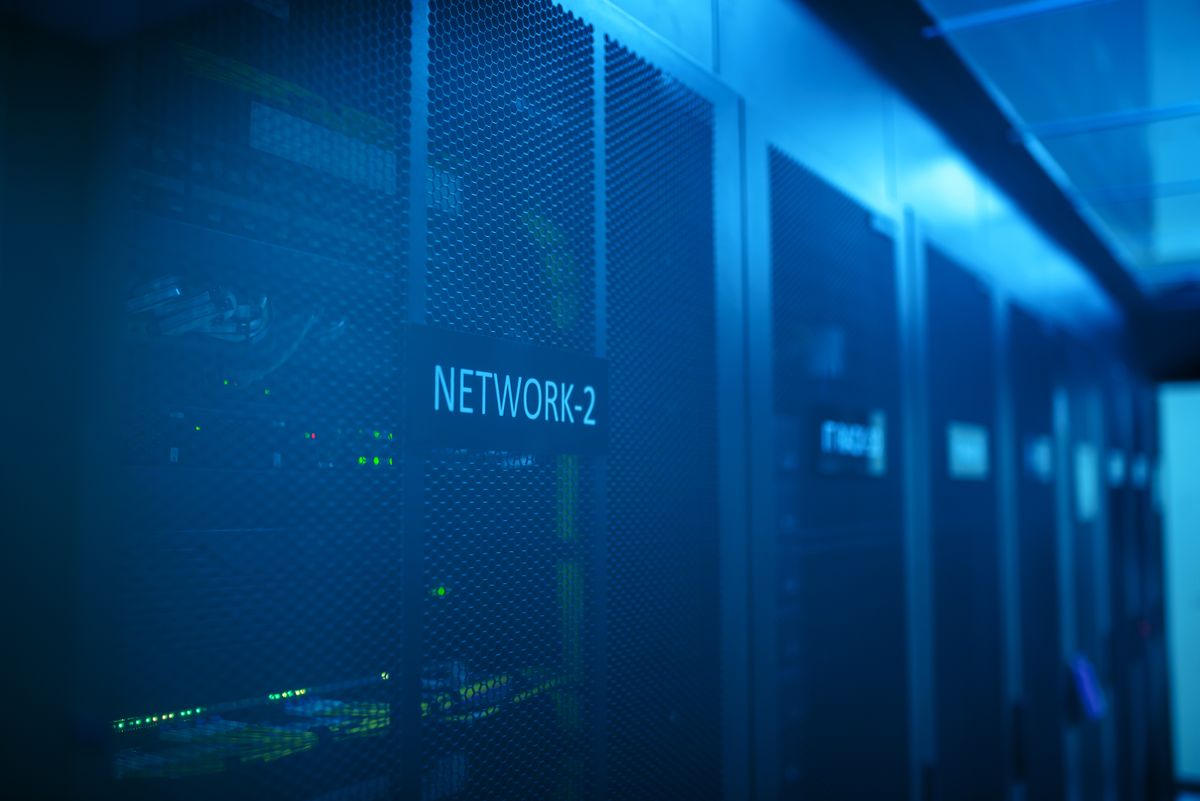
The Distributed Computing Shift
TechTarget reported in August 2026 that AI inference workloads are moving from centralized data centers toward distributed architectures. The driver is not theoretical: rack densities that once operated comfortably at 10–20 kW are now climbing beyond 100 kW for AI workloads. Goldman Sachs Research forecasts that global power demand from data centers could increase by 165% by 2030 because of AI growth. In some U.S. regions, projects are waiting years for grid connections because transmission infrastructure cannot keep pace.
That bottleneck creates a different set of trade-offs. Adding more hyperscale campuses does not solve the underlying constraint — it merely shifts it. The real constraint is not compute availability but the ability to deliver power and cooling to where it is needed. This has accelerated interest in edge computing as a way to bring inference workloads closer to where data is generated and consumed, reducing both latency and infrastructure strain.
AI infrastructure is evolving rapidly. At Huawei Connect 2025, the Chinese technology giant unveiled a SuperPod architecture based on its UnifiedBus interconnect protocol that deeply interconnects physical servers so they can "learn, think, and reason like a single logical server." This approach solves the scaling penalties that traditionally accompany larger AI clusters, where individual servers remain somewhat independent and communicate through network protocols introducing latency and complexity. For cloud providers building AI services and enterprises deploying private AI clouds, this represents a significant shift in how infrastructure can be architected, managed, and scaled.
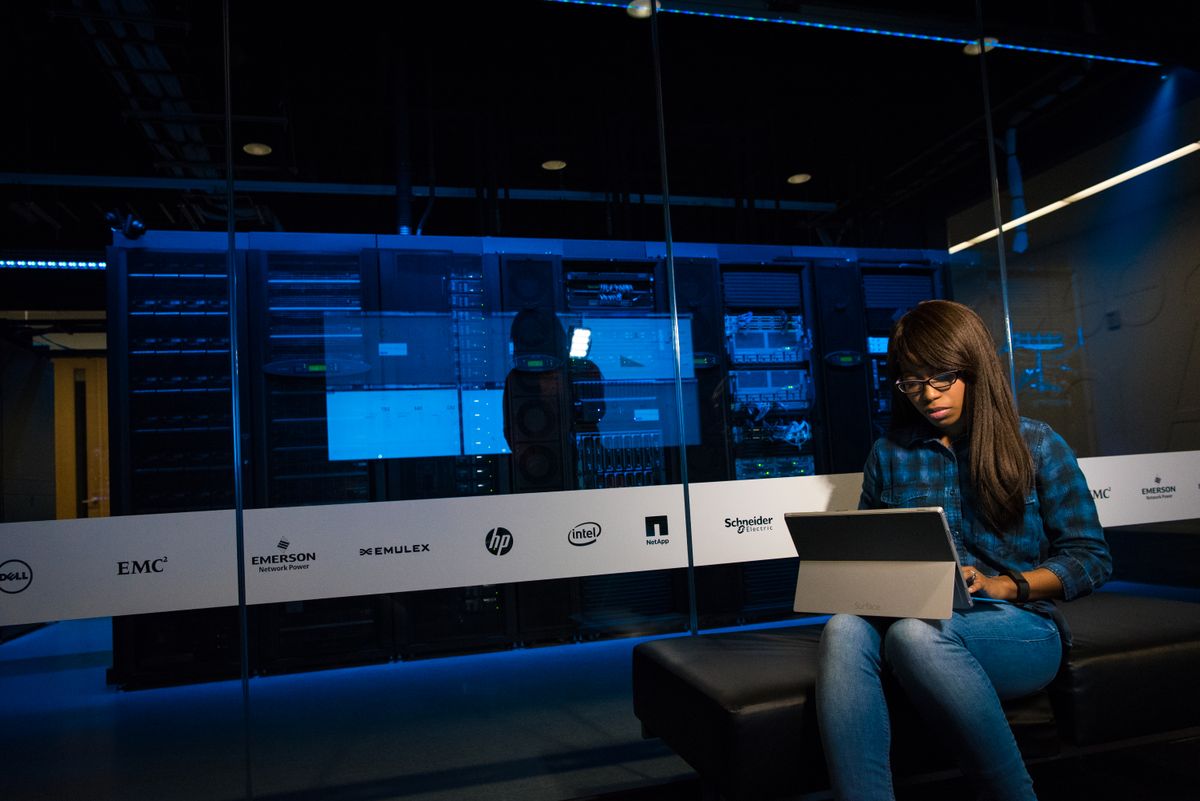
The challenge of building efficient cloud AI infrastructure has always been about scale — not just adding more servers, but making those servers work together seamlessly. Traditional cloud AI infrastructure faces a persistent challenge: as clusters grow larger, computing efficiency actually decreases because individual servers remain somewhat independent, communicating through network protocols that introduce latency and complexity. The result is what industry professionals call "scaling penalties" — where adding more hardware doesn't proportionally increase usable computing power.
Edge inference economics favor distributed deployment. Inference (chatbots, medical imaging) uses far less energy than training, IS where AI companies make money, and benefits from city-close placement. Hyperscalers pay a premium for it. This economic incentive, combined with latency requirements for use cases ranging from autonomous vehicles to industrial automation, is driving a fundamental re-architecture of AI infrastructure from center to edge.
Recent Industry Developments
Cloudflare revealed that as of June 2026, cdnjs runs entirely on its Developer Platform (Workers, Workflows, D1, Queues, Workers Cache, R2, KV, Containers), moving 9 billion daily requests off Google Cloud. The scale is significant: 12% of all websites, 48.3% JavaScript CDN market share, average 108,000 requests per second, 9 billion requests per day, 330+ Cloudflare data centers, and 98.6% cache hit rate. The migration addressed five pain points of the old architecture: no shared trace across GCP Logging and Cloudflare Logpush, split-brain storage, GCS object events used as a message queue without DLQ or replay, 26 Cloud Functions dedicated to npm checks, and a 1TB cdnjs repository that GitHub refused as tarballs or zip files.
Perimeter Compute, a new startup backed by Montauk Capital, is installing latest AI chips in basements and mechanical rooms of Class A office buildings with 0.5–20 MW spare capacity. The company pays for GPU hardware, installation, and metered power, splitting compute revenue with landlords. It has identified over 1 GW of spare capacity across US office towers and is raising capital with equipment costs estimated at $35M per MW. Though no signed contracts exist yet, the model complements the broader trend of turning already-wired spaces into distributed inference compute.
Sunrun is piloting Nvidia-chip "nodes" in homes with solar+storage, with CRO Paul Dickson noting "energy is the main bottleneck to compute" and advocating for putting one GPU in someone's house to build a distributed data center. This complements the Renew Home + Tesla 16 GW virtual-power-plant deal, suggesting that the future of AI infrastructure may involve many small, decentralized nodes rather than a few massive campuses.
Toward a Compute Continuum
The convergence of these trends points toward what some call a "compute continuum" — a distributed system where workloads dynamically move between hyperscale cores, regional facilities, and edge endpoints based on requirements for latency, cost, and privacy. The old playbook assumed a simple hierarchy: train in hyperscale data centers, send user requests to those centers, keep sensitive data in private facilities when regulations demanded it. That model still exists, but it no longer describes where the real pressure is building.
Three forces are converging: AI inference demanding lower latency, power grids struggling to keep up with density growth, and organizations unwilling to accept a single point of control. The result is a rebalancing where the center of gravity shifts toward a compute continuum in which workloads run wherever they make the most sense. For enterprises, the strategic question is no longer "cloud or edge?" but how to orchestrate a distributed system without turning it into a management nightmare.
Cloudflare Q2 2026 results showed revenue of $696.1M (+36% YoY), beating analyst expectations and raising FY guidance to $2.864-2.870B. The company reported $96.1M non-GAAP operating income (13.8% of revenue) and $56.4M free cash flow (8%).
See our Cloud & Edge Computing coverage for ongoing analysis of distributed infrastructure trends and hyperscale earnings.
Conclusion
The enterprise infrastructure landscape is undergoing a fundamental rebalancing as three forces converge: AI inference demands lower latency than centralized data centers can provide, power grids struggle to keep pace with exponential density growth from AI workloads, and organizations increasingly reject single points of control in an era of rising geopolitical and operational risk. The result is not a retreat from cloud computing but a rebalancing toward a compute continuum where workloads run wherever they make the most sense — hyperscale cores for large training jobs, regional and edge facilities for inference, and autonomous endpoints for time-critical decisions. For enterprises, the strategic question is no longer "cloud or edge?" but how to orchestrate a distributed system without turning it into a management nightmare.
References
- TechTarget: AI inference workloads moving from centralized data centers toward distributed architectures (August 2026)
- Goldman Sachs Research: Global power demand from data centers could increase by 165% by 2030 because of AI growth
- Huawei Connect 2025: SuperPod architecture based on UnifiedBus interconnect protocol
- Cloudflare Q2 2026 results: cdnjs runs entirely on Developer Platform, 9 billion daily requests off Google Cloud
- Perimeter Compute: Installs AI chips in Class A office buildings with spare capacity, 1 GW identified across US office towers
- Sunrun pilot: Nvidia-chip nodes in homes with solar+storage, energy as main bottleneck to compute
- Latitude Media: Data center outlook — 30-50% of large DCs due online in 2026 likely delayed