Target Arm Inc. announced this week that its Ralar 2 drone launch and recovery system now works with HDT Global's Hunter WOLF and WOLF-X unmanned ground vehicles, creating a mobile base that can launch, recover, and recharge drones without a human operator present. The integration points toward a future where ground robots double as autonomous aircraft carriers, collapsing the line between aerial and ground robotics.
The company revealed the integration on July 27, 2026, pairing HDT Global's wheeled robotic platforms with Target Arm's AI-assisted Ralar system. The result is an autonomous vehicle that can deploy a drone from a moving platform, retrieve it after its mission, and prepare it for another flight cycle — all without a person touching a controller.

How the Ralar System Works
Most drones need a stationary launch point. A truck has to stop. A ship has to hold position. A human operator usually stands by to handle the takeoff and landing, which costs time, creates a vulnerability window, and limits how many drones a single team can manage.
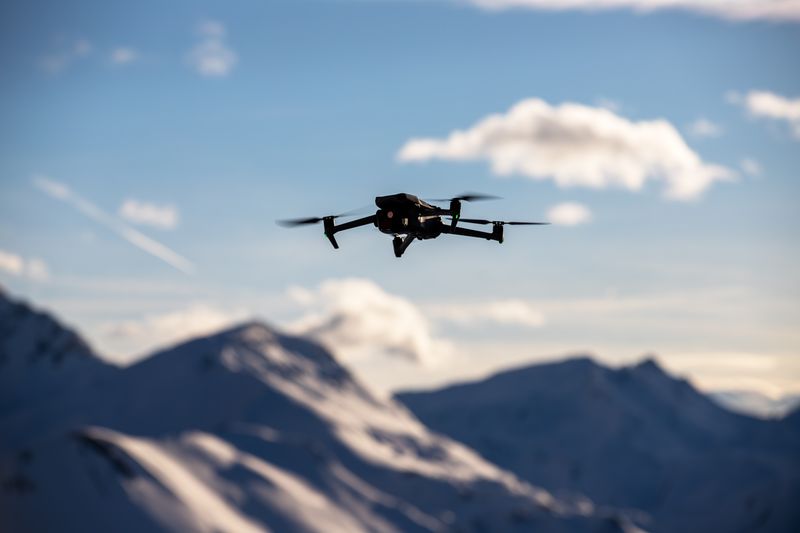
Target Arm's Ralar 1 and Ralar 2 systems remove that bottleneck. The technology uses AI-assisted robotics to handle the entire launch-landing-recharge cycle from vehicles that stay in motion. A certified drone can lift off, fly its mission, return to the moving vehicle, land autonomously, recharge, and launch again without any human intervention.
Footage released alongside the announcement shows a technician working on equipment mounted to a tan-colored wheeled ground vehicle labeled "FURIOSA" — a low-slung robotic platform fitted with sensor housings and cameras, built to traverse rough terrain without a human driver inside. The vehicle is compact, roughly the size of an ATV rather than a dedicated aircraft carrier or command truck.
Target Arm says the technology applies across defense, public safety, logistics, maritime operations, and critical infrastructure protection. Those use cases share a common requirement: the ability to keep aerial eyes in the sky without exposing a ground vehicle or its crew to unnecessary risk.
Ground Robots and Drones: From Separate Teams to Unified Systems
The separation between ground robots and aerial drones has been one of the stubborn facts of modern robotics. UGVs and UAVs require separate teams, separate control stations, separate launch procedures, and separate windows of vulnerability. A ground vehicle that stops to launch a drone becomes an easy target. A drone team that relies on a fixed base loses coverage the moment it moves.
Target Arm's integration with HDT Global's Hunter WOLF and WOLF-X platforms tackles that problem head-on. The Hunter WOLF is a wheeled UGV designed for military logistics and reconnaissance, valued for its ability to haul equipment into positions too dangerous for soldiers. Adding a drone launch-and-recovery system turns that single platform into a multi-domain asset — one machine that can scout from the ground and the air.
"We are seeing demand for systems that can operate across domains without requiring separate teams for each platform," said a Target Arm spokesperson in the announcement. The statement frames the Ralar integration as part of a broader shift toward autonomous teaming, where ground, air, and maritime robots coordinate without human orchestration of every handoff.
Carnegie Mellon Launches $50M Drone Manufacturing Initiative
The Target Arm announcement comes during a period of heavy investment in autonomous systems manufacturing. On July 15, 2026, Carnegie Foundry, Carnegie Mellon University, and leading U.S. drone manufacturers launched a national initiative to build the advanced manufacturing capabilities needed to scale domestic drone production.
The initiative leverages more than $50 million in Carnegie Mellon investments in robotics, advanced manufacturing, and commercialization infrastructure. It brings together CMU's National Robotics Engineering Center (NREC), Carnegie Foundry, and multiple drone manufacturers to create the Autonomous Systems Manufacturing Platform (ASMP) — a suite of AI-enabled robotics and manufacturing automation tools designed to help American manufacturers scale production of secure autonomous systems.
"America doesn't have a drone innovation problem. We have a drone manufacturing problem," said Dr. Robert J. Szczerba, founder and CEO of Carnegie Foundry. "Today, every company has to solve the same production challenges on its own. Our goal is to build a common manufacturing platform that gives American companies the tools to scale faster."
The initiative launches with ViDARR Inc. and Envision Technology, LLC — both already supplying drones to the U.S. Department of War. CMU President Farnam Jahanian called the project a strategic priority: "America's ability to manufacture advanced autonomous systems is becoming a strategic advantage every bit as important as our ability to invent them."
Europe Accelerates Drone Investment
The push to integrate ground and air robotics is not limited to the United States. Europe has spent the past year rebuilding its military response in light of Russia's invasion of Ukraine, and drones have emerged as a central technology in that effort.
NATO recently unveiled a new drone initiative. The U.K. earmarked billions of pounds for drones and counter-drone systems. Germany moved to procure 50,000 drones for Ukraine. Defense tech startup Helsing secured an $18 billion valuation. These developments reflect a broader shift in military planning, with autonomous systems moving from niche tools to core battlefield capability.
Morningstar analyst Loredana Muharremi described the evolution to CNBC: "Future defense is moving towards a layered battlefield, where, for example, a tank will not simply fire shells; it will also launch drones, receive live targeting data from satellites and UAVs, share information across the battlefield, and operate as part of a networked force."
Ukraine has ordered at least 50,000 unmanned ground vehicles for 2026 alone, according to President Volodymyr Zelensky's April directive. Those UGVs are being deployed alongside aerial drones in coordinated operations that blend ground reconnaissance with overhead surveillance — exactly the kind of cross-domain teaming that Target Arm's Ralar system enables.
What It Means for the Robotics Industry
The combination of ground and aerial robotics into single platforms has practical implications beyond the battlefield. Search and rescue teams could deploy a ground vehicle that launches a drone to scan a wide area, then recovers the drone and moves to the next search sector without stopping. Logistics providers could use roving ground platforms as mobile drone recharging stations, extending delivery range without building fixed infrastructure. Infrastructure inspectors could send a UGV into a pipeline or tunnel and have it launch a drone to check hard-to-reach ceiling areas.
Each of these scenarios relies on the same technical foundation: AI-assisted robotics that can handle the full launch-landing-recharge cycle from a moving platform. Target Arm's Ralar system and the HDT Global integration represent an early working example of that foundation.
The broader robotics industry is watching closely. At Automate 2026 in Chicago this past June, physical AI and humanoid robots dominated the conversation, but the quieter story was the push toward safety certification standards and interoperable platforms. Companies like Festo demonstrated AI-based grippers that handle object recognition through software rather than custom hardware, pointing toward the same commoditization of robotic capabilities that allows a UGV to accept a drone payload without custom engineering.
As more platforms adopt open interfaces and AI takes over the coordination between ground and air systems, the distinction between a "ground robot company" and a "drone company" will continue to blur. Target Arm's announcement suggests that blurring is already happening — and that the first practical demonstrations may arrive sooner than the industry expected.
Key numbers from the week in robotics: The U.S. robot industry returned to double-digit growth in 2025, with 38,000 industrial robot installations, up 11% year-on-year according to the International Federation of Robotics. The global advanced robotics market is projected to expand through 2046, driven by labor shortages and aging populations pushing automation into sectors that long resisted it. Carnegie Mellon has invested more than $50 million in robotics and advanced manufacturing infrastructure that directly supports the new Autonomous Systems Manufacturing Platform. And Target Arm's Ralar integration means a single operator in a command center can now control both a ground vehicle and an aerial drone from the same console — a capability that was restricted to military test ranges just five years ago.
For more coverage on autonomous systems and robotics, visit Robotics & Drones or explore EV technology and AI developments.