Fifteen US states and a Texas county sued the Federal Aviation Administration on September 28 over an environmental review that clears the way for routine drone package delivery. The case landed in the US Court of Appeals for the Second Circuit, in the same stretch of weeks when regulators were preparing to lock in the airspace rules that Amazon, Wing, and Zipline have spent years flying under temporary waivers.
The fight is over one number. The FAA's environmental assessment, completed in late July, models noise from 1,150 average drone deliveries coming out of a single hub per day, with aircraft flying below 400 feet. California Attorney General Rob Bonta said in a statement that the agency's "programmatic environmental assessment falls far short of properly analyzing the environmental impacts that drone package delivery operations may have." The suit alleges the FAA never properly weighed safety risks or environmental harm.
What is at stake is the schedule. The FAA's proposed Part 108 rule would let certified operators fly beyond visual line of sight without case-by-case waivers, and it is moving toward finalization. Operators are already scaling on the assumption that Part 108 arrives. Amazon said it will expand Prime Air to nearly 500 US cities and towns by the end of 2026. If the states slow the review, every one of those plans gets slower with it.
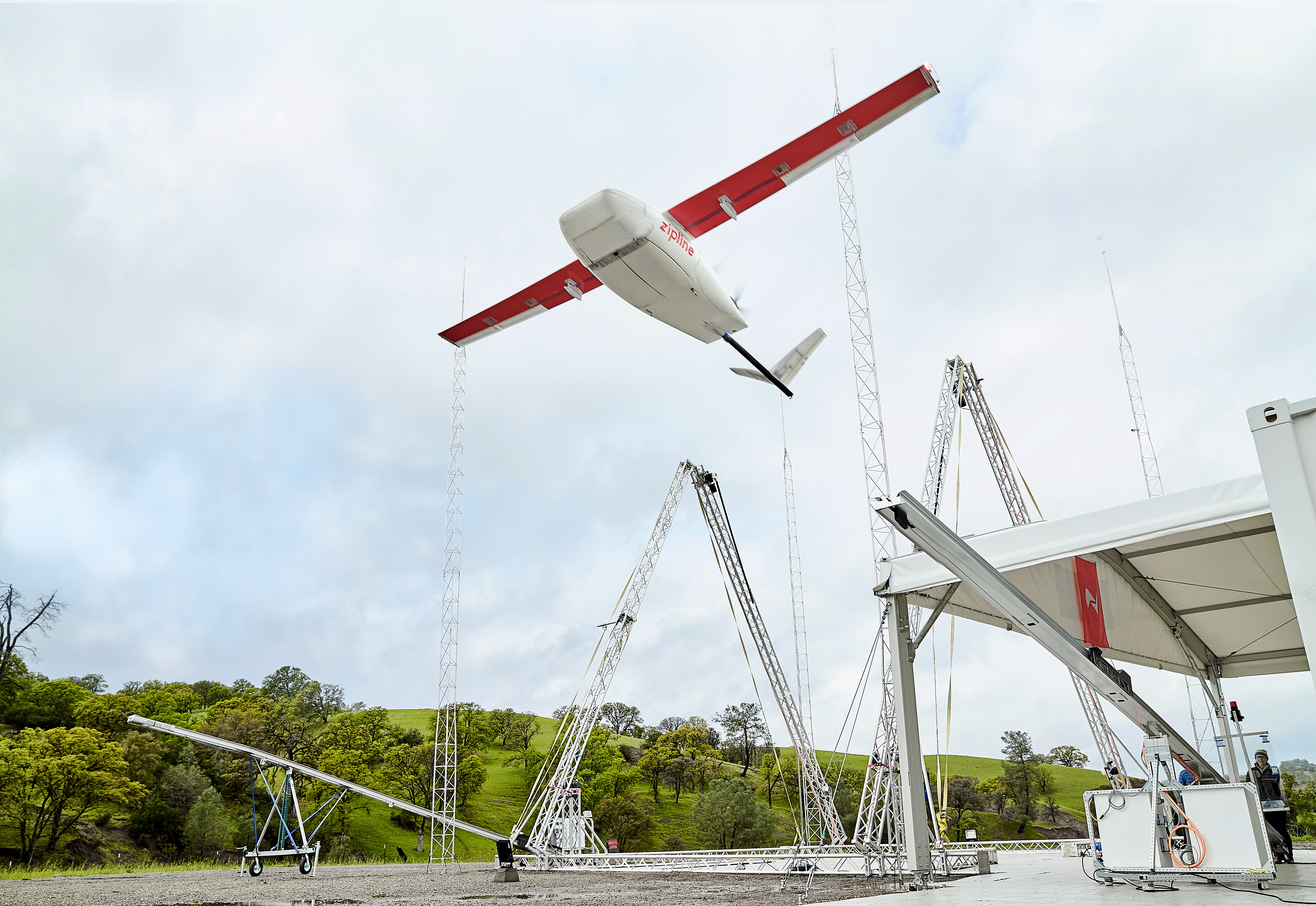
Amazon Builds the Whole Stack
Amazon's drone, the MK30, is built in-house in the United States. It runs fully electric and carries a detect-and-avoid system that lets it make autonomous safety calls in flight, including reacting to crewed aircraft that don't broadcast their position. That last part matters, because most small planes in low-altitude airspace are not required to squawk.
The company holds FAA Part 135 certification, the same authorization commercial airlines operate under, plus separate approval for beyond-visual-line-of-sight flight. Amazon detailed the expansion plans in its newsroom, with Chicago, Syracuse, Atlanta, and Boise among the new markets. The qualifying catalog covers anything five pounds or under that fits in a large shoebox: groceries, electronics, cosmetics, medications, household goods.
Owning the aircraft, the software, and the certification is a different strategy from what Wing is doing, and it is expensive. Amazon is not outsourcing its aviation operation. It is becoming one.
Wing Goes Asset-Light and Covers More Ground
Wing, Alphabet's drone unit, supplies the aircraft and the flight operations. Walmart supplies the stores, the inventory, and the demand. The pairing passed a milestone this spring when Walmart's network logged its one-millionth drone delivery, and the company pointed out a detail in the data that says something about how adoption actually works: a lot of first orders were a single banana or a snack, ordered just to watch a drone come.
Wing added drone delivery to another 150 Walmart stores in early 2026, reaching more than 40 million Americans, mostly by targeting suburban and rural markets where the airspace is simpler. Wing and Walmart called it the largest drone delivery expansion in the world to date, with 270 more locations planned for 2027 running from Los Angeles to Miami. For Walmart, the appeal is scale without the regulatory weight of running an airline.
Other players are filling in around those two. Uber partnered with Zipline to bring drone delivery to Uber Eats, starting in Houston and Dallas before the end of 2026, with a stated goal of one million drone deliveries per day by the end of 2029. DoorDash got its own FAA certification and launched an in-house program, then also ran a parallel track with Flytrex in Dallas-Fort Worth, where the service reaches over 30,000 households. Ireland's Manna raised a $50 million Series B and entered Tulsa, Oklahoma.
The Court Fight Comes Down to Noise
Noise is the center of the states' complaint. The FAA review looked at a single hub doing 1,150 deliveries a day and required drones to route away from noise-sensitive areas like parks, campgrounds, and trailheads. Launching hubs cannot sit near sensitive sites. The states say the agency did not model enough of it, and it is not clear a court will agree, but a delay while the record gets rebuilt would push Part 108 past the window operators have already planned around.
The economics are what operators are betting on. Researchers estimate per-delivery costs could fall as low as $2 by 2034, far under a van route. That estimate is doing a lot of work in the investment case, and it depends on density that only the largest networks will ever reach. A rural Walmart store gets a handful of routes a day, not a thousand, so the $2 number is really a function of hubs sitting on top of demand that already exists.
There is a consumer question too. McKinsey's survey work found that 76% of respondents worldwide would consider switching to drone delivery in 2024, up from 57% in 2021, and 58% said they would pay extra for the speed. US willingness sits at 53%, with concerns about safety and privacy over people's houses. A DroneUp survey found a Net Promoter Score of 70, with over 90% of users giving positive marks on arrival timing and drop accuracy.
Cities are writing their own rules in the meantime. Denver, which is getting delivery drone service this year, is working through ordinances on where hubs can operate, what hours they can run, and how much noise they can emit. Local limits sit on top of the federal framework, and they are being drafted now, before the federal picture settles.
People who have never had a drone land in their yard are less sure than people who have.

What Happens Next
The FAA has not commented on the lawsuit. It awarded $12 million to 19 drone companies on September 25, which suggests the agency is still pushing expansion even as states challenge the paperwork behind it.
The rule itself is the thing to watch. Part 108 would move drone delivery off the waiver framework and onto a standing authorization, which is the only way 500 cities works. Until it is final, every operator is flying on permissions that can be revoked one at a time.
More from our robotics and drones desk, and Reuters' coverage of the states' legal challenge.