South Korea's telecom regulator fined KT Corporation KRW 53.98 billion, about $39 million, after an 11-month intrusion into the carrier's mobile network exposed subscriber data and let attackers mint fraudulent micropayments — and the penalty lands harder on how KT handled the mess than on the hack itself.
The Personal Information Protection Commission (PIPC) handed down the fine on July 30, then referred KT to prosecutors. The breach ran from October 8, 2024 to September 5, 2025, and KT did not find it. A customer complaint about a mobile payment they never made triggered a regulator probe on September 10, 2025; KT filed its breach notice the next day, reporting roughly 5,500 affected subscribers. Investigators put the real figure at 16,647, three times what the carrier initially reported.
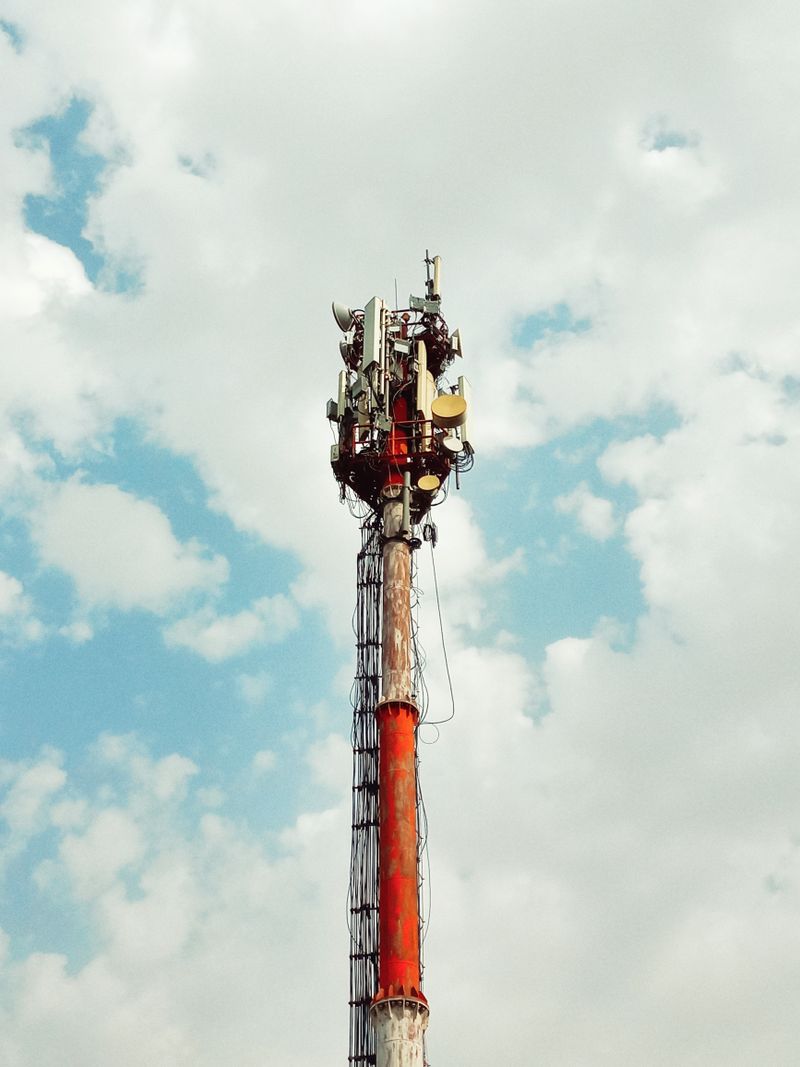
A stolen femtocell became a fake cell site
The entry point was mundane: a lost KT femtocell, a small indoor cellular base station, still carrying a valid authentication certificate. Whoever took it pulled the certificate off the box, loaded it onto their own device, and that device presented itself to KT's network as legitimate kit. Nearby phones latched onto the rogue cell, and everything crossing it — phone numbers, IMSI and IMEI identifiers, plus SMS and ARS authentication codes used to approve mobile micropayments — streamed to the attacker.
At least 368 subscribers ended up with fraudulent charges worth KRW 240 million, about $167,400, billed straight to their phone accounts. The combination of identifiers and one-time codes is a working payment credential, not a marketing list. Nobody had to phish a KT customer or guess a password; the network handed over the second factor itself.
The PIPC's findings read like a checklist of controls nobody revisited after installation. Femtocell certificates stayed valid for a decade, so a box lost in 2024 still carried a credential the network would accept. Connections were not restricted by source IP, meaning a stolen certificate authenticated from anywhere. And a route existed around the femtocell management server, the system meant to decide which base stations belong on the network. Basic hardening — shorter certificate lifetimes, IP allowlists, closing the management bypass — would have stopped the whole episode cold.
KT operates South Korea's largest mobile network, serving over 13.5 million subscribers and controlling 90 percent of the country's fixed-line connections. A breach of that scale is not just an IT failure; it is an issue of national critical infrastructure. The company employs 23,300 people and runs IPTV, cloud, and enterprise services across the country, so the attack surface extends well beyond consumer handsets.
The cover-up cost more than the breach
KT's undercount was only the start. During the investigation, the PIPC found BPFDoor malware on 38 servers in KT's IT service network, sitting there since March 2024. BPFDoor is a stealthy Linux and Solaris backdoor, documented publicly in 2022, that rides Berkeley Packet Filter hooks to avoid opening listening ports; security researchers tie it to the China-nexus Red Menshen espionage group. KT knew about the infection, the commission alleges, but handled it internally and never told regulators or customers.
Then KT deleted historical network logs from ten of the compromised servers while the investigation was underway, following a similar move at LG U+, which reinstalled operating systems and disposed of servers — including its password management server — before investigators could assess the damage. Because of the wiped logs, the PIPC says it cannot determine whether more customer data was stolen.
That is the pattern that turns a mid-sized telecom incident into a criminal referral. Two of South Korea's three major carriers now face prosecution for how they handled evidence, not for the intrusions themselves. Regulators are drawing a line: log retention during an incident is now an enforcement surface, and anything that looks like evidence destruction multiplies the penalty.
The Korea Herald reported a statutory maximum near KRW 190 billion, discounted here for breach scale, duration, and KT's compensation efforts. The discount only applies when the company cooperates. For companies that delete logs mid-probe, that cushion disappears.
What the fine buys
Beyond the money, the PIPC ordered KT to lock down femtocell and telecom equipment security, give its Chief Privacy Officer a real oversight role, and extend ISMS-P certification to its mobile network systems. The commission also wants legislative changes that would hit companies concealing or destroying evidence harder than the current framework does.
The fine fits into a broader global pattern of tougher telecom enforcement. European regulators have accumulated over €7.1 billion in GDPR fines, with telecom and data-processor cases accounting for a growing share. In the United States, the Federal Communications Commission's data-breach reporting rules tightened in 2023, and carriers have been under increasing pressure to move beyond SMS as a default authentication channel.
NIST's digital identity guidelines have flagged the public telephone network as a restricted authenticator channel for years. The KT case is the cleanest proof available of why: the carrier delivering SMS codes is itself part of the attack surface. A rogue femtocell is not a Korea-specific trick — it targets standard cellular protocols that every carrier on the planet runs. If your bank, email provider, or cloud platform still falls back to SMS for account recovery, that is a live risk today.
What mobile users should do right now
For consumers, four practical steps address the most common exposure paths. First, move high-value accounts off SMS codes to an authenticator app or a hardware security key — this closes the gap the KT attack exploited. Second, check your carrier billing settings: mobile micropayment is often enabled by default, and if you never use it, disable it or set a hard spending cap. Third, set a carrier PIN and port-out lock, both free at every major operator, to blunt SIM-swap and unauthorized account-change attempts. Fourth, audit your account recovery paths and start with your primary email, since it gates everything else.
The PIPC is also pushing for new legislation to increase penalties for evidence concealment. If that passes, South Korea will join a short but growing list of jurisdictions — alongside the European Union's GDPR enforcement regime and the United States' SEC data-breach reporting requirements — where destroying logs during a regulator's investigation carries consequences that can dwarf the cost of the breach itself.
Telecom operators should read the verdict differently
A femtocell certificate valid for ten years, no source-IP checks, a management-plane bypass, and malware sitting undetected for 18 months: any one of those is embarrassing; all four together are a governance failure. KT's initial 5,500 became 16,647, and that gap — plus the deleted logs — is what turned a mid-sized telecom incident into a nine-figure won penalty and a criminal referral.
The case puts every carrier on notice. Femtocells and other radio-access equipment sit outside the traditional data-center perimeter, but they carry credentials that authenticate to the same core network. Treating them as afterthoughts — ten-year certificate lifetimes, no IP restrictions, no monitoring — is exactly the kind of gap attackers exploit without needing advanced tools.
South Korea's three major mobile operators now face two criminal referrals and a clear regulator message: report early, preserve logs, and count your victims honestly before you publish a number. KT did the opposite on all three counts, and the PIPC responded with the largest telecom fine in the country's history.
More on this beat: the Cisco FMC backdoor saga, CISA's SharePoint hardening push, and the full Cybersecurity category coverage.
Source: South Korea fines telco giant KT $39 million for customer data breach — BleepingComputer