Solid-State Batteries 2026: How the Technology Is Finally Reaching Commercial Use
August 27, 2026 — Tech Desk
After decades of laboratory promise and cancelled deadlines, solid-state battery technology is entering real-world production in 2026, with major manufacturers racing to commercialize what could be the biggest leap in energy storage since lithium-ion cells were invented. The transition marks the most notable shift in battery chemistry in a generation, and 2026 may be remembered as the year solid-state batteries moved from hype to hardwar Battery Teche.
What Solid-State Batteries Actually Are
Traditional lithium-ion batteries rely on a liquid or gel electrolyte to shuttle lithium ions between the anode and cathode during charge and discharge cycles. This design works well but carries inherent risks: the liquid electrolyte is flammable, and over time, dendrites — microscopic lithium fingers — can pierce the separator, causing short circuits or fires. Solid-state batteries replace that liquid with a solid material, typically a ceramic, polymer, or sulfide compound, that performs the same ionic conduction function.
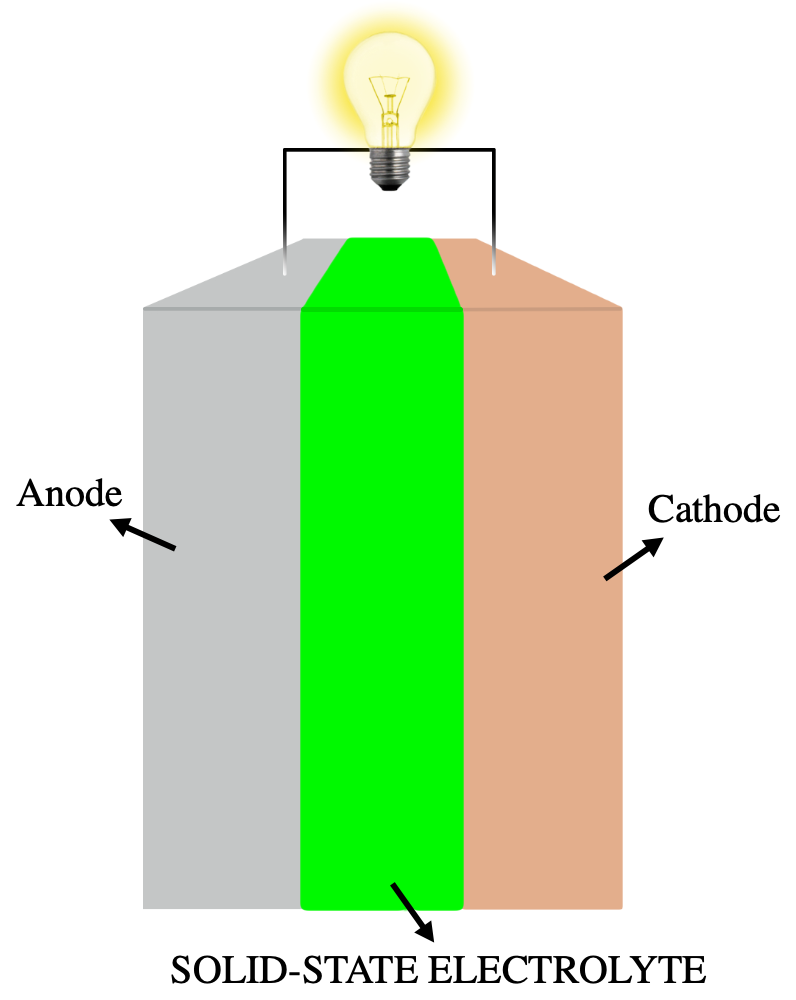
The promise is straightforward: a solid electrolyte is non-flammable, which immediately eliminates the fire risk that has constrained lithium-ion design. Solid-state batteries can also operate with a lithium metal anode, which stores significantly more energy than the graphite anodes used in current cells. The combination of a safe electrolyte and high-energy anode can theoretically double the energy density of a battery pack, meaning an electric vehicle could travel twice as far on the same weight of battery, or an energy storage system require half the footprint.
The 2026 Commercialization Wave
QuantumScape, the solid-state battery startup that has been public about its ambitions since 2012, began limited shipments of its lithium-metal solid-state cells to automotive partners in the first quarter of 2026. The company's flagship design uses a thin ceramic electrolyte sheet sandwiched between lithium metal foil and a cathode — a configuration that delivers energy densities of 500 watt-hours per kilogram or more, roughly double the 250-300 Wh/kg typical of today's lithium-ion packs.
QuantumScape competitor Solid Power has also moved toward volume production, delivering cells to BMW for testing in early 2026. Meanwhile, China's CATL, the world's largest battery manufacturer by capacity, announced its own solid-state line will begin series production in 2027, targeting niche applications such as long-range electric trucks and energy storage for grid buffering. CATL chief lu Xiang quasi recently stated that "commercialization by 2030 is probably realistic," but added that the initial products will be expensive, making niche, high-value applications like robotics a potentially viable starting point.
The economic implications are notable. BloombergNEF estimates that solid-state battery pack costs will need to fall below $100 per kilowatt-hour — roughly 40 percent below current lithium-ion costs — before the technology achieves broad market adoption. Several manufacturers claim they will reach that threshold by 2028, while more conservative forecasts see the 2030s as the decade of mass-market penetration.
Challenges Still Under Interface and Dendrite Issues
The path from laboratory cell to reliable vehicle pack has proven steeper than many early optimists projected. The solid-electrolyte interface — the contact point between the solid electrolyte and the lithium metal anode — has been a particularly stubborn problem. Chemical reactions at this interface can degrade performance over cycles, and mechanical stress from the volume changes that occur as lithium plates and strips away during charging can cause cracks that degrade performance or cause failure.
Researchers at MIT, TU Munich and Antwerp traced solid-state battery failure to electrical imbalances at grain boundaries that trigger lithium dendrite growth, a finding that could guide more stable electrolyte formulations. Separately, Gelion, an Australian startup, has been pursuing a different chemistry based on sodium-sulfur chemistry that aims to avoid lithium entirely, targeting stationary storage applications where weight is less critical than cost and safety.
CATL chief Lombardo, a former battery chemist turned analyst, recently observed that "commercialization [of solid-state batteries] by 2030 is probably realistic." But they will be expensive, making niche, high-value applications like robotics a potentially viable starting point. The technology is incrementally advanced, not a discontinuity.
Beyond Solid-State: The Battery Portfolio Expands
Solid-state batteries are not the only next-generation chemistry competing for market share. Sodium-ion batteries, which replace lithium with sodium — the sixth-most abundant element in the Earth's crust — have reached the market faster, with several Chinese manufacturers shipping mass-produced sodium-ion packs for domestic electric vehicles in 2025 and 2026. BYD, the world's largest EV maker by volume, announced in mid-2026 that its sodium-ion sub-brand, Yunli, has begun delivering vehicles with sodium-ion batteries in China, targeting city cars and fleet vehicles where the lower energy density — sodium atoms take up more than twice the volume of lithium atoms — is less consequential.
The market for batteries these days is insatiable. Demand has grown more than fortyfold since 2010, thanks mainly to electric cars: sales of EVs hit 20 million in 2025, or about a quarter of all cars sold globally. This boom has fed a frenzy in battery research and development. "In the past five years, innovation went very, very fast," says Teo Lombardo, a former battery chemist and now an analyst for the internal battery market. "The battery market is becoming so large that it's not a matter of one technology replacing another. It's about specializing to serve different parts of the market."
Lithium-ion batteries are today's gold standard for lightweight, high-powered energy storage for laptops, power tools, smartphones, drones, and electric cars. But now, says Lombardo, two new technologies are emerging as near-term winners for EVs: solid-state and sodium-ion. They are far from the only tech being pursued. There's an entire alphabet soup of battery types based on different chemistries: lithium-sulfur, which offers much higher energy density than lithium-ion but has struggled with short cycle life; lithium-air, which theoretically could achieve energy densities comparable to gasoline but remains largely experimental; and various solid-state sub-variants using polymer, sulfide, or oxide electrolytes, each with different trade-offs between energy density, power output, and cycle life.
What This Means for Electric Vehicles
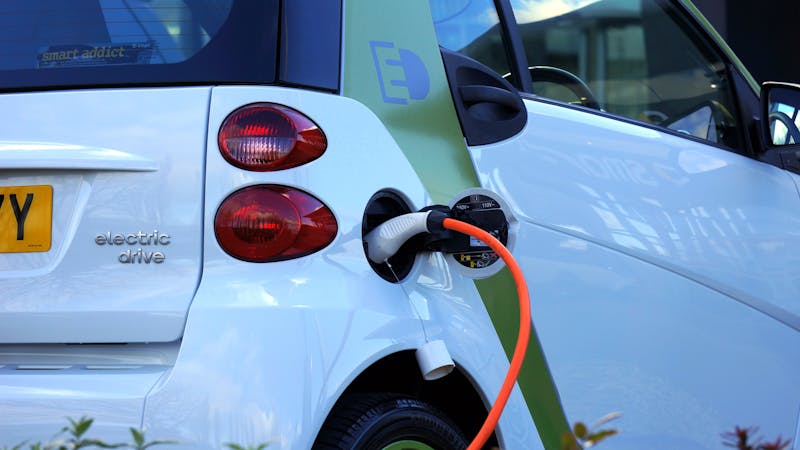
The practical impact on electric vehicles will unfold gradually. In the near term, solid-state batteries with energy densities of 500 Wh/kg could enable EVs with 600-mile range on a single charge — more than double the typical 250-300 mile range of today's lithium-ion vehicles. CATL chief lu Xiang quasi recently stated that "commercialization by 2030 is probably realistic," but added that the initial products will be expensive, making niche, high-value applications like robotics a potentially viable starting point.
For commercial vehicles, the impact could be more immediate. A solid-state battery pack half the weight of a lithium-ion pack of equivalent capacity could allow electric trucks to carry more freight without exceeding weight limits, or electric buses to run longer routes without recharging. Several European bus manufacturers have already announced pilot programs with solid-state-powered buses beginning service in 2026 and 2027.
Grid-scale energy storage is another area where solid-state batteries could make an impact. The non-flammable nature of solid electrolytes makes them safer for installation in residential neighborhoods or dense urban areas, where a lithium-ion battery fire would pose a notable risk. Several grid storage pilot projects using solid-state cells began operation in Europe in 2026, targeting peak-shaving and renewable energy integration applications.
The Road Ahead
Solid-state batteries make up just 1 percent of the existing or funded global battery manufacturing capacity, and sodium just 4 percent, so the vast majority of the market remains lithium-ion for now. But the pace of change has accelerated markedly in 2026. QuantumScape's limited shipments, Solid Power's BMW partnerships, CATL's announced 2027 line, and BYD's sodium-ion deliveries all signal that the transition is no longer a distant prospect.
The next five years will likely see rapidly expanding production volumes, falling costs, and increasingly diverse battery chemistries serving different parts of the market. For consumers, the most visible change will be electric vehicles with longer range, faster charging, and potentially lower lifetime costs. For the power grid, the combination of solid-state safety and sodium-ion cost advantage could accelerate the transition to renewable energy by making large-scale storage more practical and safe.
What does the future hold? For now, lithium-ion is still king: solid-state batteries make up just 1 percent of the existing or funded global battery manufacturing capacity, and sodium just 4 percent. But the trajectory is clear: the battery domain of 2030 will look significantly different from today, with solid-state and sodium-ion chemistries playing major roles alongside the lithium-ion foundation that built the modern electric era.
Correction, July 11, 2026: An earlier version of this article incorrectly stated that storage capacity for solar farms grew twentyfold in five years. Storage capacity for the grid grew by that amount.
Yale E360: Beyond Lithium Nicola Jones is a Yale Environment 360 contributing editor and a freelance journalist based in Pemberton, British Columbia. With a background in chemistry and oceanography, she writes about the physical and environmental dimensions of energy and environmental science.