Sodium Chromium Cells That Absorb Heat Could Let Grid Storage Drop Its Cooling Gear
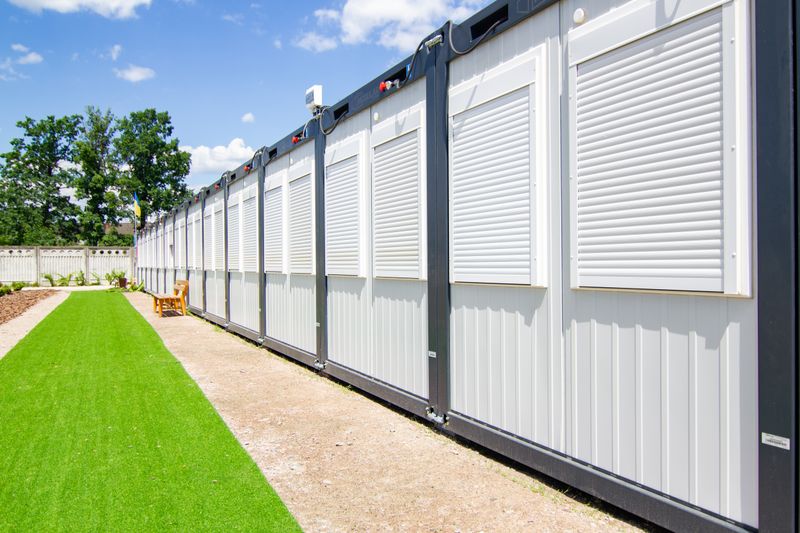
Grid-scale batteries usually need a lot of cooling. Energy companies pour power into big air-conditioning units to keep lithium-ion banks from overheating or catching fire. Two companies now think a sodium-based cell chemistry runs cool enough on its own to ditch much of that equipment.
Syntropic Power and UNIGRID Inc. announced on August 5 that they will work together to sell UNIGRID's sodium chromium oxide (NaCrO2, or NCO) batteries across North America. The plan is to line up one gigawatt-hour of NCO-based storage in 2027, starting with a wall-hung home unit and a modular platform built for utility-scale sites.
UNIGRID is a battery startup spun out of the University of California, San Diego. Syntropic Power, based in Cary, North Carolina, builds energy storage systems and says safety is its first concern. The pairing puts a cell chemistry developed in a lab together with a company that has to ship working, certifiable storage out into the field.
Laboratory numbers that back the marketing
The headline claim is thermal. Independent testing at the Rochester Institute of Technology Battery Development Center, an ISO-accredited lab, found that UNIGRID NCO cells absorb heat while they charge. That is the opposite of most batteries, which dump heat into the environment every time you push current in. An endothermic charge means the chemistry stays cooler on its own instead of loading up a cooling system.
That behavior matters because mechanical cooling is one of the bigger costs and failure points in battery storage. Cold rooms, air handlers, and the power to run them eat into the economics of a storage site. A cell that stays cooler on its own lets a designer lean on passive thermal management and skip some of that machinery.
"UNIGRID's NCO chemistry combines high round-trip efficiency, high power capability, strong cycle life performance and distinctive thermal safety behavior, providing the foundation for a GridSpan platform designed to operate without active cooling," said Matt Huber, chief technology officer of Syntropic Power.
The numbers back that up. RIT measured discharge capacity of 216 to 218 amp-hours against a 210 amp-hour nameplate rating on UNIGRID's larger cells. Cell-level round-trip efficiency landed at or above 97.9 percent. Capacity loss between a slow C/10 and a faster 1C rate came in at only 2.3 percent, according to the lab's findings. Cycling tests that UNIGRID ran held above 99 percent of capacity after more than 1,000 full depth-of-discharge cycles.
The cells also passed UN 38.3 transport testing, completed cell-level UL 9540A testing, and earned IEC 62619 certification. Those credentials clear the way for shipping large cells and for the downstream safety sign-offs a storage system needs before it plugs into a grid.
A cathode that stands apart
Sodium-ion is not one chemistry. UNIGRID's NCO reads as a chromium-based cathode, which the company says is distinct from the sodium nickel iron manganese oxide (NFM) and sodium iron pyrophosphate (NFPP) chemistries that Chinese makers have leaned on. That distinction matters as sodium-ion storage gears up for real production.

Sodium-ion is still a small slice of the battery market. The first grid storage unit using the chemistry went up in China in 2019, and the first sodium-ion electric vehicle appeared in late 2023. By 2025 sodium-ion accounted for under one percent of global production measured against lithium-ion. Its appeal is material supply: sodium comes from cheap, widely spread sources and chromium is relatively abundant, so the chain does not hinge on geographic hot spots the way lithium and cobalt do.
Why the timing works
Grid operators want storage that does not fall over in a heat wave. AI data centers and electrification are pulling more power from the same lines, and extreme weather keeps stressing the system in summer. A storage product that can sit outdoors in high temperatures, charge fast, and hold its balance without a big cooling rack looks attractive to developers who already spend heavily on thermal management.
The deployment does not stop at one product. Near-term launches with Tenet, a wall-mounted system aimed at residential, light-commercial, and virtual power plant use. Beyond that sits GridSpan, a modular direct-current platform for larger sites that supports discharge durations from about 20 minutes to 20 hours. The same family can cover fast-response power and longer ride-through windows.
That range is worth spelling out. Twenty minutes is a power play: a unit riding a dip, a ramp spike, or a contingency signal and stepping in before slower generation spools up. Twenty hours points the other way, toward shifting a full daily charge cycle or bridging an overnight lull in renewable output. Designing one product family to span both extremes is part of the reason Syntropic says it built GridSpan as a modular stack rather than as a single-purpose box. The system integrator picks the number of units and the rating, then matches the chemistry to the job rather than forcing one fixed size to fit every site.
UNIGRID has already shipped its first batch of NCO cells to Syntropic for development, testing, and integration. That puts real hardware in front of engineers rather than leaving the plan on a slide. Early cells on a bench can reveal the practical problems that datasheets hide: connector sizing, wiring losses, how the pack heats when a string charges back-to-back. Sorting those out now is what turns a validated chemistry into a product that installers trust.
The residential angle matters to the companies' strategy too. Most grid-scale storage gets sold in bulk to utilities and developers, but a wall-hung unit aimed at a home changes the business. Homeowners get a slice of backup power and, in places with the right rules, a way to shave their evening peak draw. Virtual power plant programs bundle those small units into a resource a utility can dispatch. That channel pulls in volume that a pure utility-only pitch would miss.
Sodium's wider moment
The UNIGRID deal is one sign of a broader shift. Sodium-ion has moved from lab curiosity to a chemistry grid operators and automakers are scoping in earnest. Chinese makers have fronted much of that work, which is why so many of the production benchmarks still point east. A North American push on a different cathode chemistry is a useful counterweight for customers who want supplier choice and onshore production.
None of this means sodium displaces lithium soon. Energy density still trails the best lithium cells, and the sodium-ion market is only starting to scale. But for a stationary storage job, where weight and space matter far less than they do on a vehicle, a chemistry that mostly cools itself and uses cheap, wide materials has a strong case to win real contracts.
Market analysts keep revising storage projections upward as more regions lean on batteries to smooth out wind and solar. Any chemistry that shortens the payback or cut the operating cost of a site gets a hearing. Cooling load is a visible line on that operating cost, and the NCO results suggest it can be trimmed. That is why the RIT data, not the announcement, matters most: independent measurements give buyers a number to trust.
The limits are real
Still, real-world tests decide everything. The endothermic charge behavior looks good on a bench, but a storage site spends its life in heat, cold, rain, and dust. The abuse testing and the certificates help, but nothing settles a design like a full container running for months on a live grid connection. The 2027 target gives the teams about eighteen months to prove the product outside the lab.
There is also the question of scale. One gigawatt-hour is a real order book but a small fraction of what the storage market will need. Building up cell supply, qualifying suppliers, and standing up US assembly all take time and capital. The companies have not put a number on the factory investment, lending the press release a deliberate caution.
Even so, the direction is clear. Grid storage is beginning to diversify beyond lithium-ion, and sodium is the chemistry with the most plausible near-term route to large volume. A version that absorbs heat, holds 97.9 percent round-trip efficiency, and stands up to bulk production checks a lot of boxes that operators actually care about. If the 1 GWh target holds, 2027 could be the year North America gets a steady, cooler, smaller-footprint sodium storage floor. The Battery Tech section will keep tracking this chemistry as more cells reach the field.
The agreement also maps a path to American manufacturing. Syntropic plans to make NCO cells in the United States and to lead system design, certification, module assembly, and integration. It says it is prioritizing a supply chain not aligned with a foreign entity of concern (FEOC) by the end of 2027. That detail matters as the country works to stand up a domestic battery ecosystem and keep some storage production onshore.
"The inherent stability and high power capability of the NCO chemistry make it exceptionally well-suited for these demanding conditions," said Darren H. S. Tan, chief executive officer of UNIGRID, in the announcement. "Partnering with Syntropic allows us to scale this dependable technology to deliver the power infrastructure North America urgently needs."
The plan sits alongside a wider storage push that has developers chasing both established and specialty chemistries. Sodium-ion is drawing fresh attention now that supply snags and geopolitical risk have customers weighing an alternative that does not rely on minerals locked up in a few countries. Battery Tech coverage has been tracking this area as developers decide which chemistry to build around.
The limits are real
None of this means sodium displaces lithium soon. Energy density still trails the best lithium cells, and the sodium-ion market is only starting to scale. But for a stationary storage job, where weight and space matter far less than they do on a vehicle, a chemistry that mostly cools itself and uses cheap, wide materials has a strong case to win real contracts.
If the 1 GWh target holds, 2027 could be the year North America gets a steady, cooler, smaller-footprint sodium storage floor. The Battery Tech section will keep tracking this chemistry as more cells reach the field.
Read the original announcement from Syntropic Power and UNIGRID, and the Interesting Engineering breakdown of the UNIGRID technology.