Robots and Drones Just Got Dragged Into the US-China Trade War
The day after Washington banned new Chinese humanoid and quadruped robots, Beijing's trade officials did not flinch. On August 5, China's Commerce Ministry tightened export controls on drones and drone parts bound for the United States, moved to case-by-case review of those shipments, and barred Chinese companies from dealing with seven US entities. The move lands barely a week after the US Federal Communications Commission said it would stop authorizing new foreign-made humanoid robots, quadruped robots, and networked power inverters — a rule that in practice targets China, the source of about 87% of the world's humanoid and quadruped robot shipments.
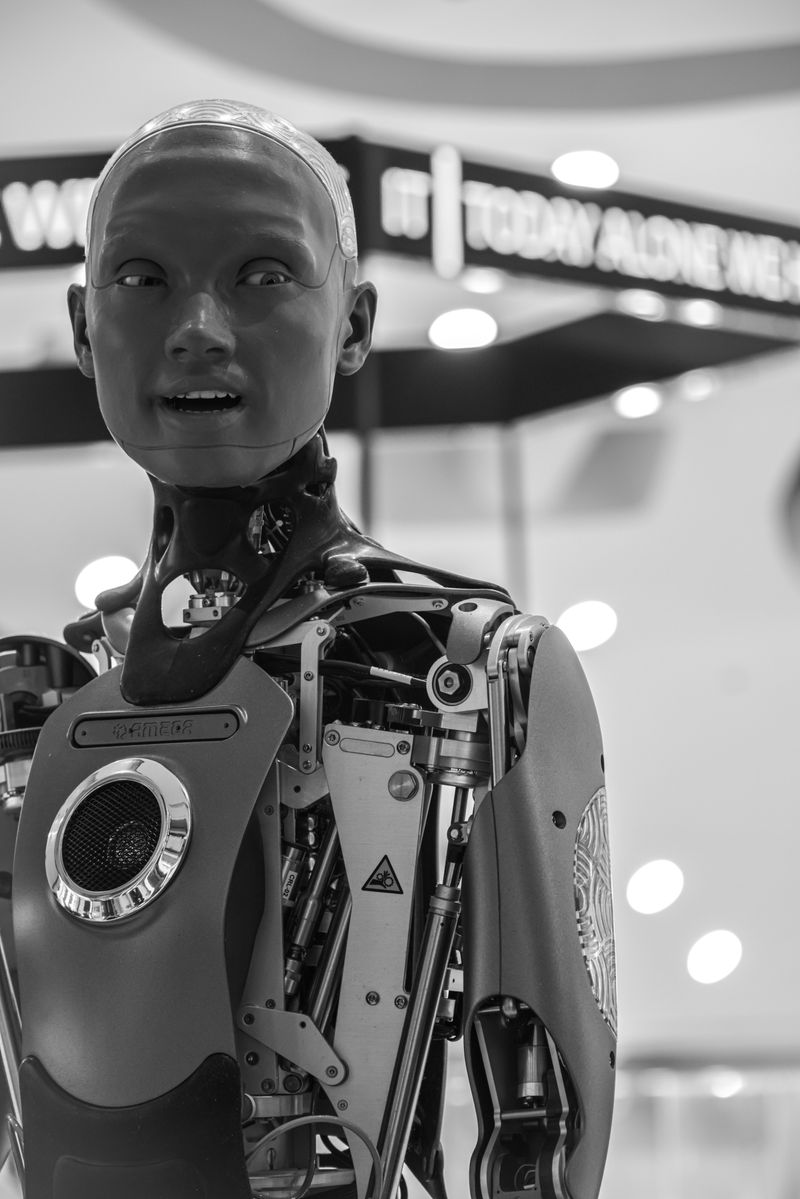
Welcome to the robotics trade war. Until this year, robot makers mostly dodged the kind of formal barriers that semiconductors and electric vehicles have lived with for a while. That era looks over. Two of the world's biggest governments have now put hardware that walks on two legs and four on the same list as chips and batteries, and both sides say the other started it.
What Beijing Did, and Why It Picked Drones
China's Commerce Ministry described the response as "restrained." The measures it announced Wednesday were specific: export controls on unmanned aerial vehicles and their key components and related technologies, case-by-case review of shipments, and bans on business between Chinese entities and a group of American companies, including Applied DNA Sciences and the rights group Human Rights in China. A separate US firm, Compliance Testing LLC, was banned from doing business in China for its work with the FCC in "harming China's sovereignty and security," according to the ministry. The ministry also flagged a national security review of imported printing and office equipment software — a lane that could reach Microsoft and HP — and market regulators cut the ability of US companies to run CCC certification audits for goods sold in China.
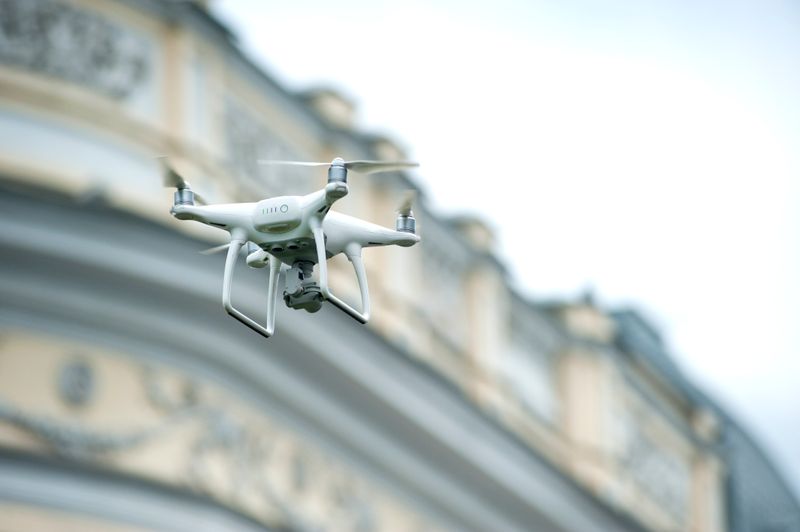
Why target drones instead of robots? Because that is where China's grip is tightest. Chinese makers, led by DJI, control most of the world's consumer and commercial drone supply chain — an even bigger share than they hold in humanoids. The US already blocked new Chinese drone models back in December 2025. So this round runs the other direction: Beijing is tightening what leaves Chinese factories for the United States, not the reverse. The AP News wire report on the countermeasures laid out the full list, and SCMP's summary of the announcement noted that export cases will now face strict, case-by-case scrutiny of every shipment, effective immediately.
China's own statement tied the move to a chain of US actions: the FCC's robot and inverter restrictions, the drone limits from December, and a Department of Homeland Security decision to add 43 Chinese companies to the forced-labor entity list under the Uyghur Forced Labor Prevention Act. Beijing said the US measures "severely damage China's legitimate rights and interests" and warned that more countermeasures would follow if Washington kept going. The timing is pointed: President Xi Jinping is expected to visit Washington in September, and both capitals had signaled a thaw after the May Trump-Xi summit in Beijing.
The FCC's Original Door Slams Shut
The exchange started back in late July. On July 28, FCC Chairman Brendan Carr said the agency would no longer approve new foreign-made humanoid robots, quadruped robots, and networked power inverters, framing the decision as "securing America's critical supply chains" and acting in lockstep with national security agencies. The FCC's stated worry was twofold: a single foreign source for a fast-growing class of physical AI, and the chance that connected machines could be used for spying or quietly taken over once they sit inside American warehouses, factories, and homes.
The scope matters. Companies are not being ordered to pull machines already sold. A warehouse running Chinese quadrupeds today keeps them running, and retailers are not told to recall a humanoid built six months ago. But robot makers refresh their lines every year — Unitree, UBTech, and Agibot update their flagships on annual cycles — so a rule about "new models" becomes, within one product cycle, a rule about nearly everything those vendors make. As Reuters reported on July 28, the door for exceptions is narrow: Defense and Homeland Security can grant waivers to manufacturers that meet security standards, but no company has yet shown it can clear that bar. The Forbes explainer of the order noted existing models remain on sale, which softens the immediate pain but not the longer-term cutoff: six of the top ten robot producers by volume are Chinese, and the 87% shipment statistic puts the whole category behind a single supply chain.
Who Stands to Gain, and Who Needs a Hedge
On paper, the winners are humanoid builders named in coverage of the decision — Figure, Agility Robotics, Tesla, 1X, and Apptronik. None ships the volumes Chinese makers ship today. But they now compete in a domestic market where the cheapest large-scale supplier option is being rationed by policy instead of economics. Whether that opener turns into real share depends on closing a genuine cost and volume gap that Chinese firms spent years building. Few analysts expect that to happen in one product cycle.
Hedging demands are spreading beyond the two blocs. Southeast Asian assembly hubs, the Philippines among them, look more interesting to companies on either side that want a third sourcing lane. The robotics-adjacent ripple is visible inside the US too: distributors with stock commitments to Chinese drone lines now weigh case-by-case review that did not exist a month ago, and firms running fleets of Chinese inspection robots, warehouse bots, or delivery drones are adding a new planning variable — the export license, not just the price tag, in six months.
The Stakes for the Drone Economy
Drones are the fastest-moving part of this story because they already trade at scale. DJI's models dominate everything from consumer photography to farm spraying, and the US December 2025 ban on new Chinese drone models already forced rethinking among dealers. Now the reverse flow — Chinese export controls into the US market — adds uncertainty at the point where supply meets demand. Manufacturing quality was never in dispute, which is exactly why the fight has never been about the hardware itself. It is about who controls the flows.
For smaller robotics firms working on top of Chinese hardware, the message is straightforward: design so the hardware stack can be swapped. Fleet software, remote-operation tooling, and computer-vision layers that run on more than one platform are now far safer bets than code glued to a single vendor's chassis. The same logic that pushed cloud buyers toward multi-cloud backup now pushes robotics buyers toward multi-vendor hardware.
What Comes Next
Both sides have left themselves room. Beijing says further countermeasures are on the table if the US adds restrictions. Washington has the waiver process for robotics suppliers and has shown no sign of backing off the drone reviews. The two governments are also talking: the Xi visit penciled in for September could reset the pace, or it could set the stage for a bigger swap. In the meantime, the practical answer for anyone in the supply chain is to reprice August 5 as a new baseline, not a spike.
The deeper story is that robots have joined chips and batteries on the policy table. Humanoids and quadrupeds are no longer an industrial curiosity — they are strategic goods. For buyers, sellers, and the small companies that resell this hardware, the era of friction-free trade is just arithmetic: quantities, licenses, and lead times now move with regulators, not just with demand. Robotics and drones coverage on this site will track the next round — the September visit, the first waiver cases, and the first shipment stuck in review. Do not be surprised if the next blow comes from the same stack of policies, just applied to another machine.