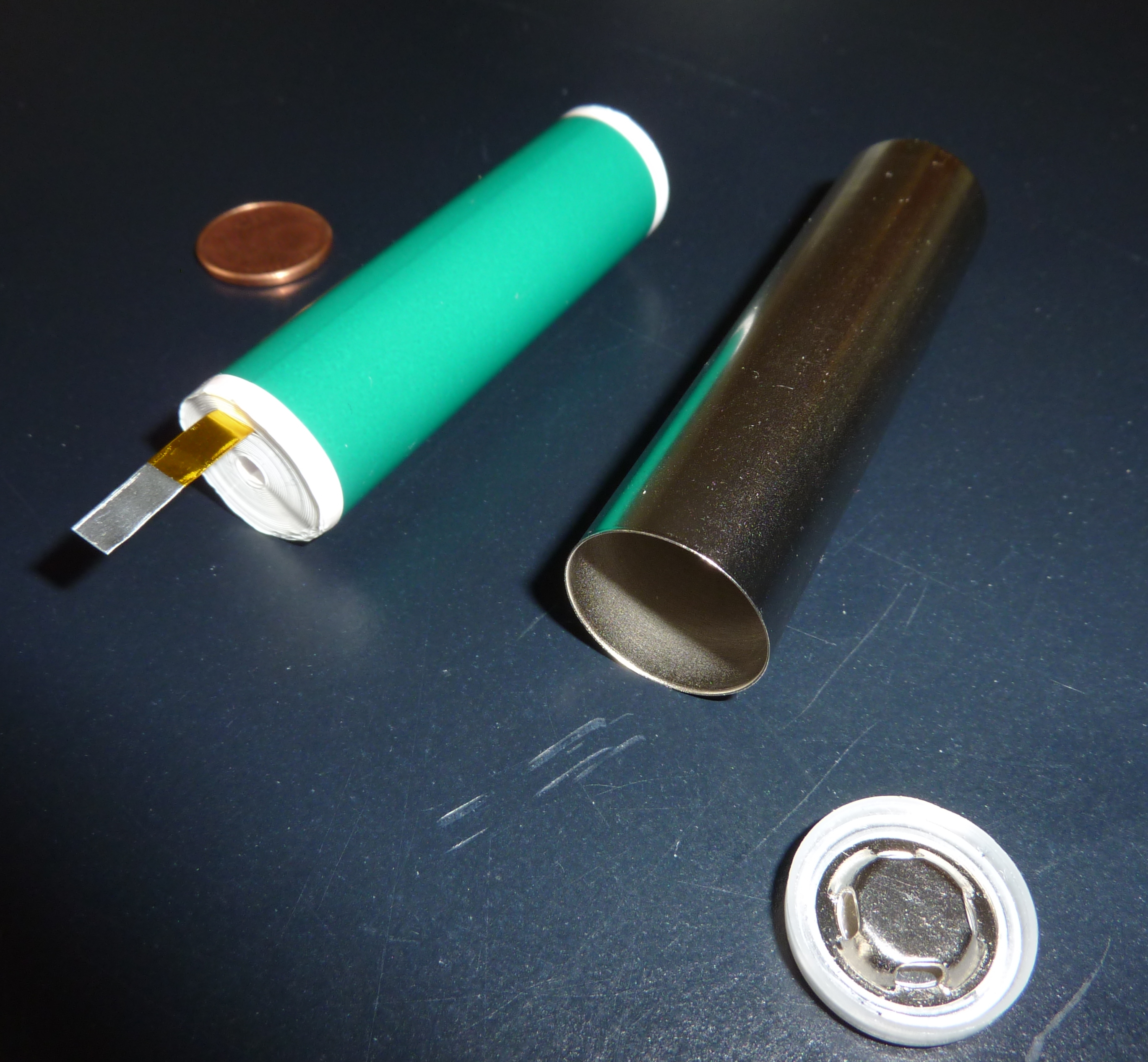
ProLogium Technology said on Sept. 2 that its Gen 3.5 lithium ceramic battery is now in mass production at its giga-level facility in Taiwan. The company has shipped more than 2.4 million cells on this platform since 2013, but it's the all-solid-state version that's first to reach volume production. The announcement moves a chemistry that researchers have chased for a decade from the test bench into a factory that runs at industrial scale.
From Lab to Line
Solid-state battery development has spent years in the lab, and ProLogium's announcement ends that stretch for its own platform. The TÅV report showed the 185.4 Ah cell reached 381 Wh/kg gravimetric energy density and 903 Wh/L volumetric energy density. UL Solutions tested the cell under China's GB/T 43568-2026 method. After six hours under vacuum at 120°C, the cell recorded weight loss of less than 0.05%, below the 0.5% maximum for all-solid-state classification.

The stakes are timing and numbers. All-solid-state batteries have spent a decade in the lab, and ProLium's plant is the first giga-scale line to treat the chemistry as a mass-produced item. Electric vehicles, AI data centers, and fast-charging networks want more energy per kilogram and per liter. ProLium has already booked automotive orders, including repeat orders from a U.S. automotive audio-system company and a Japanese automaker ranked among the top three in North American sales.
The lab-to-factory gap has been the hard part. Solid-state promises had good numbers on paper. The trouble was building a production line that could hold the chemistry without degrading it. ProLium's answer is a platform built around a ceramic separator with a proprietary edge-frame structure. The company has run three generations of manufacturing since 2012.
The first generation came in 2013, aimed at niche markets. The second arrived in 2017, moving to continuous manufacturing. The third opened in 2024, a giga-level platform. The fourth chemistry followed the same path.
The Numbers
The 185.4 Ah format is large for a consumer device, and the energy density numbers get the weight down. At 381 Wh/kg, the pack does more work per kilogram than a comparable lithium-ion pack. At 903 Wh/L, the volume math gets harder, and ProLium says the cell clears that test too. The company sees high-power and fast-charging uses as the next market.
ProLium has delivered more than 2.4 million cells since production began in 2013, mostly to consumer electronics, wearables, medical devices, and explosion-resistant applications. The automotive segment is the next pull. The company has placed more than 175 repeat orders with one automotive customer, and cumulative deliveries have passed 900,000 cells.
The customer is a well-known U.S. automotive audio-system company, and the batteries sit in vehicles from a Japanese automaker ranked among the top three in North American sales. Those repeat orders are the signal ProLium points to. A one-off pilot order says little. A customer that keeps coming back says the chemistry survived real-world use.
A lithium-ion pack today sits around 250 Wh/kg in the best cases. The ProLium cell clears 381 Wh/kg. That gap is not a rounding error. It means a truck, a bus, or a data center battery can carry more energy without adding weight.
The weight math matters for electric vehicles. A heavier pack eats range and cuts payload. A lighter pack lets a vehicle go farther on a charge, or carry more cargo. ProLium's numbers point to real gains, but the company has not yet published a pack-level figure for the Gen 3.5 cell.
Gen 4 Keeps the Same Factory
The Gen 4 lithium ceramic battery uses a fully inorganic superfluidized electrolyte. ProLium said only about 10% of the existing giga-level production line needs modification for the new cell. The new design adds an active safety mechanism that ProLium calls ASM. The company expects ASM to stop thermal runaway, improve low-temperature performance, and cut material and manufacturing costs.
The company holds more than 1,200 patents across its battery work. ProLium founded the group in 2006, and the Logithium cell architecture has defined the platform since 2012. The company moved through three generations of manufacturing before the Gen 3.5 cell reached mass production.
Gen 4 keeps the ceramic separator and edge-frame design that made the platform scalable. ProLium said the inorganic electrolyte is the chemistry change, not the factory. The company expects the same high energy density, high power, and fast charging to carry over. It also expects lower costs.
The Safety Test
The safety test is the part that could move the needle fastest. ProLium said the cell stayed under vacuum for six hours at 120°C and lost less than 0.05% of its weight. That is a thin margin, and the 0.5% threshold for all-solid-state classification is the line the industry watches.
The company submitted the GB/T 43568-2026 method to the International Electrotechnical Commission for review. That step could give international buyers a standard to cite when they order the cell.
What's Next
ProLium plans a global manufacturing network. Taiwan is the technology and validation base, France supports scaled production, and North America adds localized capacity. The company is aiming at AI data centers, electric vehicles, maritime, and aerospace uses.
The AI data center angle is getting harder to ignore. Operators are paying for storage that can soak up grid power and release it when demand spikes. A battery with more energy per unit of weight gives them a simpler path.
ProLium has not named a customer for Gen 4. The company said the platform is ready for automotive, unmanned systems, aerospace, and maritime programs. It did not promise a launch date for the all-solid-state cell in cars.
The automotive customer has taken more than 175 repeat orders. Cumulative deliveries have passed 900,000 cells to that customer. ProLium has not disclosed how many vehicles those cells go into, and the company has not said when the all-solid-state cell will appear in a production car.
For now, the story is about capacity, not just chemistry. ProLium has the factory. It has the test data. It has the orders. The next move is the launch.