ProLogium Courts AI Data Centers With a 381 Wh/kg Solid-State Cell It Says Won't Burn
Introduction
The most consequential constraint on artificial intelligence in 2026 is no longer a smarter model. It is a wall socket. As hyperscalers pour more than $725 billion this year into new data centers across Microsoft, Meta and Google alone, the question of how to keep those facilities fed through peak demand, grid stress and the ever-present risk of a thermal runaway in a warehouse full of batteries has become a boardroom problem. Into that gap steps ProLogium, a Taiwanese battery maker betting its next act on a market far removed from the electric cars that built its reputation: the backup-power and grid-stability systems that AI data centers will need by the gigawatt-hour.
The company is not starting from zero. ProLogium's Gen 3.5 Lithium Ceramic Battery, a large-format 185.4 ampere-hour cell, entered mass production on 2 September at a Giga-level facility in Taiwan, a milestone that ended a years-long pattern in which solid-state announcements stalled at the pilot line. What is new is the audience. In recent weeks ProLogium has spelled out a target list that reads like an AI-infrastructure directory: data centers, unmanned systems, aerospace and maritime applications, with North America as a priority. The pitch is built on two numbers the company says are third-party verified: 381 w-h/kg of gravimetric energy density and 903 W-h/L of volumetric density, both certified by TÜV.
The Cell and Its Credentials
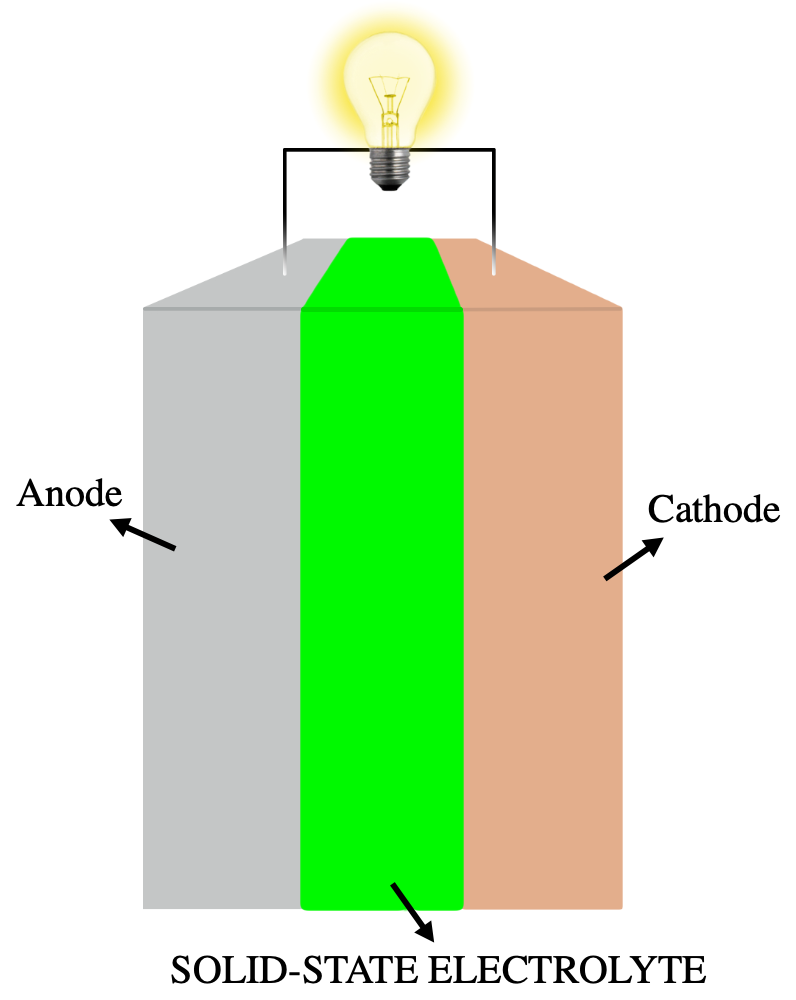
To understand why a data center operator would care, it helps to understand what ProLogium is actually selling. The Gen 3.5 cell is not a conventional lithium-ion pouch. It uses a solid electrolyte — a ceramic material that replaces the flammable liquid electrolyte found in most of the world's batteries — sandwiched between an anode and a cathode. The company has more than 1,100 patents on the design, and it argues that the solid electrolyte is what unlocks both the density and the safety. A higher gravimetric density means more kilowatt-hours per kilogram of installed battery, which translates directly into a smaller footprint and a lower structural load for a data center that may be retrofitting a building never designed to hold thousands of tonnes of cells.
The 185.4 Ah form factor is the other half of the pitch. Most solid-state prototypes are coin cells or small pouches that are easy to make in a lab and hard to scale. ProLogium's cell is large enough to be handled by the automated roll-to-roll equipment that automotive and storage manufacturers already use, which the company says is why it can cross from a pilot line to a Giga-scale plant without inventing an entirely new factory. TÜV, the German testing and certification body, verified the 381 W-h/kg and 903 Wh/L figures, giving the numbers a stamp that procurement teams at hyperscalers tend to ask for before they will even begin a qualification.
Behind the Gen 3.5 sits a Gen 4 that ProLogium is already describing in public. The company calls it a superfluidized inorganic solid-state battery, and it pairs a non-flammable electrolyte with an all-ceramic separator and what ProLogium terms an active safety mechanism. TÜV Rheinland has certified that design at 360 W-h/kg, and the company has said it can run Gen 4 on roughly the same production line with only about ten percent of the equipment modified — a claim that, if true, would let a new chemistry reach volume faster than rivals are building factories from scratch.
Safety as the Selling Point
For a data center, the headline spec is not density. It is fire. A lithium-ion thermal runaway in a server hall can cascade from a single cell to an entire row, and the coolant and lithium inventory of a multi-megawatt-hour installation make that a catastrophic risk rather than a maintenance headache. This is the argument ProLogium is making most aggressively, and it is backed by a result that is unusual in an industry that prefers to discuss safety in the conditional tense.
ProLogium says its cells were subjected to an accelerating rate calorimetry test by UL Solutions, the safety science company, using a method called Heat-Wait-Seek that is designed to provoke a thermal runaway deliberately. The company reports that no runaway occurred. The distinction matters. Many solid-state announcements imply safety because the electrolyte is solid; ProLogium is pointing to a specific test, run by a named third party, in which the cell was pushed past the point at which a conventional cell would be expected to ignite and did not. For an operator weighing a backup-power contract, that is a far more useful data point than a marketing claim about non-flammability.
The AI Power Crunch
The market ProLogium is chasing is growing faster than almost any other in the energy business. Capital expenditure by Microsoft, Meta and Google is expected to exceed $725 billion in 2026, a figure that reflects not just new servers but the generation, transmission and storage infrastructure required to run them. Arm's chief executive Rene Haas has said plainly that AI is power-hungry in a way that previous computing waves were not, and that the industry's appetite for electricity is outpacing the grid's ability to deliver it. Data centers are responding by looking beyond the meter: on-site generation, demand response and, increasingly, battery storage that can absorb renewable generation, shave peaks and ride through outages.
That is the slot ProLogium wants to fill. The company has been explicit that AI data centers are a primary target, alongside unmanned systems, aerospace and maritime uses, with North America as the strategic priority. What it does not yet have, by its own admission, is a confirmed AI data center customer. That is the gap between a credible product and a signed contract, and it is the single most important thing to watch. A hyperscaler or a colocation operator that puts ProLogium cells into a live facility would transform the company's narrative from a battery maker with a good cell to a supplier with a reference design.
Money, Markets and the Long Game
ProLogium is not waiting for that reference customer to raise its profile. The company is pursuing a public listing through a merger with Translational Development Acquisition Corp, a special-purpose acquisition company, in a transaction that values the combined entity at roughly $3.8 billion and would put ProLogium's shares on the Nasdaq. A public valuation of that size would give the company the capital and the visibility to compete for the very large, very long qualification cycles that AI data center and maritime customers run.
At the same time, ProLogium is not abandoning the market that made it. The company has longstanding relationships with automakers including VinFast and Mercedes-Benz, the latter of which signed an agreement in late September to evaluate ProLogium's Gen 4 cells under a joint testing deal. That automotive work is the credibility engine: a cell that passes an automaker's laboratory is a cell a data center operator can take more seriously. The two markets reinforce each other, and the revenue from cars and two-wheelers can fund the push into grid-scale storage.
The competitive landscape is not idle. China's Ministry of Industry and Information Technology released a battery plan this autumn that names all-solid-state batteries as a commercialization milestone for 2030 and backs sodium-ion chemistry as a lower-cost complement. South Korea and Japan are pouring billions into their own solid-state and sodium-ion programs, and established lithium-ion giants including CATL, Samsung SDI and GM are scaling manganese-rich and lithium-iron-phosphate lines that already ship in volume. ProLogium is not the only company promising a better cell; it is one of the few that can point to a large-format cell already in mass production and a named safety test that came back clean.
Conclusion
The battery industry's conversation has shifted. For a decade, the headline was always the electric vehicle: range, charging speed and cost per kilowatt-hour for a passenger car. In 2026 the fastest-growing demand signal comes from a different machine — the data center — and it rewards a different set of attributes. It wants density without danger, longevity without cobalt, and a supplier that can scale to gigawatt-hour volumes. ProLogium is arguing, with a TÜV-certified 381 W-h/kg cell and a clean UL Solutions safety result, that it can deliver all three.
The next twelve months will test that claim. Watch for a named AI data center customer, for the Gen 4 timeline to firm up, and for the Nasdaq listing to close. If those three fall into place, ProLogium will have done what solid-state battery makers have promised for a generation and rarely delivered: turned a laboratory miracle into an industrial product that the infrastructure of artificial intelligence actually buys. Until then, the 381 Wh/kg cell and its fire-resistant credentials remain the most concrete evidence that the promise is closer than it has ever been.
Images


References
- Tech-Inspector: ProLogium 381 Wh/kg Solid-State Battery Targets AI Data Centers
- PV Magazine: China Sets 2030 Battery Targets, Backs Sodium-Ion and Solid-State
- ProLogium Technology
- UL Solutions
- TÜV Rheinland
- More coverage of the battery industry can be found in our battery technology coverage