Procore Technologies announced it will buy DroneDeploy for $845 million in cash, pulling the drone data and robotics company into its construction management platform to give builders cameras, drones, and robots that can see a jobsite, make sense of what they find, and take action on it automatically.
The all-cash deal, announced July 29, is one of the largest acquisitions ever in construction technology. It joins Procore's trove — nearly 400 million photos, over 126 million drawings, and more than 10 million requests for information and inspections logged in the last year alone — with DroneDeploy's visual record of roughly 20 trillion square feet of built-world data, tens of millions of user annotations, and more than 100,000 labeled safety issues. Construction Dive reported that the purchase price is around six times DroneDeploy's total venture funding, signaling how strategic buyers value integrated visual intelligence above what the venture market had assigned.
"It's about turning visual data into something a computer can act on," Procore CEO Ajei Gopal said in the announcement. "Once the acquisition closes, we plan to immediately cross-sell DroneDeploy's solutions into our broader customer base and vice versa. For the longer term, adding DroneDeploy's technology into the Procore platform will enable us to accelerate our AI strategy."
What DroneDeploy Brings to the Table
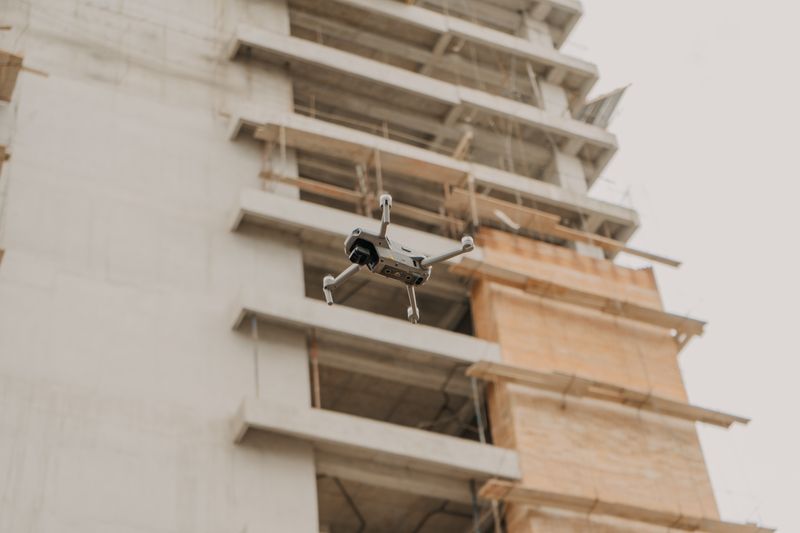
DroneDeploy started as a drone flight-planning and aerial-mapping platform and grew into a full reality-capture and robotics company used on more than 3 million jobsites across 180 countries. Its system covers ground and aerial imaging: drones, ground-deployed robots, mobile cameras, fixed cameras, and even wearable devices. Users capture 3D models, progress photos, and thermal imagery from a single interface.
The company's value proposition is straightforward: instead of a project manager walking a 40-story building to spot a missing window or a rebar issue, a drone or ground robot does the round in minutes. DroneDeploy's software flags deviations from the plan automatically and routes them to the right person in the construction workflow. The platform processes more than 20 trillion square feet of visual data from the built world, according to the company's press materials, and has accumulated over 100,000 labeled safety incidents that train its detection models.
Mike Winn, CEO of DroneDeploy, framed the deal as a natural next step. "DroneDeploy was built to give people who build, power, and feed our world a source of truth about the physical site. Over the last decade, our customers have consistently told us the same thing — they want reality capture to be a native part of how they work, not another tool bolted on. Joining Procore accelerates that mission."
Procore had already been bulking up its AI capabilities. In January 2026, it acquired Datagrid, a vertical AI firm that provides a suite of AI agents for construction. That purchase set the foundation for what Procore now calls "digital coworkers" — software agents that watch a project's progress, compare it to the plan, and nudge the right people when things are off-track. DroneDeploy gives those digital coworkers eyes on the ground.
The acquisition also brings DroneDeploy's robotics expertise. Beyond aerial drones, the company has been investing in ground-based robots that can traverse active construction sites, capture 360-degree imagery, and upload it to the cloud without human intervention. These ground robots are especially useful for interior inspections of buildings under construction, where GPS signals are weak or nonexistent and aerial drones cannot safely operate.
The Data Play Behind the Deal
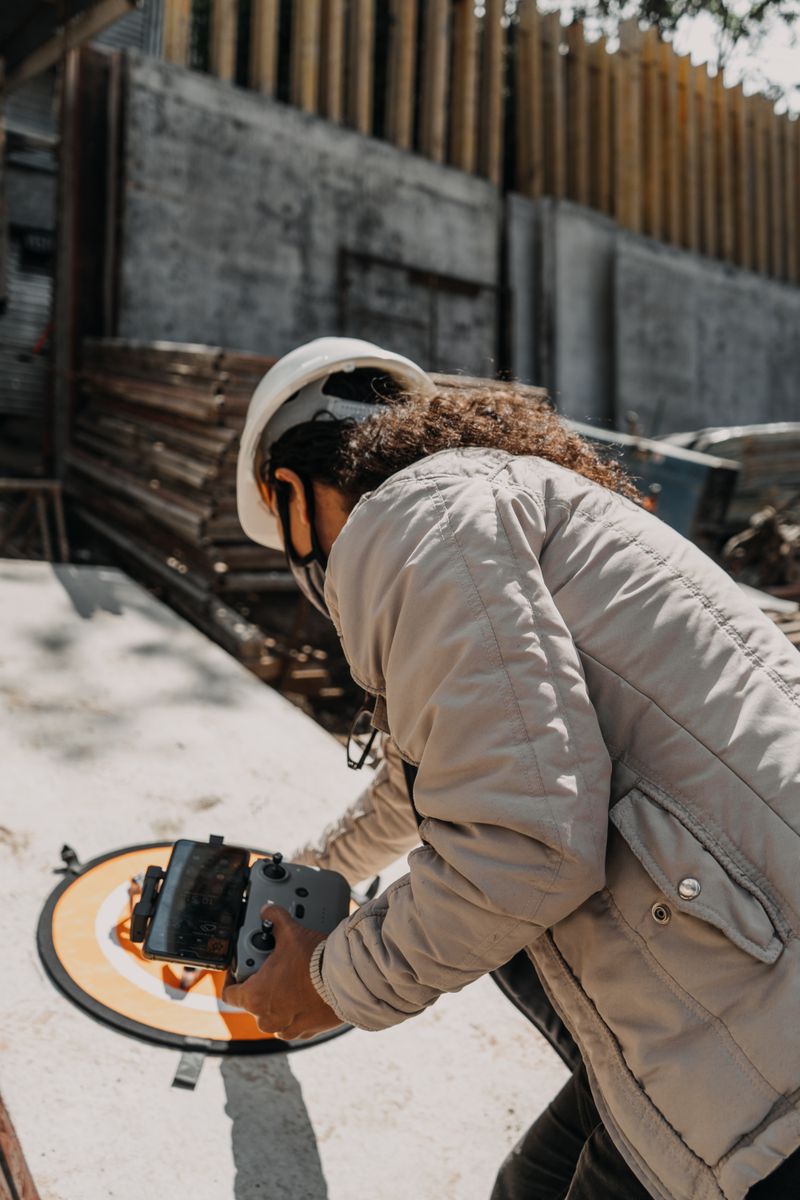
This acquisition is as much about data as it is about drones. Procore's platform holds hundreds of millions of drawings and photos that document the entire lifecycle of a construction project — RFIs, submittals, inspections, field observations. DroneDeploy layers a real-time visual layer on top of that record. The combination creates what the companies call "a single source of truth" for a construction site: what was planned, what is happening right now, and what needs to change.
Gopal described the end state as a system where a camera or drone spots a safety hazard, the AI identifies it against the 100,000 labeled incidents in DroneDeploy's training set, and the platform automatically opens a safety observation that routes to the foreman's phone. No human has to view the footage, classify the issue, or write the report. The system acts on its own.
Meg Baldini, Procore's vice president of corporate development and partnerships, told Construction Dive that M&A is only one tool in the company's strategy. "We've always viewed acquisitions as a way to accelerate our strategy — they're never the strategy itself."
The deal is expected to close later in 2026, subject to regulatory approvals. Goldman Sachs advised Procore on the transaction, and Citi advised DroneDeploy. Procore's published financial guidance for the remainder of the year reflects its organic business and does not factor in contributions from DroneDeploy.
Procore's stock traded higher following the announcement, analysts noted, suggesting the market sees the deal as a strategic fit rather than a risky bet. The company had been sitting on a strong cash position after a period of profitability, making the $845 million outlay manageable without taking on heavy debt loads.
What This Means for the Construction Robotics Market
The Procore-DroneDeploy combination signals something bigger than a single acquisition. Construction is one of the least digitized industries in the global economy, but that is changing fast. Labor shortages are acute — the Associated General Contractors of America reported in early 2026 that more than 80 percent of construction firms cannot find enough workers to fill open positions. Automation on site, from autonomous drones to robotic total stations to self-driving earthmovers, is moving from nice-to-have to must-have.
For the robotics and drone industry specifically, the $845 million price tag is a validation of the commercial-drone thesis. DroneDeploy had raised roughly $140 million in venture funding since its founding in 2013. The acquisition price of about six times that venture haul signals that strategic buyers see far more value in integrated visual intelligence than the venture market had assigned.
The deal also highlights a consolidation trend in construction technology. Autodesk acquired Rhimbix, a construction field-management app, in March after finalizing its purchase of Payapps. Trimble signed a deal to buy Document Crunch, an AI-powered contract-review startup, in the same period. Each purchase combines a workflow platform with a data source that feeds it — the same pattern the Procore-DroneDeploy deal follows.
Winn said DroneDeploy remains committed to serving its existing customer base beyond Procore's ecosystem. "Going forward, we remain committed to delivering the best ground and aerial reality capture solutions — deeply integrated into Procore to drive automated action — while building on our early investments in AI and robotics. We're excited to build what's next together."
The practical effect for builders: a jobsite where a drone takes off at 7 AM, maps the entire site by 7:15, the AI compares the point cloud against the BIM model by 7:20, flags the column that is 2 inches out of plumb by 7:22, and a change order is drafted before the concrete crew arrives at 8. That level of automation is not a decade away — Procore and DroneDeploy are betting it is here now.
For construction firms in Southeast Asia and other fast-growing markets, the deal also lowers the barrier to adopting drone-based inspection. Procore's platform is already widely used by major contractors in the region, and embedding DroneDeploy's visual-intelligence layer means local builders no longer need to stitch together a custom workflow from separate drone, AI, and project-management vendors. The integration is prebuilt.
The broader robotics industry will watch the deal closely. If Procore can turn jobsite imagery into automated actions at scale — and sell that capability to its existing customer base of over 1.5 million users — it could accelerate adoption of construction robotics far faster than standalone hardware or software startups could manage on their own.
Read more about construction robotics and autonomous systems.