Ondas Closes Cyberhawk Deal, Betting Big on Drone Inspection of Critical Infrastructure
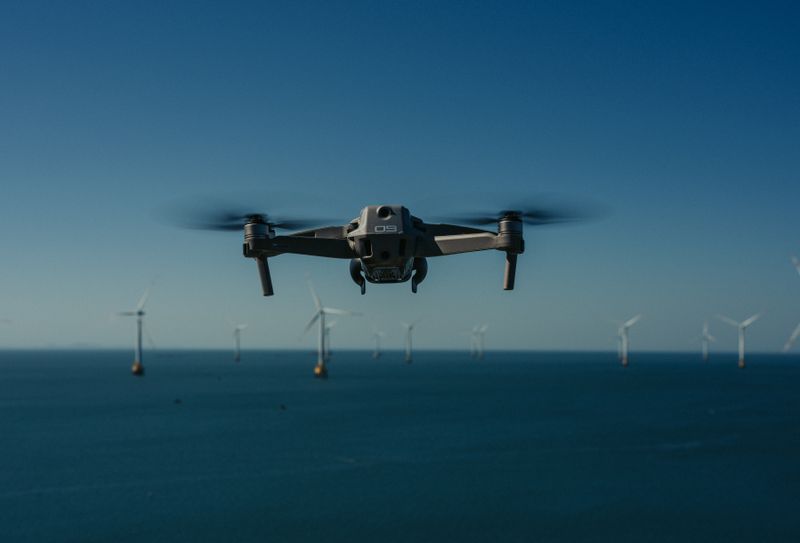
Ondas Holdings has completed its acquisition of Cyberhawk, the Scottish drone-inspection specialist, in a deal the company says turns it into one of the largest players in the booming market for aerial checks of power grids, oil and gas plants, and other critical infrastructure. The transaction, announced on August 10, folds Cyberhawk's inspection platform, its visual data management tools, and its AI-powered asset analytics into Ondas' existing portfolio of autonomous aerial systems, according to the company's statement.
Ondas Chairman and CEO Eric Brock said the deal accelerates the company's push into high-value infrastructure and industrial markets that are growing quickly as regulators and utilities push for safer, faster inspection methods. "Ondas is a dual-purpose company, and we will invest with the intent to establish market leadership in this important end market," Brock said. As Ondas works Cyberhawk into its broader platform, including its enterprise-wide Palantir Foundry deployment, it expects to squeeze more value out of data integration and AI-enabled workflows, he added. Ondas will file a Current Report on Form 8-K with the Securities and Exchange Commission covering the acquisition.
The move is the latest consolidation play in an industry that has spent the past decade replacing rope-access crews and cherry pickers with aircraft that can photograph a flare stack or a transmission tower in minutes. Cyberhawk has completed more than 500,000 aerial inspections across 40 countries, according to its own figures, and counts utilities, energy companies, renewables operators, miners, and industrial firms among its customers. Its iHawk platform lets engineers log, compare, and analyze inspection imagery over time, which is what turns a single flight into a maintenance plan. That installed base — 300-plus customers and more than 11,000 iHawk users — is the real prize for Ondas, which had already assembled a portfolio that includes the drone makers Airobotics, American Robotics, and Iron Drone, plus the Ardenna counter-drone operation.
What Cyberhawk Brings to the Table
Cyberhawk started life in Livingston, Scotland, in 2001, and built its reputation in the oil and gas sector, where inspecting flare stacks, pipework, and offshore platforms historically meant sending workers to dangerous heights or shutting down production for days. The company swapped much of that for drones flown by certified pilots, with inspection engineers reviewing the imagery and flagging defects before they turn into failures. Its pitch has always been simple: keep people out of harm's way, keep assets online, and catch problems early.
Over the years the company widened its reach into power transmission, where utilities use drones to check insulators, corrosion, and vegetation encroachment along hundreds of kilometers of lines, and into renewables, where solar farms and onshore wind assets need periodic scans to spot cracked panels or damaged blades. More recently it leaned into software, wrapping its flight operations in the iHawk platform so that a single utility can track the health of thousands of assets from one dashboard. The company says its model combines specialist pilots, drone technology, and the software layer to deliver what it calls a complete aerial intelligence package, from data capture to defect analysis.
That emphasis on software is why Ondas, which trades on Nasdaq under the ticker ONDS, sees the deal as an acquisition of capability rather than just a fleet. Cyberhawk's AI-enabled analytics sort through the terabytes of imagery that modern inspection campaigns generate, comparing shots from different years to measure corrosion growth or coating breakdown. For a grid operator, that kind of trend data supports predictive maintenance — fixing a corroded pylon joint during scheduled downtime instead of after a fault knocks a line out of service.
The Numbers Behind the Deal
Ondas did not disclose the purchase price in its announcement, but Investing.com's coverage details the equity awards tied to the deal. In connection with the acquisition, Ondas approved inducement grants covering 1,601,593 restricted stock units and stock options exercisable for 1,290,000 shares at an exercise price of $9.11 per share, awarded to 47 newly hired employees under a Nasdaq listing rule that lets companies grant equity as an inducement to join. The RSUs vest in three tranches: most semi-annually over two years, a large block one-third on August 10, 2027 followed by eight quarterly installments, and a small number at closing. The options vest one-third on August 10, 2027 and then in 24 equal monthly installments. All vesting is tied to continued employment.
The scale of the inducement package hints at how much Ondas values Cyberhawk's people, a mix of certified pilots, inspection engineers, and software developers who are not easy to replace in a tight labor market. Drone inspection firms have been hiring aggressively across the United States and Europe, and the pool of pilots qualified to fly beyond visual line of sight or to work in live industrial environments remains small.
The Bigger Picture: An Inspection Market Taking Off
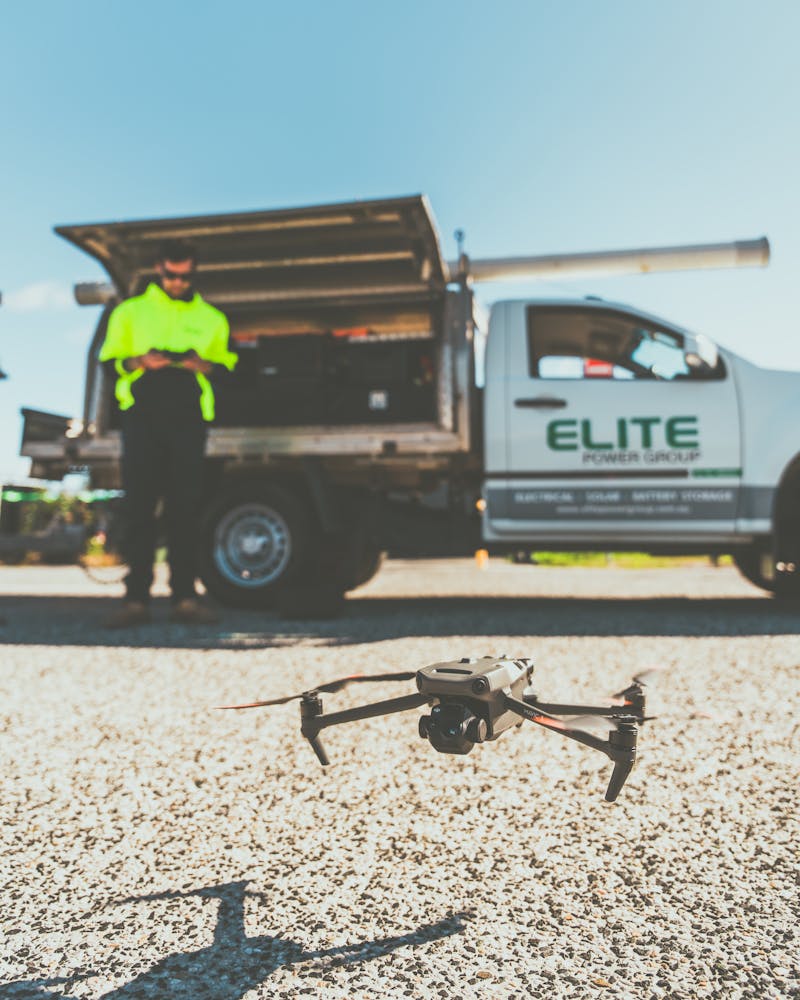
The deal lands as the wider drone inspection market accelerates. Fortune Business Insights pegs total spending on drone inspection and maintenance at $10.11 billion in 2026, and projects it will grow at a 16.9 percent compound annual rate to reach $35.35 billion by 2034. A separate estimate from Intel Market Research values the utility inspection drone segment at $2.38 billion in 2025, rising to $3 billion this year as grid operators in North America and Europe add drone programs to cope with aging assets and stricter reporting rules.
Regulators are pushing in the same direction. The Federal Aviation Administration and its counterparts in Europe have gradually opened up operations that let companies fly beyond visual line of sight under waivers, which is what makes large-area utility and pipeline surveys financially viable. At the same time, governments are tightening rules on vegetation management and asset integrity reporting after a string of high-profile grid failures, giving utilities a reason to document infrastructure condition on a schedule rather than on an ad-hoc basis. That combination — permissive regulation plus compliance pressure — is exactly the demand tailwind Brock cited in Tuesday's announcement.
Ondas' own portfolio shows how the sector is consolidating around platforms rather than point products. Its Ondas Autonomous Systems unit now spans aerial, ground, and counter-drone work: Airobotics builds automated drone-in-a-box systems for security and facility monitoring, American Robotics markets the Scout system for autonomous industrial inspection, and Iron Drone makes an interceptor for hostile drones. Cyberhawk slots in as the services-and-software arm that can run inspection programs end to end for utilities and energy firms, with Ardenna providing the defense side. The company presents the combined operation as a one-stop shop for infrastructure intelligence — capture the data with aircraft, process it with software, and act on it with maintenance plans.
What Happens Next for the Combined Company
The integration work starts now. Ondas has said it will lean on Palantir Foundry, the data platform it already uses across the business, to stitch Cyberhawk's inspection data into a common layer with its other autonomous systems. The near-term focus is cross-selling: taking Cyberhawk's inspection services to Ondas' existing government and defense customers, and pointing Cyberhawk's energy and utility clients at Ondas' automated drone platforms. Brock has framed the goal as building market leadership in critical infrastructure intelligence rather than simply adding revenue lines.
There are risks. Drone inspection is a lumpy services business with long sales cycles, and Cyberhawk's expansion beyond oil and gas into transmission and renewables has taken years to build. Ondas also carries a history of dilution — the company has funded acquisitions partly with equity, and Tuesday's inducement grants add to the share count at a moment when investors are watching cash burn across the drone sector. The company's stock has been volatile, and a deal-heavy strategy means execution on integration, not the acquisition itself, will decide whether the Cyberhawk purchase pays off.
Still, the strategic logic is clear, and it mirrors what bigger defense and industrial names have been doing: buy the inspection capability, bundle it with autonomous hardware, and sell the combination to owners of assets that are too big, too tall, or too dangerous to check by hand. Cyberhawk's half-million completed flights give Ondas a head start in an industry where trust and safety records matter as much as technology. If the integration goes as planned, the combined company exits 2026 as one of the largest independent drone inspection operations in the world, with the software stack to match.
For Indonesia and Southeast Asia, the consolidation trend is worth watching. The region's utilities and energy firms are early adopters of drone inspection — state-owned electricity and oil companies in the archipelago have run pilot programs over transmission lines and refinery infrastructure for several years, and events like the Indonesia Drone Expo, which opened this week in Jakarta, showcase the local ecosystem of operators and service providers. A consolidated global player with Cyberhawk's pedigree could eventually bring cheaper, more standardized inspection services to regional markets that are just starting to build their asset-integrity budgets. Robotics and Drones coverage will keep tracking how that shakes out.
Readers interested in related automation trends can also check our Cybersecurity section for counter-drone and drone-defense developments, or the EV category for how autonomous vehicles are reshaping inspection routes in the energy sector.