Nvidia Bets on Japan's Factories as Physical AI Moves From Labs to Assembly Lines
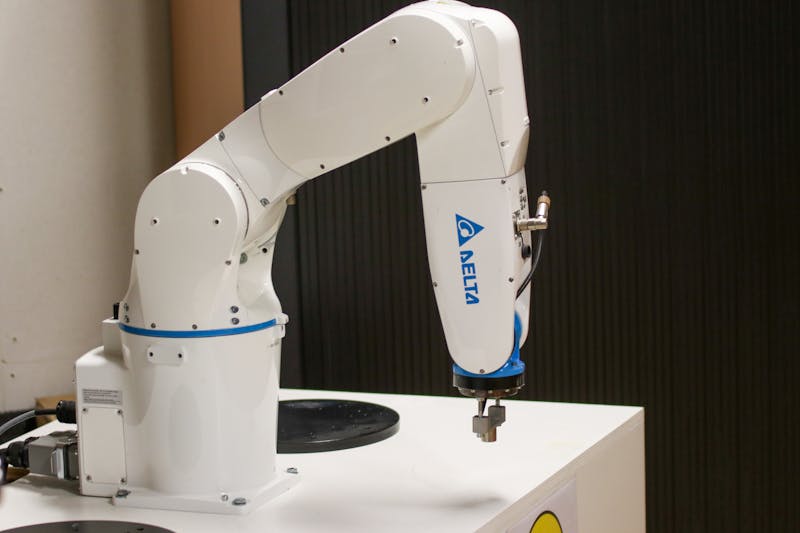
Nvidia said on Thursday it will partner with Japanese industrial giants Fanuc and Yaskawa Electric to build out artificial intelligence for factory robotics, a move that pushes the chipmaker deeper into what it calls "physical AI." The agreement, reported by Reuters on July 16, 2026, pairs the world's most valuable semiconductor company with two of the firms that build the arms and controllers inside thousands of plants across the globe.

The deal is the latest sign that AI spending is moving past chatbots and image generators and into the machines that weld, paint, and package physical goods. Nvidia also introduced a new model, Cosmos 3 Edge, and said it would widen its physical-AI network in Japan with local partners. The company has spent the past year arguing that the next large market for its accelerators is not data centers alone but robots that sense and act in the real world.
Japan's factories become a test bed
Japan remains the world's largest maker of industrial robots, and its manufacturers have been quicker than most to trial AI on the shop floor. A Reuters poll published in May found that one in three Japanese companies already use or are weighing the deployment of AI-powered robots. That appetite explains why Nvidia is concentrating resources there rather than in the United States or Europe.
Kawasaki Heavy Industries had already signaled interest. Nikkei reported in May that Kawasaki and Nvidia planned a robotics development center in Silicon Valley to combine heavy machinery with physical AI. The new Fanuc and Yaskawa tie-ups extend that strategy from a single partner to the core of Japan's automation supply chain. Fanuc alone ships the controls that run a large share of the world's computer-numerical-control machines; Yaskawa is a leading maker of servo motors and drives.
Training models on the factory floor
Physical AI differs from a language model in one blunt way: it has to work in a noisy, unpredictable place where a wrong move breaks equipment or hurts someone. Nvidia's pitch rests on simulation. The company trains robot policies inside virtual factories first, then transfers the learned behavior to real arms. Cosmos 3 Edge is built for that loop, generating synthetic training data and running inference on devices with tight power and latency budgets.
Fanuc and Yaskawa bring the installed base. Their controllers already sit in plants that run around the clock, which means any AI layer has a direct path to deployment without ripping out existing machinery. That is why the partnership draws attention: it is not a demo, it is an integration plan across the machines that actually make things.
Anthropic ships a cheaper model for agentic work
Nvidia was not the only AI vendor making news this week. Anthropic launched Claude Sonnet 5 on June 30, 2026, pricing it as a lower-cost option for running autonomous software agents. At introduction, Sonnet 5 costs $2 per million input tokens and $10 per million output tokens, a rate set to hold through August 31 before it rises. The model carries a one-million-token context window and can produce up to 128,000 output tokens in a single response.
Those specifications matter for developers who build long-running agents that read documents, call tools, and chain many steps without human input. Sonnet 5 is available through the Claude API, Amazon Bedrock, and Google Cloud's Vertex AI, giving enterprise teams several routes to adopt it without committing to a single cloud. TechCrunch reported the launch as Anthropic's effort to make agentic workloads affordable enough to run at scale.
Money continues to pour into the field
Behind the product news sits a wall of capital. Stanford's 2026 AI Index, published this year, puts private AI investment in the United States at $285.9 billion for 2025. The same report notes that the number of new AI PhDs in the United States and Canada climbed 22 percent between 2022 and 2024, a hint that universities are still racing to feed the hiring demand.
The spending is not limited to model builders. AMD will hold its Advancing AI event in San Francisco on July 22 and 23, 2026, where it is expected to detail new accelerators aimed at Nvidia's training and inference business. Competition for the infrastructure layer has turned into a multi-year build-out, with cloud providers, chipmakers, and nation-states all claiming a stake.
Governments weigh in on governance
Policymakers are catching up to the speed of deployment. China is preparing to set out its vision for a role in global AI governance, according to coverage from July 16, 2026, as member states gathered in Geneva for the UN Global Dialogue on AI Governance earlier this month. The White House issued an action in June 2026 promoting advanced AI development alongside national-security review, a sign that Washington treats the technology as both an economic and a defense priority.
The split is clear: Washington wants to accelerate domestic capability while screening risk, and Beijing wants a seat at the table that writes the international rules. Neither approach has produced a binding global framework yet, and researchers at the UN have warned that the gap between deployment and oversight keeps widening.
What comes next
For readers tracking the sector, the throughline this week is convergence. The models are getting cheaper and longer-context, the chips are being aimed at robots, and the factories of a manufacturing powerhouse are becoming the proving ground. Whether that translates into productivity gains on the line remains an open question, but the companies placing the bets are among the largest in the world.
We'll keep covering the shift from software-only AI to machines that work alongside people on the floor. For related coverage, see our Battery Tech desk's report on EV cells and our IoT coverage of factory sensors. Sources: Reuters on the Nvidia-Japan deal, TechCrunch on Claude Sonnet 5, and the Stanford 2026 AI Index.