Nvidia is in talks to guarantee up to $250 billion in financing for OpenAI's planned 10-gigawatt data center campus in southern Ohio — a project that could top $500 billion in total cost and rank as the largest AI infrastructure buildout ever proposed. The guarantee would let OpenAI borrow against Nvidia's credit rating to fund construction and equipment leases at a site that once housed a uranium enrichment plant, according to people familiar with the negotiations.
A Financial Backstop at Unprecedented Scale
The discussions center on a backstop that would cover lease payments and construction debt for a data center campus in Pike County, Ohio, developed by SoftBank and its energy subsidiary SB Energy in partnership with the US Department of Energy. The site is designed to draw up to 10 gigawatts of power — roughly the annual consumption of 8 million US homes, according to a CNBC analysis of Energy Information Administration data. Nvidia's guarantee would strengthen the project's credit profile and help OpenAI secure debt financing on more favorable terms, sources told CNBC and The Wall Street Journal.
Nvidia declined to comment on the negotiations. The Wall Street Journal was first to report the talks, which remain in early stages and subject to change.
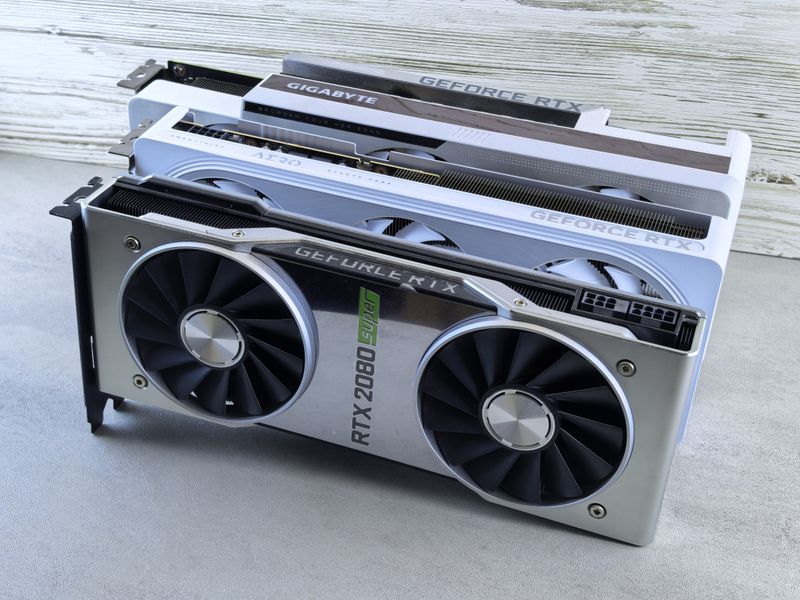
The chipmaker's involvement goes beyond financial backing. Nvidia and OpenAI are separately discussing supply agreements for the company's AI accelerators and networking hardware that would populate the facility. Those chip deals are not covered by the $250 billion guarantee and are being negotiated independently, according to a person familiar with the plans.
This is not the first time Nvidia has put its balance sheet behind OpenAI. In September 2025, Nvidia said it would invest up to $100 billion in the AI lab as part of a partnership to deploy at least 10 gigawatts of Nvidia-powered systems. That investment never fully materialized. However, Nvidia did contribute $30 billion to the record-breaking funding round that OpenAI closed in March 2026, which pushed the company's private valuation to nearly $1 trillion.
SoftBank and SB Energy are developing the Ohio campus in close coordination with the Department of Energy. The Japanese investment giant is a major investor in OpenAI and has already pledged $1 billion to SB Energy earlier this year. Parts of the agreement have been announced through President Trump's US-Japan Strategic Trade and Investment Agreement, which includes $33.3 billion in Japanese funding directed at US infrastructure projects.
OpenAI's Giant Bet on Physical Infrastructure
OpenAI kicked off the current AI boom with the launch of ChatGPT in November 2022, and it has been racing ever since to lock down the computing capacity needed to train and run increasingly powerful models. The Ohio campus is central to that strategy: a 10-gigawatt facility would give OpenAI enough power to field massive training clusters and handle inference demand from hundreds of millions of users.
The project comes at a pivotal moment for OpenAI. The company confidentially filed for an initial public offering with the Securities and Exchange Commission in June 2026, though it hasn't disclosed a timeline for its market debut. An IPO would give investors a clearer window into OpenAI's finances, including the staggering capital requirements that infrastructure projects like the Ohio campus represent.
But competition is heating up from multiple fronts. Rivals Anthropic, Google, Amazon, and Meta are collectively spending hundreds of billions of dollars on capex to support their own AI infrastructure expansions. Open-weight model providers, many based in China, are putting pressure on pricing by offering comparable performance at fractions of the cost. Z.ai's GLM 5.2 release, for instance, saw the fastest adoption of any model tracked by Vercel in 2026, illustrating how quickly challengers can gain traction.
"OpenAI is now valued at nearly $1 trillion by private investors betting the company will maintain its lead in AI and find a long-term workable business model," noted CNBC in its July 27 report. "That confidence faces increased uncertainty as a host of open-weight alternatives, largely out of China, threaten to undercut its pricing power."
Wall Street Worries About AI Spending Levels
Even as AI infrastructure investment accelerates, financial markets are signaling concern. Credit default swaps tied to companies closely associated with AI infrastructure — including Oracle, Alphabet, Amazon, Meta, Broadcom, and Nvidia itself — have touched record highs, according to data from the London Stock Exchange Group cited by the Financial Times. The rising cost of insuring against default suggests that investors worry AI-related borrowing is growing faster than the revenue the projects can generate.
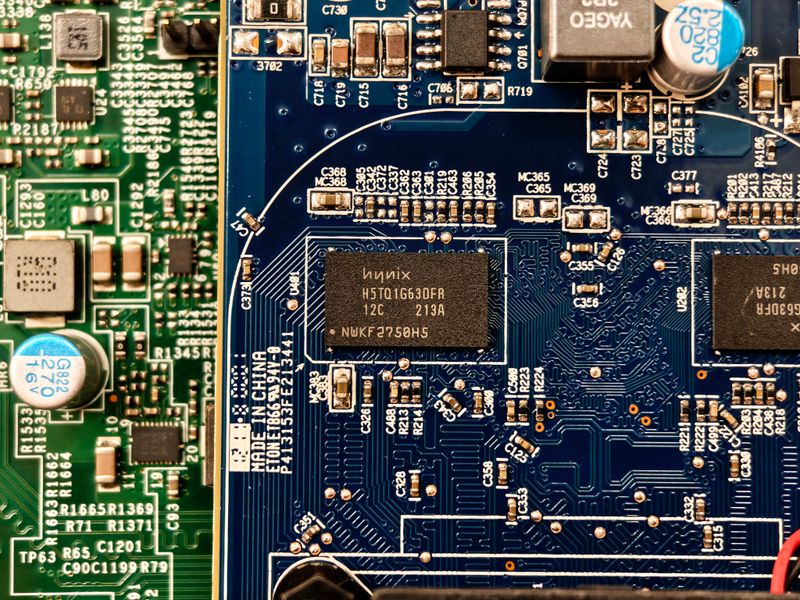
Shares of South Korean memory chipmakers SK hynix and Samsung Electronics have fallen 10% and 12% respectively during a broader AI-related market sell-off that began in late July. The declines indicate that some investors are questioning whether the scale of capital expenditure across the industry can produce proportional returns within a reasonable timeframe.
The Bank of England weighed in this month, warning in its July 2026 Financial Stability Report that an AI-related equity price correction could reduce UK GDP by 2.2%. The central bank pointed to concentrated exposure among institutional investors and the risk that AI infrastructure projects may not deliver expected returns on the timelines markets have priced in.
Separately, the Financial Times reported that Nvidia has signed leases worth up to $50 billion covering a 1-gigawatt data center under development at Beacon Point in Texas, built by Hut 8 — a developer that pivoted from cryptocurrency mining to AI infrastructure as demand for high-density computing capacity surged.
McKinsey estimates that global spending on data centers could reach $7 trillion by 2030, illustrating the sheer scale of investment expected across power generation, facilities, networking, and compute hardware as AI demand continues to grow.
What the Ohio Deal Means for the Broader AI Industry
If completed, the Nvidia-backed financing structure would set a template for how frontier AI companies fund infrastructure at a scale that no single corporation can easily finance from its own balance sheet. By using a chip supplier's credit rating to backstop construction debt, the arrangement would effectively tie hardware procurement to construction finance — a model that could be replicated across the dozens of gigawatt-scale AI data centers now in planning worldwide.
Nvidia CEO Jensen Huang, speaking during the company's quarterly results in May 2026, described the buildout of AI factories as "the largest infrastructure expansion in human history." He added that Nvidia is "uniquely positioned at the center of this transformation as the only platform that runs in every cloud, powers every frontier and open-source model and scales everywhere AI is produced — from hyperscale data centers to the edge."
The project also deepens the financial interdependence between the world's most valuable chip company and its most prominent AI customer. Nvidia already controls roughly 80% of the market for AI training accelerators, and tying its credit directly to OpenAI's construction financing would cement that relationship as both companies prepare for OpenAI's public listing.
For the local economy, the Pike County site promises thousands of construction jobs over several years, followed by hundreds of permanent operational positions. The project has drawn support from Ohio's governor and federal agencies including the Department of Energy, which has designated the repurposed uranium enrichment site as part of a broader strategy to convert former industrial and energy assets into AI infrastructure hubs.
Whether the deal closes at the reported numbers, at a smaller scale, or fails to materialize entirely, the direction is unmistakable: the AI industry is preparing to spend at a scale that rivals the largest industrial projects in human history. And the financing structures being built to support that spending may ultimately matter as much as the chips, models, and software running inside the facilities.
Sources: CNBC, The Wall Street Journal, Data Centre Magazine, Financial Times (via Data Centre Magazine), Bank of England Financial Stability Report July 2026