SALAMANCA, NY — A rural school district in upstate New York has shelved its plan to put a humanoid AI robot in the classroom — at least for now — after teachers, state regulators, and Seneca Nation community members raised a storm of objections over privacy, ethics, and the company's ties to the hyper-realistic sex doll industry.
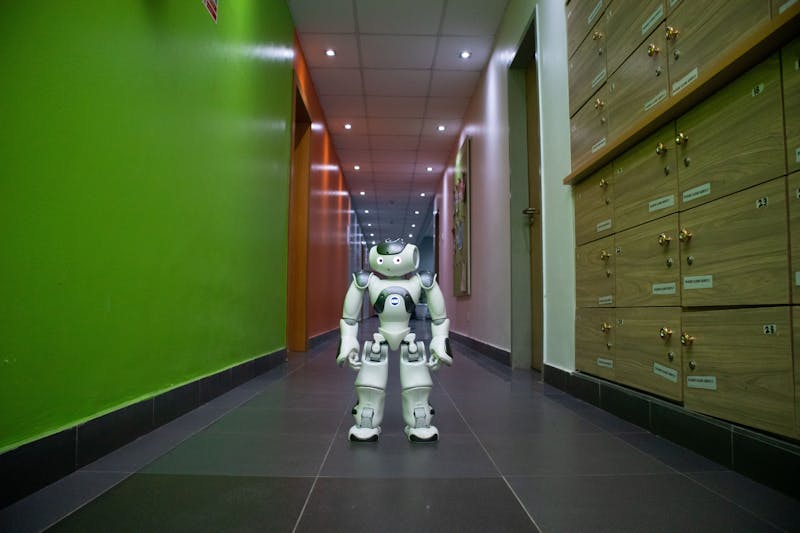
The Salamanca City Central School District, located on the Allegany territory of the Seneca Nation in Cattaraugus County, approved a nearly $60,000 purchase of a humanoid robot from Toronto-based Realbotix Corp. The robot, quickly nicknamed Sally by students and staff, was supposed to begin a pilot program this fall. Sally was meant to sit in on robotics and technology classes, answer student questions, and serve as a hands-on learning tool for teenagers studying artificial intelligence and engineering.
Instead, the district faces a full-blown community revolt.
Teachers Sound the Alarm
The Salamanca Teachers Association, the local union representing educators at the high school, called for an immediate halt to the program. Lacey Pihlblad, the union's president and a teacher at the school, said the concerns go far beyond the robot's appearance.
"We would like to see the school district pause implementing the robot, pause implementing the software aspect of this AI technology until we can have more individuals weigh in," Pihlblad told reporters.
The union is particularly worried about the data the robot will collect. Sally, powered by Realbotix's Optio AI platform, features cameras, microphones, and facial recognition capabilities. Pihlblad said the union has received no clear answers from the district about how student data will be stored, who will have access to recordings, and whether the software can be switched off remotely.
"There's a growing consensus that indicates our students should be exposed to less technology," she added. "Placing a humanoid robot into the classroom to interact with our children is a massive step in the wrong direction."
Melinda Person, president of New York State United Teachers, the statewide parent union, went further. "Our members in Salamanca and educators across the state are sounding the alarm that this is really inappropriate," she said. "Put simply, our initial reaction is this is kind of creepy."
Person argued that classrooms need more human connection, not less. "Putting a lifeless machine in front of students is a bad idea," she said. "A machine that is designed to simulate a human relationship with young people who are just learning how to interact, how to be with their peers, how to solve conflicts — it leads to the dehumanization of the profession of education."
Realbotix's Ties Spark Outrage
A major source of controversy is Realbotix's corporate history. The company, formerly known as Tokens.com, pivoted from cryptocurrency into humanoid robotics in 2024 when it acquired Simulacra Corp. for $16.7 million. Simulacra is the parent of Abyss Creations, a Las Vegas-based manufacturer widely known for producing high-end, hyper-realistic sex dolls.
District officials and Realbotix executives have stressed that the two entities operate independently. The M-Series humanoid robot used in the Salamanca pilot is a separate product line with no connection to the companion doll business, the company insists.
But the association has stuck. Teachers and parents argue that placing a robot built by a company linked to the sex industry into a high school is beyond inappropriate — especially without full transparency about the hardware and software inside the unit.
"A robot built by a company associated with sex dolls has no business in our classrooms," Person said bluntly.
Realbotix, for its part, issued a statement saying the pilot is intended to "complement, not replace" teachers, and that its Optio AI assistant and the M-Series unit represent a limited, supervised educational experiment within the district's existing STEM curriculum.
Seneca Nation Community Sees History Repeating
The controversy carries a deeper cultural dimension that has drawn less national attention but cuts hardest at the local level. Salamanca High School sits on Seneca Nation territory; nearly 40 percent of the student body is Native American.
Community members and local educators say they were never properly consulted before the district signed the Realbotix agreement.
"Out of all the schools in New York State, let alone the United States, they chose to experiment on Native American children yet again," said Sierra May Abrams, a substitute teacher at Salamanca High School and a local resident. "Our culture is struggling to stay alive due to the impact of the Native American boarding schools and what they did to our elders. We live on the only reservation located in a city, so it is absolutely insane that we are the ones 'testing it out.'"
Alyson Brown, a community health specialist and Seneca Nation member who graduated from Salamanca, pointed out that many students have relatives who attended the Thomas Indian School on the Cattaraugus territory — part of the same boarding school system that for decades forcibly assimilated Native children. "Many native families are viewing this pilot program as history repeating itself," Brown said. "I see nothing positive to come from this being introduced in the classroom setting. I worry for the cognitive development of young minds with this exposure."

The Seneca Nation itself declined to comment publicly on the pilot, but community members have been vocal on social media and in school board meetings.
State Education Officials Step In
New York State's education department also entered the fray. JP O'Hare, the assistant commissioner for public affairs, said the agency has raised serious concerns with the district about student privacy, appropriate safeguards, and the risk that the robot could be used to perform functions that "should remain the responsibility of trained, qualified professionals."
State Education Commissioner Betty Rosa sent a letter to the district warning that although the district confirmed the robot would not deliver direct classroom instruction, a recent board presentation described the robot as a "tutoring platform," which Rosa said appears to contradict that assurance.
The commissioner also demanded clarity on data privacy protections, student consent protocols, and the district's plan for ensuring the robot's AI cannot be repurposed outside its intended educational scope.
The district responded last Friday by placing the pilot on hold while it works through "enhanced student data privacy agreements" with the state and continues community outreach, according to a Facebook post from the school board.
The Bigger Picture: Humanoid Robots in Education
The Salamanca case has quickly become a national flashpoint in the broader debate over AI and automation in schools. Humanoid robots have been deployed experimentally in classrooms in South Korea, Japan, and China for years, but their introduction into American public schools has been slower and far more contentious.
Several districts across the United States are watching the Salamanca outcome closely. Proponents argue that humanoid robots can offer personalized tutoring, assist students with special needs, and spark interest in STEM careers among underrepresented groups. Critics counter that schools are underfunded, understaffed, and already struggling with screen overuse among students — and that a $60,000 robot is a distraction from real needs like smaller class sizes, counselor availability, and classroom supplies.
The Salamanca Teachers Association says it is currently negotiating a new union contract and intends to include specific protections around artificial intelligence in the classroom — language that could serve as a template for other districts nationwide. The debate echoes similar discussions around Robotics and Drones as these technologies enter more aspects of daily life.
What Comes Next
For now, Sally sits in storage. The district's purchase is already approved and paid for, but the robot cannot be activated until the state signs off on a data-privacy agreement. The district also promised broader community consultation, including direct engagement with Seneca Nation leadership, before any relaunch.
Realbotix has not commented on the pause or the community backlash. The company continues to market the M-Series robot and Optio AI platform to other school districts in North America, but the Salamanca controversy has already prompted at least two other districts — one in Ohio and one in California — to delay their own pilot evaluations pending the New York outcome.
The Salamanca City Central School District and Superintendent Mark Beehler did not respond to requests for comment on the status of the pilot.
The question at the heart of this fight is not whether robots can teach — technically, many can — but whether they should. As one teacher put it during a packed school board meeting: "Our students don't need robots. They need real relationships with caring adults."
That question, and Sally, both remain on hold.