Mercedes-Benz Will Test ProLogium Gen4 Solid-State Cells Under a Joint Evaluation Deal
Introduction
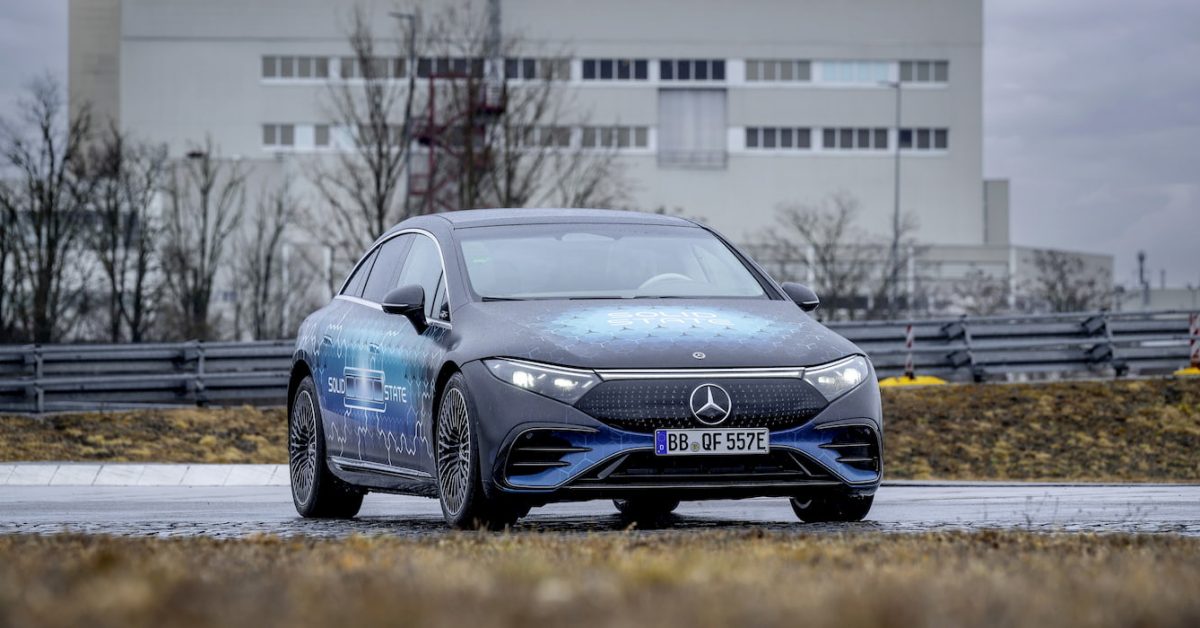
Mercedes-Benz and ProLogium have signed a joint testing agreement that gives the automaker priority access to the battery maker's latest Gen4 cells. The September 24 announcement puts the new work at the front door of Mercedes' vehicle programme, but it is a test agreement, not a supply contract.[1] No vehicle has been announced, no pack has been approved and no date for series production was given.
That distinction matters because solid-state battery announcements tend to blur three separate questions: can a cell be made, can it pass an automaker's laboratory work, and can enough good cells be built at an acceptable price. ProLogium has evidence on the first and third questions. Mercedes is now taking on the second.
The agreement is also a continuation rather than a surprise. The two companies began working together in 2016, and Mercedes invested in ProLogium and took a board seat. Their earlier work covered pouch cells, next-generation prismatic formats and ProLogium's bipolar technology. Gen4 is the first time their partnership has moved to a preliminary evaluation of the newest cell platform for possible future vehicle use.[1]
Main Content
What Mercedes will actually test
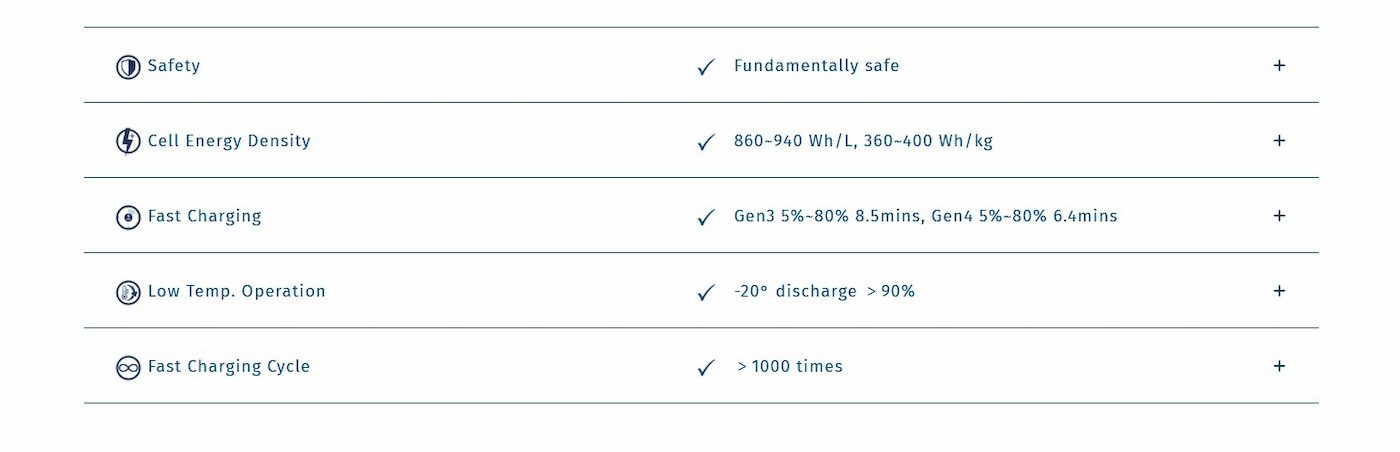
The cells are described as Gen4 Superfluidized Inorganic Next-Generation Lithium Ceramic Battery cells. ProLogium says the package of interest combines five characteristics: intrinsic safety, high performance, high energy density, manufacturing that can scale and a competitive cost structure. The announced safety architecture uses a non-flammable inorganic electrolyte, a ceramic separator and a proprietary active-safety mechanism. It is also designed for rapid charging, high power output and low-temperature operation.[1]
The testing itself will cover electrical, thermal and safety performance. Some work is to take place in Mercedes facilities, while other parts are assigned to specialist external institutes. ProLogium describes the project as a preliminary technology evaluation, and the results will determine whether the cells look suitable for a future vehicle application.[1]
Priority access has a narrower meaning than it might first appear. It gives Mercedes earlier access than other customers to evaluate the technology. It does not guarantee that Mercedes will order the cells, reserve a fixed production volume or name a future model. Automotive engineers still need data on durability, consistent cell-to-cell behaviour, pack integration, repairability, service life and cost. The announcement gives no test schedule or list of performance thresholds.
Electrek, which reported the agreement the same day, described the deal as Mercedes obtaining first rights to evaluate the Gen4 cells.[2] That is the right level of description. Calling it a production win now would go beyond what either company has disclosed.
Gen4 follows a measured Gen3.5 result
The new evaluation comes three weeks after ProLogium said its Gen3.5 Lithium Ceramic Battery had entered mass production in Taiwan. A third-party TÜV test on a 185.4 ampere-hour large-format cell found gravimetric energy density of 381 watt-hours per kilogram and volumetric energy density of 903 watt-hours per litre.[3]
Those figures are not Gen4 test results. ProLogium previously listed a different Gen4 target range of 360 to 400 Wh/kg and 860 to 940 Wh/L, along with a 5-to-80-percent charge time of 6.4 minutes. The September agreement does not publish fresh independent results for the cells Mercedes will examine. It points engineers toward a platform whose earlier generation has already been measured.
The distinction is more than legal housekeeping. A cell that can make a strong result once on a test bench is not the same as a production population with tight tolerances. Automotive programs care about the lower tail: how the weakest cells behave, whether resistance changes as a pack ages and whether variation grows as production volume climbs. Any successful evaluation still has to account for those questions.
The earlier factory announcement offers some manufacturing context. ProLogium opened its Taoke plant in Taoyuan, Taiwan, in January 2024 as a GWh-scale facility and a production model for a planned European site. It said the Taiwanese line had begun output in late 2023 and had a planned capacity of 2 GWh, subject to market demand.[4] The company now says Taoke has completed GWh-scale manufacturing validation and can support C-sample production, demonstration-car programmes and future commercial production.[1]
Why the partnership matters to both companies
For Mercedes, Gen4 is a hedge against the limits of pack engineering. Even with excellent liquid lithium-ion cells, a vehicle's energy density is constrained by cell format, cooling, structural reinforcement and the space needed to keep a pack safe. A cell that stores more energy in less mass and volume gives designers more room, though it does not remove the need for a well-engineered enclosure and battery-management system.
For ProLogium, a Mercedes evaluation carries weight in an industry where announcements are frequent and production shortages are not unusual. An established automaker can push a young chemistry through tests that are broader and less forgiving than a press release. It can also expose weaknesses before a vehicle programme is designed around them. Successful evaluation would help the company turn a technical claim into a qualified automotive product; a poor result would force redesign.
The relationship has unusual depth. ProLogium says Mercedes has been a long-term automotive partner and strategic investor, and that a Mercedes-Benz director sits on its board. The company also links that history to its Dunkirk expansion: the French plant broke ground in February 2026, its first phase is designed for 4 GWh of annual capacity by 2030, and the full site is designed for as much as 44 GWh.[1]
A European factory would sit close to Mercedes' customer base and reduce some cross-border logistics. It would not make the company independent of Asian cell supply overnight, and the announced capacity is future design capacity rather than completed output. Before those lines reach volume, equipment installation, yield improvement, supplier readiness and working capital all remain. A vehicle programme linked to Dunkirk would still have a long chain of dependencies.
The questions that decide whether the cells reach a car
Electrical and thermal tests are the start. Mercedes will want the Gen4 cell to remain stable under fast charge, hard acceleration, repeated deep discharge and the temperature swings experienced on a European or North American road. Cold-weather charging is especially demanding because charging power often falls when the cell is cold, while a driver expects a usable range.
Safety evaluation must also consider what happens after physical damage. A non-flammable electrolyte reduces one source of fuel, but a pack can still experience local heating, gas generation, cell-to-cell propagation or damage from a crash. The proprietary safety mechanism needs independent evidence under the conditions Mercedes uses, not only a supplier description. The external institutes named in the agreement make that separation more credible, but no institute or complete result has yet been published.
Pack design could reveal another gap between cell data and a finished vehicle. A large, thin ceramic cell changes mechanical restraint requirements. It also has to be connected through tabs, cooled without creating large temperature gradients and monitored accurately by the battery-management system. Engineers must confirm that assembly tolerances, maintenance procedures and factory quality controls do not erase the cell's theoretical advantage.
Cost will decide the commercial question. ProLogium says it is pursuing a competitive cost structure and scale manufacturing, yet the announcement gives no per-kilowatt-hour price, yield figure or comparison with current premium lithium-ion cells. It also gives no purchase volume. A high-performing cell at an unattractive price can remain a demonstration product. A cheaper design with uneven output can put more pressure on quality control.
A reasonable timetable is also absent. Solid-state programmes often move through years of cell work, vehicle testing, factory preparation and validation. A joint test agreement is one gate in that sequence. It is a useful gate, because it creates a customer evaluation around a real candidate, but it is not a production release.
How to read the announcement without overstating it
The deal strengthens the case that ProLogium's lithium-ceramic line is moving from manufacturing credibility toward vehicle qualification. The partners are no longer discussing only an older generation or an abstract collaboration. They have put Gen4 inside Mercedes' formal test process.[1]
The stronger claim would be that a Mercedes electric vehicle is confirmed to use the cells. It is not. No model, date or supply volume has been announced. The two companies have also not published the external test schedule, acceptance criteria or Gen4 results.[1][2]
For battery watchers, the useful milestones now are concrete. First comes independent electrical, thermal and safety data for the cells Mercedes receives. Then come yield and consistency information from Taoke and the next production steps. A future production award would be a stronger commercial signal, but it should not be confused with a test agreement.
The news matters because an automaker with deep integration experience is taking the latest ProLogium platform seriously enough for a dedicated evaluation. For an EV buyer, the practical benefit remains distant. The immediate story is about industrial qualification: whether a cell architecture can move from a giga-scale line into a car maker's engineering process without losing its promised safety, density, charging speed or cost advantage.
Conclusion
Mercedes-Benz has won priority access to test ProLogium's Gen4 solid-state lithium-ceramic cells, extending a relationship that began in 2016. The deal is an important customer-side validation step, especially after ProLogium reported third-party density results for the preceding Gen3.5 cell and began mass production in Taiwan.[1][3]
It is not a signed battery supply deal, and the companies have not named a vehicle or test deadline. Those gaps matter. The next evidence to watch is not another target specification but repeatable test data, manufacturing yield, pack-level safety and a clear path to commercial volume. Until those appear, Gen4's place in a Mercedes vehicle is promising, not confirmed.
Images
References
[1] ProLogium Technology, “Mercedes-Benz and ProLogium have entered into a joint testing agreement,” September 24, 2026 — https://prologium.com/mercedes-benz-and-prologium-have-entered-into-a-joint-testing-agreement-including-a-preliminary-platform-evaluation-of-of-prologiums-latest-gen4-superfluidized-all-inorganic-solid-state-batt/ [2] Electrek, “Mercedes-Benz gets first dibs on ProLogium’s Gen4 solid-state EV battery cells,” September 24, 2026 — https://electrek.co/2026/09/24/mercedes-priority-prologiums-gen4-solid-state-ev-battery/ [3] ProLogium Technology, “ProLogium Begins Mass Production of High-Energy-Density All-Solid-State Battery, Reaching 381 Wh/kg and 903 Wh/L,” September 2, 2026 — https://prologium.com/prologium-begins-mass-production-of-high-energy-density-all-solid-state-battery-reaching-381-wh-kg-and-903-wh-l/ [4] ProLogium Technology, “ProLogium Opens the World’s First Giga-level Solid-State Lithium Ceramic Battery Factory,” January 23, 2024 — https://prologium.com/prologium-opens-the-worlds-first-giga-level-solid-state-lithium-ceramic-battery-factory/
More research and market developments are available in Battery Tech and EV coverage.